ROI [🔏CLASSIFIED FILE] No. X009 | What is the SBI Method?
📅 2025-05-24
🕒 Reading time: 6 min
🏷️ SBI 🏷️ SBI Method 🏷️ Learning 🏷️ [🔏CLASSIFIED FILE]
- What is the SBI Method? - Case Overview
- Basic Structure of the SBI Method - Evidence Analysis
- SBI Method Implementation Procedures - Investigation Techniques
- The Power of the SBI Method - Hidden Truth
- Limitations and Cautions of the SBI Method - Potential Dangers
- Applications and Related Techniques of the SBI Method - Related Case Files
- Conclusion - Investigation Summary
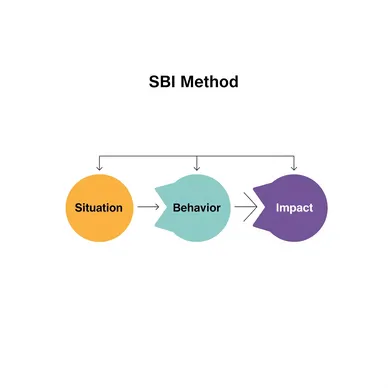
Detective's Note: A three-letter code called the "SBI Method" secretly utilized in performance evaluations and subordinate coaching. This feedback technique, formed from the initials of Situation, Behavior, and Impact, possesses the power to transform emotionally charged interpersonal challenges into objective and constructive dialogue. Yet reports continue to surface that many managers, blocked by psychological barriers of "difficulty in giving criticism" and "not wanting to demotivate subordinates," cannot unleash this method's true power. Why does the SBI Method make "difficult things easier to say" and "hard-to-accept things easier to receive"? Uncover the true nature of this psychological mechanism.
What is the SBI Method? - Case Overview
The SBI Method (Situation/Behavior/Impact) is a feedback technique that translates to "Situation, Behavior, Impact" in practice. Born from American organizational psychology research in the 1970s, this communication technique possesses a structure that transforms subjective and emotional feedback into objective and constructive dialogue. While recognized among clients as an "essential skill for supervisors and subordinates," voices from the field often state, "I understand the theory, but practice is difficult."
Investigation Note: Structuring emotions through three steps. It holds the power to transform delicate interpersonal issues into fact-based discussions. We must clarify why this sequence is crucial and identify the nature of psychological barriers during implementation.
Basic Structure of the SBI Method - Evidence Analysis
Primary Evidence: The Three Stages of SBI
Situation - Specific Context Setting
"When, where, and what circumstances?"
・Confirmation of objective facts
・Building common ground for understanding
・Identifying time, place, and parties involved
・Clarifying background context
Behavior - Observable Action Description
"What was done, what was said?"
・Describing only observable facts
・Eliminating speculation and interpretation
・Recreating specific words and actions
・Description without judgment or evaluation
Impact - Explaining Behavioral Effects
"What impact did that behavior have?"
・Impact on oneself
・Impact on team/organization
・Impact on customers/stakeholders
・Expected future impact
Evidence Analysis: The brilliance of the SBI Method lies in shifting the foundation of discussion from emotional judgment to objective facts. Particularly, it incorporates a structure that enables behavior-based discussion of "this action had this impact" rather than personal attacks like "you are inadequate."
SBI Method Implementation Procedures - Investigation Techniques
Investigation Finding 1: Positive Feedback Example
Case Evidence (Subordinate's excellent presentation):

Situation:
"During yesterday's client proposal meeting,
when presenting to five executives from Company A"

Behavior:
"You thoroughly researched the client's challenges beforehand
and presented three specific solution patterns.
Additionally, during Q&A, you repeated each question
before providing detailed answers"

Impact:
"As a result, we received feedback from the client saying
'They understand our challenges well,' and we secured
an opportunity for a detailed proposal next time.
Your careful preparation contributed to improving
the entire team's credibility"
Investigation Finding 2: Improvement Suggestion Feedback Example
Case Evidence (Timing of remarks in meetings):

Situation:
"During this morning's department meeting,
while Manager B was explaining the budget"

Behavior:
"You spoke three times during the presentation,
each time interrupting Manager B's explanation.
While your comments were accurate, you spoke
before the other person finished speaking"

Impact:
"As a result, the meeting ran 15 minutes over schedule,
and Manager B commented that it was 'difficult to speak.'
To convey your valuable opinions more effectively,
I think the meeting would proceed more smoothly
if you could wait until others finish speaking"
Investigation Finding 3: Key Implementation Points - Preparation: Confirming specific situational and behavioral facts - Timing: Implementing as soon after the behavior as possible - Environment: Conducting in a safe one-on-one setting - Mutual Dialogue: Progressing as dialogue, not one-way transmission
The Power of the SBI Method - Hidden Truth
Warning File 1: Avoiding Emotional Confrontation By discussing fact-based "this behavior had this impact" rather than making personality judgments like "you are X type of person," defensive reactions from the other party can be minimized.
Warning File 2: Achieving Constructive Improvement Suggestions By clarifying specific situations and behaviors rather than mere criticism, improvement points become clear for the recipient. "What and how to change" becomes visible.
Warning File 3: Promoting Two-Way Communication By establishing objective facts as the foundation, an atmosphere is created that welcomes questions, objections, and additional explanations from the other party. Dialogical problem-solving becomes possible rather than one-sided pointing out.
Warning File 4: Facilitating Organizational Learning By focusing on behavioral improvement rather than personal attacks, "good behavior patterns" and "behavior patterns needing improvement" can be shared throughout the organization. This contributes to fostering an organizational learning culture.
Limitations and Cautions of the SBI Method - Potential Dangers
Warning File 1: The Trap of Mechanical Application Danger of giving an unnatural and cold impression when mechanically applying only the SBI format. Flexible application considering relationships and context is necessary.
Warning File 2: Subjectivity in Impact Explanation Possibility that impact explanations may lean toward the speaker's subjective interpretation. Risk of inviting backlash when confusing "objective impact" with "subjective impressions."
Warning File 3: Overemphasis on Negative Feedback Cases where focus leans toward pointing out improvements, with insufficient utilization for positive feedback. Missing opportunities for recognition and praise, losing chances for motivation enhancement.
Warning File 4: Ignoring Cultural Context In cultures that don't favor direct feedback or organizations that emphasize hierarchical relationships, the SBI Method's effectiveness may be limited. Consideration of organizational culture compatibility is necessary.
Warning File 5: Insufficient Follow-up Tendency toward inadequate confirmation of behavioral changes after delivering feedback and insufficient ongoing support. Danger of misunderstanding that one feedback session completes the process.
Applications and Related Techniques of the SBI Method - Related Case Files
Related Evidence 1: COIN Method (Context/Observation/Impact/Next)
Context + Observation + Impact + Next steps
Adding specific improvement actions to the SBI Method
Version more specialized for behavioral change
Related Evidence 2: Combination with DESC Method
Fact organization with SBI Method → Request transmission with DESC Method
Integration of objective analysis and specific requests
More comprehensive communication strategy
Related Evidence 3: Utilization in 360-Degree Feedback
Multifaceted feedback from supervisors, subordinates, colleagues
Enhanced objectivity through SBI Method structuring
Functions as organizational talent development system
Related Evidence 4: Regular Use in 1-on-1 Meetings
Utilization in regular supervisor-subordinate meetings
Fostering daily feedback culture
Continuous relationship improvement and growth support
Related Evidence 5: Mutual Feedback in Team Building
Mutual feedback among team members
Frank opinion exchange in safe environment using SBI Method
Overall team performance improvement
Conclusion - Investigation Summary
Investigator's Final Report:
The SBI Method is the "guardian deity of objectivity in interpersonal relationships." The structuring through three steps—Situation, Behavior, and Impact—possesses the power to transform emotionally subjective interpersonal challenges into fact-based constructive dialogue.
What was most impressive in this investigation was the SBI Method's contribution to "psychological safety." By enabling behavior-based discussion rather than personal attacks, it minimizes defensive reactions from feedback recipients and creates an environment where they can listen openly. This is the secret mechanism that makes "difficult things easier to say" and "hard-to-accept things easier to receive."
However, the "difficulty of practice" that many managers face has also come to light. There's a significant gap between theoretical understanding and actual application. Flexible utilization considering relationships and organizational culture, rather than mechanical application, is key to unlocking this method's true value.
It also became clear that the SBI Method should be viewed not as a "tool for pointing out improvements" but as a "foundation for constructive dialogue." Its power dramatically increases through utilization in positive feedback, continuous follow-up, and fostering an organization-wide learning culture.
Constructive Feedback Maxim: "Superior feedback shows the possibility for specific behavioral improvement without denying the person's character"
Case Closed
関連記事



📚 関連書籍
🎖️ Top 3 Weekly Ranking of Classified Case Files

What is MVP
What is Agile Development
What is STP Analysis
Solve Your Business Challenges with Kindle Unlimited!
Access millions of books with unlimited reading.
Read the latest from ROI Detective Agency now!
*Free trial available for eligible customers only