ROI Case File No.334 | 'The December Crisis of Globex'
📅 2025-11-25 23:00
🕒 Reading time: 9 min
🏷️ 5W1H

- Chapter 1: The Time Bomb of Leave — Operations Stop at Year-End
- Chapter 2: The Misconception of Outsourcing — AI Isn't Magic
- Chapter 3: The Discovery of Organization — Three Priority Challenges
- Chapter 4: Implementation Execution — Company B's Integrated Tool
- Chapter 5: Peace of Mind Through Automation — Results After 3 Months
- Chapter 6: Detective's Diagnosis — Challenge Organization Is 80% of Solution
- Related Files
Chapter 1: The Time Bomb of Leave — Operations Stop at Year-End
The day after the SkyNet Solutions AI order agent case was solved, a consultation about EC operations dependency arrived. Volume 27, "The Pursuit of Reproducibility," Episode 334 tells the story of restructuring human-dependent operations.
"Detective, our EC operations depend on just one member. And he's taking a three-month extended leave starting at year-end. During that time, Amazon operations will stop."
Shinji Yamada, EC Business Director of Globex, originally from Shibuya, visited 221B Baker Street with an urgent expression. In his hands, he held EC operations flow diagrams alongside contrasting organizational charts marked "Backup Personnel: None."
"We operate three EC channels. Amazon, Rakuten, and our proprietary EC. Annual revenue is 420 million yen. However, 62% of that — 260 million yen — is Amazon. And Sato alone handles that Amazon."
Globex's EC Structure: - Established: 2018 (apparel EC business) - Annual revenue: 420 million yen - EC channels: Amazon (62%), Rakuten (24%), Proprietary EC (14%) - EC operations members: 3 - Sato (Amazon) - Suzuki (Rakuten) - Tanaka (Proprietary EC) - Problem: Sato on extended leave from late December to late March. No backup
Yamada's voice carried deep urgency.
"Sato is excellent. He perfectly understands Amazon specifications and handles inventory management, product registration, and data analysis all alone. But that's the problem. When he's gone, no one can operate Amazon."
Sato's Daily Tasks:
Morning (9:00-12:00): - Inventory check: Compare Amazon inventory data with Next Engine data (1 hour) - Order processing: Order products with low inventory (1.5 hours) - Product registration: Register new products on Amazon (0.5 hours)
Afternoon (13:00-15:00): - Data analysis: Analyze sales data, inventory turnover, advertising effectiveness (1.5 hours) - Product modification: Modify product page descriptions, images, prices (0.5 hours)
Evening (15:00-18:00): - Customer support: Handle inquiries, respond to reviews (1 hour) - Advertising operations: Adjust sponsored ads (1 hour) - Report creation: Daily sales report to supervisor (1 hour)
Total: 8 hours/day
Yamada sighed deeply.
"There's more. We use Next Engine inventory management system, but it's not integrated with Amazon. So we manually transfer data. And the company has no AI expertise. Management says 'find AI tools,' but we don't know what to choose or how."
Chapter 2: The Misconception of Outsourcing — AI Isn't Magic
"Yamada-san, do you think implementing AI tools will solve all problems?"
To my question, Yamada showed a confused expression.
"Yes... we're hoping so, but we don't actually know what's possible. We received vendor proposals for AI tools, but can't judge if they fit our challenges."
Current Understanding (AI Panacea Model): - Expectation: Implementing AI tools solves everything - Problem: What to delegate to AI isn't organized
I explained the importance of clarifying challenges and identifying feasible scope.
"The problem is 'what you want AI to do' is vague. 5W1H — What, Why, When, Who, Where, How. What, why, when, who, where, how. Organize these six, and truly necessary AI tools become visible."
⬜️ ChatGPT | Catalyst of Concepts
"AI isn't magic. Organize challenges. Clarify 'what to delegate to AI' with 5W1H."
🟧 Claude | Story Alchemist
"Year-end deadlines always prompt 'preparation.' Plan with 5W1H."
🟦 Gemini | Compass of Reason
"5W1H is organization technology. Transform vague challenges into executable plans."
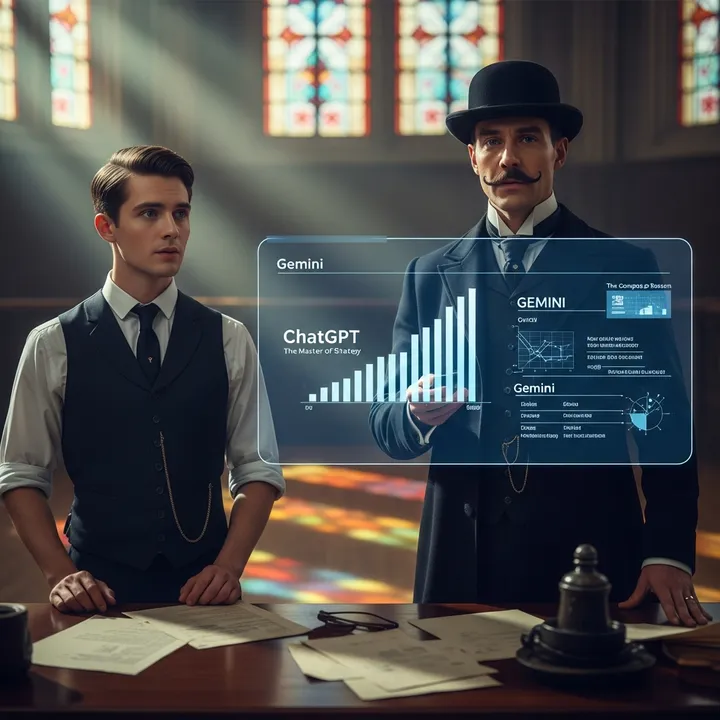
The three members began analysis. Gemini displayed the "5W1H Framework" on the whiteboard.
5W1H's 6 Elements: 1. What: What do you want to achieve 2. Why: Why is it necessary 3. When: By when to achieve it 4. Who: Who will execute it 5. Where: Where to execute it 6. How: How to achieve it
"Yamada-san, let's start organizing from 'What.' What do you want to achieve?"
Chapter 3: The Discovery of Organization — Three Priority Challenges
Phase 1: 5W1H Analysis (2 weeks)
What (What to achieve):
Interviewed Yamada and Sato, organized operations.
Priority 1: Inventory management automation - Current: Compare Amazon and Next Engine data in Excel (1 hour/day) - Ideal: Automatic integration, real-time inventory difference confirmation
Priority 2: Order processing automation - Current: Manually order products with low inventory (1.5 hours/day) - Ideal: Automatically propose orders when inventory falls below threshold
Priority 3: Product registration efficiency - Current: Manually register new product information on Amazon (0.5 hours/day) - Ideal: Batch upload product information, automatic format conversion
Priority 4 (On Hold): Data analysis automation - Current: Aggregate data in Excel, create graphs (1.5 hours/day) - Ideal: Automatic visualization with dashboard - Decision: Difficult to achieve by year-end. Focus on priorities 1-3 first
Why (Why necessary):
Reason 1: Continue operations during Sato's extended leave - Period: Late December to late March (3 months) - During this time, 260 million yen/year ÷ 12 months × 3 months = 65 million yen at risk
Reason 2: Eliminate dependency on individual - Reduce tasks only Sato can do, make anyone capable
Reason 3: Create growth capacity through operational efficiency - Allocate freed time to new initiatives (new product development, marketing)
When (By when to achieve):
Deadline: December 20, 2025 - Sato's leave starts: December 28 - With buffer, operation starts by December 20
Schedule: - Nov 1-15: AI tool selection (2 weeks) - Nov 16-Dec 10: Implementation and setup (3 weeks) - Dec 11-20: Test operation (10 days)
Who (Who will execute):
Internal: - Yamada (project manager) - Sato (business requirement definition, testing) - Suzuki (training as backup)
External: - AI tool vendor (implementation support) - System integrator (Next Engine integration)
Where (Where to execute):
Environment: - Amazon Seller Central (existing) - Next Engine (existing) - New AI tool (to be selected)
Data Storage: - Centralized cloud management - Accessible from office and remote
How (How to achieve):
Step 1: AI Tool Selection - Candidates: Compare 3 companies - Company A: Inventory management specialized AI tool - Company B: EC operations integrated platform - Company C: Custom development (high cost)
Selection Criteria: - Amazon integration capability - Next Engine API integration - Implementation period (complete by December 20) - Cost (within 100,000 yen monthly)
Chapter 4: Implementation Execution — Company B's Integrated Tool
Phase 2: AI Tool Selection (2 weeks)
After comparing three companies, selected Company B.
Selection Reasons:
Company B Features: - Supports Amazon, Rakuten, proprietary EC - Next Engine API integration possible - Automates inventory management, order proposals, product registration - Implementation period: 3 weeks - Monthly fee: 85,000 yen
Why not Company A: - Inventory management only, no order proposal function
Why not Company C: - Custom development takes 2 months (misses deadline)
Phase 3: Implementation and Setup (3 weeks)
Week 1: Data Integration Construction - API integration between Next Engine and Company B tool - Integration between Amazon Seller Central and Company B tool - Built mechanism for automatic inventory data synchronization
Week 2: Automation Rule Configuration
Inventory Management Rules: - Alert notification when inventory difference exceeds 10 units - Report previous day's inventory changes every morning at 9 AM
Order Proposal Rules: - Propose orders when inventory falls below safety stock (set per product) - Order quantity: Past 30 days average sales × 1.5
Product Registration Rules: - Upload new product data (CSV), automatically convert to Amazon format - Automatically format product names, descriptions, image URLs
Week 3: Suzuki's Training - Suzuki (Rakuten) trains as Amazon backup - Learn Company B tool operation - Inherit irregular response know-how from Sato
Phase 4: Test Operation (10 days)
December 11-20: - Sato and Suzuki operate in parallel - Verify Company B tool operation - Fix any issues immediately
Test Results:
Inventory Management: - Automatic synchronization: Normal operation - Alert notification: Normal operation - Work time: 1 hour/day → 10 minutes/day (83% reduction)
Order Proposals: - Proposal accuracy: 92% (46 of 50 appropriate) - 4 inappropriate cases didn't consider seasonal product demand fluctuations - Improvement: Manually check seasonal products only
Product Registration: - Format conversion: Normal operation - Work time: 0.5 hours/day → 5 minutes/day (90% reduction)
Overall Evaluation: - Sato: "With this, I can leave it to Suzuki" - Suzuki: "Anxious, but seems manageable with the tool"
Chapter 5: Peace of Mind Through Automation — Results After 3 Months
December 28: Sato Begins Extended Leave
Suzuki took over Amazon operations.
Operation Status (January-March):
Inventory Management: - Automatic synchronization kept inventory differences near zero - Suzuki manually checks only when alerts appear (weekly)
Order Processing: - Suzuki orders following proposals - Adjusts seasonal products only after consulting Yamada - Work time: 1.5 hours/day → 20 minutes/day (78% reduction)
Product Registration: - Registered 5 new products - Auto-converted with Company B tool, completed in 5 minutes
Sales: - January-March revenue: 68 million yen (year-over-year +5%) - Sales maintained and improved despite Sato's absence
Late March: Sato Returns
Sato's Feedback: "Honestly, I was anxious. I thought operations wouldn't work without me. But thanks to Company B tool and Suzuki, operations continued without issues. Moreover, sales increased 5%.
During leave, I completely refreshed. No guilt about 'causing trouble for the company.' This is thanks to organizing challenges with 5W1H and properly implementing AI tools."
Organizational Changes:
Eliminating Dependency: - Before: Only Sato operates Amazon - After: Suzuki can also operate. Operations standardized
Work Time Reduction: - Before: Sato's work time 8 hours/day - After: Reduced to 4 hours/day through automation (50% reduction)
Creating Growth Capacity: - Allocate freed 4 hours/day to new initiatives - Strengthen new product development and marketing initiatives
Yamada's Feedback:
"Until using 5W1H, we only had vague expectations of 'AI tools will somehow work.' But by organizing What, Why, When, Who, Where, How, we saw what was truly necessary.
We focused on priorities 1-3 and put priority 4 on hold. And selected Company B tool to meet the December 20 deadline. As a result, we maintained and improved sales during Sato's extended leave.
Now not just Sato but Suzuki can also operate Amazon. Dependency eliminated, organizational growth capacity created."
Chapter 6: Detective's Diagnosis — Challenge Organization Is 80% of Solution
That evening, I contemplated the importance of challenge organization.
Globex had vague expectations that "implementing AI tools will solve it." But the problem was 'what to delegate to AI' wasn't organized.
By clarifying challenges with 5W1H, prioritizing, and setting deadlines, optimal AI tools became visible. And maintained sales during Sato's extended leave, eliminated dependency.
"AI isn't magic. Organize challenges, prioritize, identify feasible scope. 5W1H transforms vague expectations into clear plans."
The next case will also depict the moment of organizing challenges.
"What, Why, When, Who, Where, How. Organize these six. Vague challenges transform into clear plans. AI tools demonstrate power for organized challenges." — From the Detective's Notes
Related Files

🎖️ Top 3 Weekly Ranking of Case Files

'QuantumGrocers' Lost Customer Data'

AeroSpray's Vanishing Sales Force'
'GlobalSoft's Drowning Inquiry Response'