ROI Case File No.339 | 'TechWave's 10-Year Data Maintenance'
📅 2025-11-30 23:00
🕒 Reading time: 10 min
🏷️ SBI

- Chapter 1: The Paradox of Updates — Manual Work Remains Despite Renewal
- Chapter 2: The Misunderstanding of Partial — No Need to Automate Everything
- Chapter 3: The Discovery of Breakdown — Three Task Priorities
- Chapter 4: The Strategy of Staged — Results After 6 Months
- Chapter 5: Detective's Diagnosis — Staged from High-Impact Areas
- Related Files
Chapter 1: The Paradox of Updates — Manual Work Remains Despite Renewal
The day after the GlobalTech production management system implementation case was solved, a consultation about data maintenance automation arrived. Volume 27, "The Pursuit of Reproducibility," Episode 339 tells the story of unraveling situation, behavior, and impact.
"Detective, we spent two years on a major system update. We renovated the old system and changed to an extensible architecture. However, manual data maintenance work still remains."
Kenichi Tamura, System Development Director of TechWave, originally from Tokyo, visited 221B Baker Street with a complex expression. In his hands, he held system architecture diagrams alongside contrasting business analysis documents marked "Manual Work: 120 hours/month."
"We operate the 'BCN Ranking Data Service' that distributes POS data collected from home electronics retailers and EC sites nationwide. This service has been provided for over 10 years, and the system had become outdated."
TechWave Service Overview: - Established: 2005 - Service: BCN Ranking Data Service - Content: Home electronics POS data collection, analysis, distribution - Data providers: Approximately 2,800 stores nationwide - Customers: Home electronics manufacturers, marketing companies (approximately 150 companies) - Problem: 120 monthly hours of manual data maintenance work remain
Tamura's voice carried deep frustration.
"Two years ago, we implemented a large-scale system update. We renovated the outdated system, optimized the database, and established APIs. The purpose was to ensure future extensibility. And to continue operational efficiency improvements.
However, manual data maintenance work still remains. 120 hours monthly. Three staff members each spend 40 hours monthly on data cleansing, matching, and corrections."
Typical Data Maintenance Tasks:
Task 1: Data Cleansing (50 hours/month) - POS data contains store name notation variations, product name typos, abnormal price values - Examples: - Store name: "Bic Camera Shinjuku," "Big Camera Shinjuku," "BicCamera Shinjuku" - Product name: "Sony Headphone WH-1000XM5," "Sony Headphone WH1000XM5" - Abnormal values: Prices of "0 yen," "999,999 yen" - Staff visually confirm and manually correct
Task 2: Data Matching (40 hours/month) - Same product registered with different names at different stores - Match with standard product master, assign product codes - Staff check one by one
Task 3: Missing Data Completion (30 hours/month) - When POS data has deficiencies (e.g., price field empty) - Estimate from previous week's data or other store data - Staff judge and manually input
Tamura sighed deeply.
"We've consulted with existing transaction partner system vendors. However, they said 'further modifying the current system would cost an additional 20 million yen.' We want to compare including new companies. Can't we automate data maintenance by combining generative AI and RPA?"
Chapter 2: The Misunderstanding of Partial — No Need to Automate Everything
"Tamura-san, do you want to automate all data maintenance?"
To my question, Tamura answered immediately.
"Yes, ideally everything would be automated. However, realistically it's difficult. So we want to automate even partially."
Current Understanding (Partial Automation Model): - Recognition: Automate partially where possible - Problem: Can't see where to automate from, priorities unclear
I explained the importance of analyzing current behaviors and automating from high-impact areas.
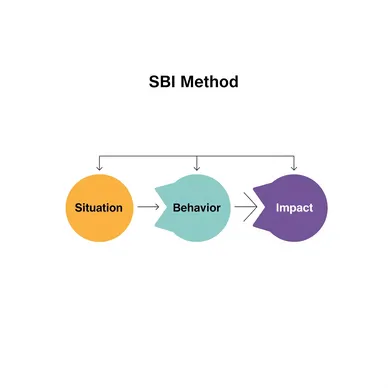
"The problem is 'where to automate from.' SBI analysis — Situation, Behavior, Impact. Situation, behavior, impact. Analyze these three, and automation points with highest effect become visible."
⬜️ ChatGPT | Catalyst of Concepts
"Don't look at the whole. Look at impact. Automate from highest-effect areas with SBI."
🟧 Claude | Story Alchemist
"Manual work always exists in 'repetition.' Find that repetition."
🟦 Gemini | Compass of Reason
"SBI is behavior analysis technology. Break down situation, behavior, impact to determine improvement priorities."
The three members began analysis. Gemini displayed the "SBI Framework" on the whiteboard.
SBI's 3 Elements: 1. Situation: In what situation does it occur 2. Behavior: What behavior is performed 3. Impact: What impact does that behavior have
"Tamura-san, let's break down data maintenance tasks with SBI."
Chapter 3: The Discovery of Breakdown — Three Task Priorities
Phase 1: SBI Analysis (2 weeks)
Analyzed three data maintenance tasks with SBI.
Task 1: Data Cleansing
Situation: - POS data contains store name notation variations, product name typos, abnormal price values - Occurrence frequency: Approximately 15,000 items monthly (about 5% of all data)
Behavior: - Staff visually confirm - Correct according to rules - Store names: Reference notation variation dictionary, correct to standard name - Product names: Reference typo patterns, correct - Abnormal values: Estimate from previous week's data or average prices - Work time: 50 hours/month
Impact: - If not corrected, data credibility decreases - Customer complaints occur - Importance: High
Automation Possibility: - Notation variation dictionary and typo patterns already exist - Rule-based correction → Can automate with RPA - Abnormal value estimation → Can estimate with generative AI - Automation rate: Estimated 85%
Task 2: Data Matching
Situation: - Same product registered with different names at different stores - Match with standard product master, assign product codes - Occurrence frequency: Approximately 8,000 items monthly
Behavior: - Staff confirm product names - Search standard product master for similar products - Manually assign product codes - Work time: 40 hours/month
Impact: - If not matched, same product aggregated as different products - Ranking data accuracy decreases - Importance: High
Automation Possibility: - Product name similarity search → Can propose similar products with generative AI - Final judgment requires human (when similarity is low) - Automation rate: Estimated 70%
Task 3: Missing Data Completion
Situation: - POS data has deficiencies (e.g., price field empty) - Estimate from previous week's data or other store data - Occurrence frequency: Approximately 3,000 items monthly
Behavior: - Staff check missing patterns - Judge completion method (previous week data, other store data, average value, etc.) - Manually input - Work time: 30 hours/month
Impact: - If not completed, data becomes incomplete - However, service can continue without completion (displayed as data missing) - Importance: Medium
Automation Possibility: - Completion methods are somewhat patterned - Can estimate with generative AI - Automation rate: Estimated 60%
SBI Analysis Results:
| Task | Work Time | Importance | Automation Rate | Priority |
|---|---|---|---|---|
| Cleansing | 50 hours/month | High | 85% | 1st |
| Matching | 40 hours/month | High | 70% | 2nd |
| Missing completion | 30 hours/month | Medium | 60% | 3rd |
Conclusion: - First, automate cleansing (50 hours monthly) - Next, automate matching (40 hours monthly) - Missing completion has low priority
Chapter 4: The Strategy of Staged — Results After 6 Months
Phase 2: Vendor Selection (4 weeks)
Compared and examined three companies capable of generative AI × RPA.
Selection Result: Vendor H - Data maintenance tool combining generative AI (GPT-4 based) and RPA - Initial implementation cost: 4.8 million yen - Annual maintenance fee: 1.2 million yen - Implementation period: 3 months
Phase 3: Staged Implementation (6 months)
Step 1: Cleansing Automation (Months 1-3)
RPA Portion: - Automatically correct store names based on notation variation dictionary - Automatically correct product names based on typo patterns
Generative AI Portion: - Detect abnormal values (price 0 yen, 999,999 yen, etc.) - Estimate from previous week's data, other store data, average prices - Propose estimated values (final judgment by human)
Results: - Automatic correction: 12,750 items (85% of 15,000) - Human confirmation needed: 2,250 items (15%) - Work time: 50 hours/month → 8 hours/month (84% reduction)
Step 2: Matching Automation (Months 4-6)
Generative AI Portion: - Search standard product master for similar products from product names - Calculate similarity score (0-100%) - Similarity 80%+: Automatic assignment - Similarity 50-79%: Propose to human - Similarity 49% or less: Human judges
Results: - Automatic assignment: 5,600 items (70% of 8,000) - Human judgment needed: 2,400 items (30%) - Work time: 40 hours/month → 12 hours/month (70% reduction)
Step 3: Missing Completion Automation (On Hold)
Decision: - Low priority, so first verify effects of Steps 1 and 2 - Consider automation in future
Results After 6 Months:
Work Time Reduction:
Before: - Cleansing: 50 hours/month - Matching: 40 hours/month - Missing completion: 30 hours/month - Total: 120 hours/month
After: - Cleansing: 8 hours/month - Matching: 12 hours/month - Missing completion: 30 hours/month (not started) - Total: 50 hours/month
Reduction: 70 hours/month (58% reduction)
Annual Reduced Hours: - 70 hours/month × 12 months = 840 hours/year
Monetary Effect: - 840 hours × 4,000 yen (hourly rate) = 3.36 million yen/year
Investment Recovery: - Implementation cost: 4.8 million yen - Annual reduction effect: 3.36 million yen - Annual maintenance fee: 1.2 million yen - Net reduction effect: 2.16 million yen/year - Investment recovery period: 2.2 years
Data Accuracy Improvement:
Before: - Cleansing error rate: 2.5% (human visual errors) - Matching error rate: 3.8% (human judgment errors)
After: - Cleansing error rate: 0.8% (generative AI estimation accuracy improved) - Matching error rate: 1.2% (generative AI similarity search accuracy improved)
Customer Complaints: - Before: Monthly average 3.5 (data error complaints) - After: Monthly average 0.8 (77% reduction)
Organizational Changes:
Data Maintenance Staff Voices:
Staff Member A: "Previously, I spent 50 hours monthly on data cleansing. Visually confirming and correcting one by one. Monotonous, tiring work. But after RPA and generative AI introduction, work time reduced to 8 hours.
And my job changed. Previously I was a 'correction worker,' but now I'm a 'confirmer.' Just confirm and approve corrections AI proposed. And I allocate freed time to data analysis and report creation."
Staff Member B: "Matching work was searching for similar products from product names. Judging 'Sony Headphone WH-1000XM5' and 'Sony Headphone WH1000XM5' are the same product is easy. But judging whether 'Sony WH-1000XM5' and 'WH-1000XM5 Wireless Headphone' are the same is difficult.
Generative AI calculates similarity scores. 80%+ for automatic assignment, 50-79% for proposal. This reduced work time 70%. And error rate decreased."
Tamura's Feedback:
"Until conducting SBI analysis, we couldn't see 'where to automate from.' We were trying to automate all three tasks simultaneously.
However, by analyzing situation, behavior, and impact with SBI, priorities became clear. Cleansing (50 hours monthly, importance: high, automation rate: 85%) was top priority. Next matching (40 hours monthly, importance: high, automation rate: 70%). Missing completion low priority, so on hold.
By automating in stages, achieved 70 hours monthly (58%) reduction in 6 months. And data accuracy improved, customer complaints reduced 77%.
We didn't need to automate everything at once. We just needed to automate in stages from high-impact areas."
Future Development:
12-Month Plan: - Start missing completion automation - Estimated automation rate: 60% - Additional reduced hours: 18 hours/month
18-Month Goal: - Total data maintenance work time: 120 hours/month → 32 hours/month (73% reduction) - Annual reduced hours: 1,056 hours - Annual reduction effect: 4.22 million yen
Ensuring Extensibility: - System update two years ago established APIs - Easy to add new automation tools in future
Chapter 5: Detective's Diagnosis — Staged from High-Impact Areas
That evening, I contemplated the importance of staged automation.
TechWave had the ideal of "wanting to automate everything." However, they couldn't see where to start.
By breaking down situation, behavior, and impact with SBI analysis, priorities became clear. Prioritize cleansing (50 hours monthly, 85% automation rate), then matching (40 hours monthly, 70% automation rate). By automating in stages, achieved 58% reduction in 6 months.
"Don't automate everything at once. Automate in stages from high-impact areas. Analyze situation, behavior, impact with SBI to determine priorities."
The next case will also depict the moment of staged improvement.
"Situation, Behavior, Impact. Break down behavior with these three. Automate in stages from high-impact areas. No need to change everything at once." — From the Detective's Notes
Related Files
🎖️ Top 3 Weekly Ranking of Case Files

'QuantumGrocers' Lost Customer Data'

AeroSpray's Vanishing Sales Force'

'GlobalSoft's Drowning Inquiry Response'