ROI Case File No.341 | 'Globex Corporation's Scattered Customer Information'
📅 2025-12-02 23:00
🕒 Reading time: 9 min
🏷️ 5F

- Chapter 1: The Limitation of Excel Management—Prospects Disappearing
- Chapter 2: The Illusion of System Implementation—Tools Don't Solve Everything
- Chapter 3: Discovery Through Breakdown—The True Cause of 32% Follow-up Rate
- Chapter 4: Optimization Through Selection—Implementation After 3 Months
- Chapter 5: Reproducibility as Results—Changes After 6 Months
- Chapter 6: Detective's Diagnosis—Breaking Down Challenges is 80% of the Solution
- Related Files
Chapter 1: The Limitation of Excel Management—Prospects Disappearing
The day after resolving TechWave's data organization case, a consultation arrived regarding customer management in real estate sales. Volume 28 "The Pursuit of Reproducibility," Story 341, is a tale of integrating scattered information.
"Detective, our prospects are disappearing every month. Customers we should follow up with are buried in Excel. Sales representatives don't know whom to approach anymore."
Globex Corporation's Sales Director, Kazuya Takahashi from Shinagawa, visited 221B Baker Street with barely concealed anxiety. In his hands were an Excel sheet with customer information and, in stark contrast, an analysis report marked "Follow-up Rate: 32%."
"We specialize in real estate sales brokerage. Condominiums, houses, investment properties. Approximately 480 transactions annually. Twenty-two sales representatives. However, there's a problem. We're unable to follow up with 68% of our prospects."
Globex Corporation's Sales Structure: - Established: 2010 (Real estate sales brokerage) - Annual transactions: Approximately 480 - Sales representatives: 22 - Monthly inquiries: Average 350 - Conversion rate: 11.4% (480 ÷ (350 × 12 months)) - Problem: Customer information is scattered, making follow-ups inefficient
Takahashi's voice carried deep concern.
"Customer information is divided between two systems. First, Excel. Each representative manages their customer list. Second, simulation creation software. We input customer income and remaining housing loan to calculate purchasable amounts.
The problem is these two systems don't integrate. Excel contains basic customer information (name, contact, desired area). The simulation software contains purchasable amounts. However, we can't tell at a glance which properties to propose to which customers."
Typical Problem Cases:
Case 1: Sales Representative A (5 years experience): - Managed customers: Monthly average 80 - Follow-up frequency: About once per month - Problem: Manages customers in Excel but cannot prioritize whom to contact - Result: Only contacts "customers of interest," others are neglected
Case 2: Sales Representative B (2 years experience): - Managed customers: Monthly average 50 - Follow-up frequency: Less than once per month - Problem: Calculates purchasable amounts in simulation software but doesn't reflect them in Excel - Result: Forgets "how much this customer can purchase"
Case 3: New Inquiry Response: - Monthly 350 new inquiries - Initial response rate: 98% (responds to almost all inquiries) - Follow-up rate: 32% (second and subsequent contacts) - Problem: Unable to follow up with existing prospects due to handling new inquiries
Takahashi sighed deeply.
"There's another problem. We have only one IT staff member. He's overwhelmed managing the internal network and handling PC troubles. We're considering SFA/CRM implementation, but we don't have time for selection and deployment."
Chapter 2: The Illusion of System Implementation—Tools Don't Solve Everything
"Mr. Takahashi, do you believe implementing SFA/CRM will solve all problems?"
My question left Takahashi bewildered.
"Yes... we expect so. We believe centralizing customer information will make follow-ups easier."
Current Understanding (Tool Omnipotence Type): - Expectation: Implementation of SFA/CRM will solve everything - Problem: What needs solving isn't clear
I explained the importance of identifying essential customer management challenges and selecting the optimal system.
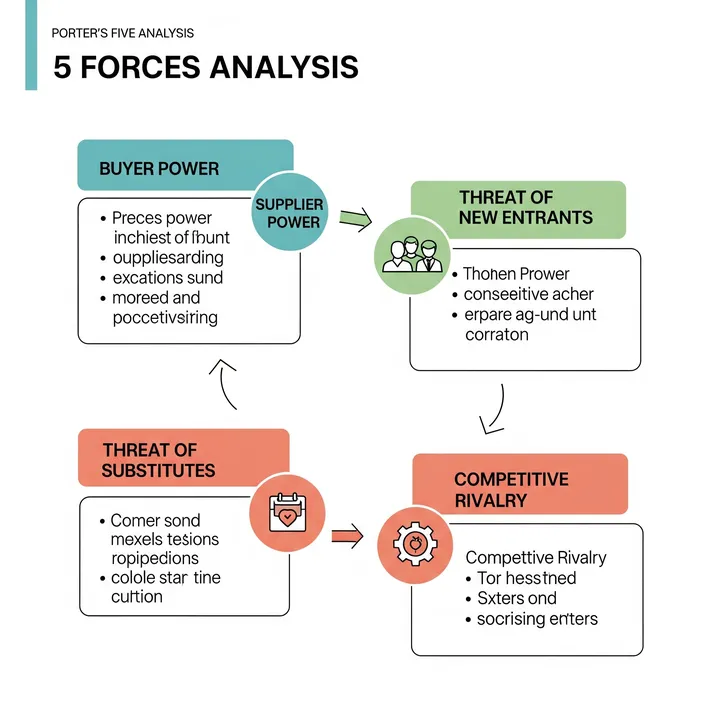
"The problem is the ambiguity of 'what you want to achieve.' Five Forces analysis—examining industry competitive factors. But today, we'll shift perspective. Your five challenge factors in sales activities—scattered customers, inefficient follow-ups, difficult property matching, new inquiry burden, insufficient system resources—we'll organize these and derive the essential solution."
⬜️ ChatGPT | Catalyst of Conception
"Tools are means. Clarify your purpose. Organize five challenge factors and penetrate the essence"
🟧 Claude | Alchemist of Narrative
"Prospects are always waiting to be 'forgotten.' Create a system that responds to their voice"
🟦 Gemini | Compass of Reason
"5F is competitive analysis technology. Break down five challenge factors in sales activities and prioritize"
The three members began analysis. Gemini deployed "Five Challenge Factors" on the whiteboard.
Five Challenge Factors: 1. Customer Information Fragmentation 2. Follow-up Inefficiency 3. Property Matching Difficulty 4. New Inquiry Overload 5. System Resource Shortage
"Mr. Takahashi, let's break down these five and identify what truly needs solving."
Chapter 3: Discovery Through Breakdown—The True Cause of 32% Follow-up Rate
Phase 1: Five Challenge Factor Analysis (2 weeks)
Factor 1: Customer Information Fragmentation
Current State: - Excel: Basic customer information (name, contact, desired area, price range) - Simulation software: Income, remaining housing loan, purchasable amount - Due to fragmentation, cannot see "which properties to propose to which customers"
Impact: - Sales representatives manually cross-reference information - Average 5 minutes verification time per customer - Representative managing 80 monthly customers: 400 minutes (6.7 hours/month)
Factor 2: Follow-up Inefficiency
Current State: - Follow-up timing depends on representative's judgment - "When to contact" is unclear - Result: Irregular contact about once monthly
Impact: - 68% of prospects neglected - Of 350 monthly new inquiries, 238 lack second contact - Opportunity loss: Estimated 40 monthly cases (potentially closeable through follow-up)
Factor 3: Property Matching Difficulty
Current State: - When new properties arrive, cannot determine "which customers to propose to" - Representatives rely on memory for proposals - Manual matching of purchasable amounts with property prices
Impact: - Cannot propose optimal properties - Customers feel "properties matching me aren't introduced" and withdraw - Proposal accuracy: Estimated 60% (appropriate property proposal rate)
Factor 4: New Inquiry Overload
Current State: - Handling 350 monthly new inquiries - Initial response rate: 98% - However, follow-ups can't keep pace
Impact: - 70% of sales representatives' time spent on new inquiries - Existing prospect follow-ups postponed - Vicious cycle: "Focus on new acquisition, existing customers withdraw"
Factor 5: System Resource Shortage
Current State: - IT staff: Only 1 person - Tasks: Network management, PC troubleshooting - Cannot allocate time for SFA/CRM selection and deployment
Impact: - System implementation doesn't progress - Sales department attempts "we'll manage ourselves" but fails
Phase 2: Identifying Essential Challenges (1 week)
Analysis of five factors led to this conclusion.
Essential Challenges: "Follow-up Inefficiency" and "Property Matching Difficulty" are top priority challenges
Reasoning: - Customer information fragmentation obstructs follow-ups and property matching - New inquiry overload occurs because follow-ups can't be done - System resource shortage solvable through external vendor utilization
Priority Order: 1. Follow-up automation (visualize whom to contact when) 2. Property matching automation (match purchasable amounts with properties) 3. Customer information centralization (integrate Excel and simulation software data into SFA/CRM)
Chapter 4: Optimization Through Selection—Implementation After 3 Months
Phase 3: SFA/CRM Selection (4 weeks)
Based on five challenge factors, compared three SFA/CRM providers.
Selection Criteria: - Follow-up alert function (notify whom to contact when) - Purchasable amount and property matching function - Integration with existing systems (simulation software) - Implementation period (within 3 months) - Cost (within 300,000 yen monthly)
Selection Result: Vendor C - Real estate industry-specific SFA/CRM - Follow-up alerts: Optimal timing notifications based on customer status - Property matching: Automatic matching of purchasable amounts with property prices - API integration: Data linkage with simulation software possible - Implementation period: 3 months - Monthly cost: 280,000 yen
Phase 4: Implementation and Operations Launch (3 months)
Step 1: Data Migration (Month 1) - Migrate Excel customer data to System C - API link simulation software purchasable amount data - Consolidate past 2 years' customer data (approximately 8,400 records)
Step 2: Follow-up Rule Configuration (Month 2)
Follow-up Alert Rules: - No contact within 3 days after initial inquiry: Alert - 2 weeks since last contact: "Time to follow up" - Property matching desired conditions arrives: "Propose to this customer" - High purchasable amount customers (top 20%): Weekly follow-up recommended
Step 3: Property Matching Configuration (Month 2) - Automatic search for properties within ±10% of purchasable amount - Consider desired area, floor plan, building age conditions - Automatic notification of matched properties to sales representatives
Step 4: Sales Representative Training (Month 3) - System C operation methods - Follow-up alert utilization - Property matching function utilization - Training period: 2 weeks
Phase 5: Operations Launch (Month 3-6)
Changes After Operations Launch:
Follow-up Rate: - Before: 32% (112 cases monthly) - After: 78% (273 cases monthly) - Improvement: +46 points (+161 cases/month)
Follow-up Timing: - Before: Representative's judgment (irregular) - After: Follow system alerts (optimal timing)
Property Proposal Accuracy: - Before: 60% (dependent on representative's memory) - After: 88% (system's automatic matching) - Improvement: +28 points
Sales Representative Time Allocation: - Before: New inquiries 70%, follow-ups 30% - After: New inquiries 50%, follow-ups 50%
Chapter 5: Reproducibility as Results—Changes After 6 Months
Results After 6 Months:
Transaction Count: - Before: 480 annually (40 monthly) - After: 648 annually (54 monthly, +35%)
Transactions from Follow-ups: - Before: 12 monthly (30% of total transactions) - After: 32 monthly (59% of total transactions) - Improvement: +20 cases monthly
Sales: - Before: Monthly sales 160 million yen (brokerage fees, average 4 million yen/case) - After: Monthly sales 216 million yen (+35%) - Improvement: +56 million yen monthly
ROI: - Investment: Initial deployment 1.2 million yen + monthly 280,000 yen × 6 months = 2.88 million yen - Return: +56 million yen monthly × 6 months = 336 million yen - ROI: 11,567%
Organizational Changes:
Sales Representative A's Voice: "Previously, I didn't know 'whom to contact,' relying on memory. But now the system tells me 'follow up with this customer' and 'propose this property.' Follow-ups became planned, conversion rates increased."
Sales Representative B's Voice: "Even when I calculated purchasable amounts in simulation software, I forgot to reflect them in Excel. But now the system automatically links. I can see 'this customer's purchasable amount is 35 million yen' at a glance."
Takahashi's Reflection:
"Until conducting five challenge factor analysis, we only had vague expectations that 'implementing SFA/CRM would somehow work.' However, customer information fragmentation, follow-up inefficiency, property matching difficulty, new inquiry overload, system resource shortage—organizing these five revealed essential challenges.
Top priority was follow-up automation and property matching automation. By implementing Vendor C's SFA/CRM, follow-up rate improved from 32% to 78%. Transaction count increased 35%, achieving +56 million yen monthly sales increase.
Prospects no longer disappear. The system won't let them be forgotten."
Chapter 6: Detective's Diagnosis—Breaking Down Challenges is 80% of the Solution
That evening, I contemplated the importance of challenge breakdown.
Globex Corporation held vague expectations that "implementing SFA/CRM will solve it." However, the problem was that 'what needs solving' wasn't clear.
Breaking down five challenge factors—customer information fragmentation, follow-up inefficiency, property matching difficulty, new inquiry overload, system resource shortage—revealed priorities. Concentrating on follow-up automation and property matching automation achieved 35% transaction increase.
"Tools are means. Clarify purpose and break down challenges. Organize five factors to see the essential solution."
The next case will also depict the moment of breaking down challenges.
"Customer information fragmentation, follow-up inefficiency, property matching difficulty, new inquiry overload, system resource shortage. Break down five factors and penetrate the essence. Tools are means. Clarify purpose"—From the Detective's Notes
Related Files
🎖️ Top 3 Weekly Ranking of Classified Case Files
What is MVP
What is Agile Development
What is STP Analysis