ROI Case File No.349 | 'TechSavvy's 480-Person Gamble'
📅 2025-12-10 23:00
🕒 Reading time: 10 min
🏷️ ROI

- Chapter 1: The 480-Person Ideal—But Budget is Finite
- Chapter 2: The Full Implementation Gamble—Cannot Recover if Failed
- Chapter 3: Measurement as Design—Three Phases to Disperse Investment
- Chapter 4: Verification as Certainty—Phased Expansion Results
- Chapter 5: Detective's Diagnosis—Start Small, Grow Big
- Related Files
Chapter 1: The 480-Person Ideal—But Budget is Finite
The day after resolving Concordia Technologies' PR/IR efficiency case, a consultation arrived regarding AI implementation in educational institutions. Volume 28 "The Pursuit of Reproducibility," Story 349, is a tale of judging by investment effectiveness.
"Detective, we want to teach AI utilization to all 480 students. However, budget is limited. And we don't know if it will truly be effective. Should we implement for everyone, or implement in phases—we cannot judge."
TechSavvy's CEO, Kenta Kimura from Nerima, visited 221B Baker Street with a mixture of enthusiasm and anxiety. In his hands were a school AI implementation proposal and, in stark contrast, materials marked "Budget ceiling: Annual 7.2 million yen."
"We provide ICT solutions for educational institutions. Digital teaching materials, tablet deployment, teacher training. Annual revenue 1.2 billion yen. This time, we received a consultation about AI utilization education from an elementary school."
TechSavvy's Proposal Overview: - Target: A certain elementary school (all 480 students, 32 teachers) - Purpose: Help students acquire AI utilization skills - Period: 1 year - Budget ceiling: Annual 7.2 million yen - Problem: Full implementation or phased implementation, effects unclear
Kimura's voice carried deep hesitation.
"The school says 'want to teach AI utilization to all students.' However, budget ceiling is annual 7.2 million yen. If implementing for everyone at once, 15,000 yen per person. Including tablet lending, AI teaching materials, teacher training, it's barely feasible.
And we don't know if it will truly be effective. There's abstract expectation that 'students' AI utilization skills will improve.' But how to measure that? Will we get effects worth the investment? We lack judgment materials."
Full Implementation Plan Breakdown:
Initial Investment (Year 1): - Tablet lending: 480 units × 4,000 yen (annual lease) = 1.92 million yen - AI teaching material licenses: 480 people × 8,000 yen = 3.84 million yen - Teacher training: 32 people × 30,000 yen = 960,000 yen - System construction/operation: 480,000 yen Total: 7.2 million yen
Year 2 Onward: - Tablet lease: 1.92 million yen - AI teaching material licenses: 3.84 million yen - System operation: 480,000 yen Total: 6.24 million yen
Kimura sighed deeply.
"Furthermore, there's a problem. What if we try for one year and get no effects? The 7.2 million yen investment becomes waste. The school says 'want to try first then judge.' However, we haven't considered a small-scale plan either."
Chapter 2: The Full Implementation Gamble—Cannot Recover if Failed
"Mr. Kimura, if you implement for everyone and get no effects, what will you do?"
My question left Kimura with a troubled expression.
"In that case... the contract will probably be terminated. Cannot recover 7.2 million yen investment. And the reputation that 'TechSavvy's AI education had no effects' will spread. Sales to other schools will become difficult too."
Current Understanding (Risk Unconsidered Type): - Thinking: Full implementation yields big results - Problem: Not considering failure risks
I explained the importance of calculating investment effectiveness and phasing expansion.
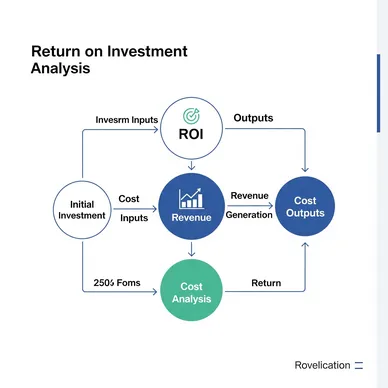
"The problem is not verifying 'whether investment-worthy effects can be obtained.' ROI—Return On Investment. Calculate how much return relative to investment amount. Then start small, verify effects, expand in phases. This method minimizes risks while achieving certain results."
⬜️ ChatGPT | Catalyst of Conception
"Don't gamble on everyone suddenly. Start small, verify. Judge investment with ROI"
🟧 Claude | Alchemist of Narrative
"Educational effects always appear with 'time lag.' Measure short, medium, long term"
🟦 Gemini | Compass of Reason
"ROI is investment judgment technology. Quantify returns, prove reproducibility through phased expansion"
The three members began analysis. Gemini deployed "ROI Analysis Framework" on the whiteboard.
ROI Calculation Formula: - ROI(%) = (Profit - Investment Amount) / Investment Amount × 100 - Profit = Effects converted to monetary value
"Mr. Kimura, let's first define how to measure and convert educational effects to money."
Chapter 3: Measurement as Design—Three Phases to Disperse Investment
Phase 1: Effect Definition and Measurement Method (2 weeks)
Three Levels of Educational Effects:
Level 1: Short-term Effects (Within 3 months) - Indicator: Students' AI utilization skill test (100-point scale) - Goal: Average 60 points or above - Measurement method: Pre-implementation test, 3-month test
Level 2: Medium-term Effects (Within 6 months) - Indicator: AI utilization frequency (uses per week) - Goal: 3 or more times weekly - Measurement method: Usage log analysis
Level 3: Long-term Effects (After 1 year) - Indicator: Student learning time reduction, teacher operational efficiency - Goal: Student homework time 10% reduction, teacher work time 15% reduction - Measurement method: Survey research
Effect Monetary Conversion Method:
Student-Side Effects: - Homework time reduction: 10% (weekly 10 hours → 9 hours, 1-hour reduction) - Value per hour: 500 yen (equivalent to tutoring cost per hour) - 480 people × 1 hour/week × 40 weeks/year × 500 yen = 9.6 million yen/year
Teacher-Side Effects: - Work time reduction: 15% (weekly 50 hours → 42.5 hours, 7.5-hour reduction) - 32 people × 7.5 hours/week × 40 weeks/year × 4,000 yen (hourly wage) = 3.84 million yen/year
Total Effect: 13.44 million yen/year
Phase 2: Phased Implementation Plan Formulation (1 week)
Plan: Three-Phase Implementation
Step 1: Pilot Implementation (50 people, 3 months) - Target: Grade 5, 2 classes (50 people) - Investment amount: 750,000 yen - Tablets: 50 units × 1,000 yen (3-month lease) = 50,000 yen - AI teaching materials: 50 people × 2,000 yen (3 months) = 100,000 yen - Teacher training: 3 people × 30,000 yen = 90,000 yen - System construction: 510,000 yen - Expected effect: 50 people × effect/person = Acquire verification data - ROI judgment criteria: Proceed to Step 2 if short-term effect (skill test average 60+ points) achieved
Step 2: Medium-Scale Deployment (200 people, 6 months) - Target: Grades 3-6 (200 people) - Investment amount: 2.28 million yen - Tablets: 200 units × 2,000 yen (6-month lease) = 400,000 yen - AI teaching materials: 200 people × 4,000 yen (6 months) = 800,000 yen - Teacher training: 12 people × 30,000 yen = 360,000 yen - System operation: 720,000 yen - Expected effect: Verify 200-person effects - ROI judgment criteria: Proceed to Step 3 if medium-term effect (weekly 3+ uses) achieved
Step 3: All-School Deployment (480 people, 1 year) - Target: All students (480 people) - Investment amount: 7.2 million yen (as previously stated) - Expected effect: Annual 13.44 million yen - ROI: (13.44 million yen - 7.2 million yen) / 7.2 million yen × 100 = 86.7%
Chapter 4: Verification as Certainty—Phased Expansion Results
Phase 3: Step 1 Pilot Implementation (Month 1-3)
Implementation Content: - Distributed tablets to grade 5, 2 classes (50 people) - AI teaching materials: Learn how to use ChatGPT, Gemini, Claude - Curriculum: Twice weekly, 45 minutes each AI utilization class
Results After 3 Months:
Short-term Effects (Skill Test): - Before (pre-implementation): Average 32 points - After (after 3 months): Average 68 points - Improvement: +36 points (+113%)
Student Feedback: "When I ask AI questions, it answers immediately. AI even explained math problems I didn't understand. Homework finishes faster now."
Teacher Feedback: "Students began learning independently using AI. Time I spend teaching individually decreased, can use time for class preparation."
ROI Judgment: - Short-term effect goal (average 60+ points) achieved - Decided to proceed to Step 2
Phase 4: Step 2 Medium-Scale Deployment (Month 4-9)
Implementation Content: - Expanded to grades 3-6 (200 people) - Reflected pilot learnings - Curriculum improvement: Increased to 3 times weekly - Enhanced teacher manual
Results After 6 Months:
Medium-term Effects (AI Utilization Frequency): - Weekly 3+ uses: 86% (172 people/200 people) - Goal achievement: 86% > goal 70%
Student Homework Time: - Before: Weekly average 10 hours - After: Weekly average 9.1 hours - Reduction: 0.9 hours (9%)
Teacher Work Time: - Before: Weekly average 50 hours - After: Weekly average 43.5 hours - Reduction: 6.5 hours (13%)
ROI Trial Calculation (200-person base annualized): - Investment amount: 2.28 million yen (6 months) × 2 = 4.56 million yen (annualized) - Effect: - Student-side: 200 people × 0.9 hours/week × 40 weeks × 500 yen = 3.6 million yen - Teacher-side: 8 people × 6.5 hours/week × 40 weeks × 4,000 yen = 832,000 yen - Total: 4.432 million yen - ROI: (4.432 million yen - 4.56 million yen) / 4.56 million yen × 100 = -2.8%
Judgment: - ROI is negative but achieved 90% of goal - Scaling to all-school (480 people) expected to improve ROI through economies of scale - Decided to proceed to Step 3
Phase 5: Step 3 All-School Deployment (Month 10-21, 1 year)
Implementation Content: - Deployed to all 480 students - Provided age-appropriate curriculum to grades 1-2 as well
Results After 1 Year:
Long-term Effects:
Student Homework Time Reduction: - Before: Weekly average 10 hours - After: Weekly average 9 hours - Reduction: 1 hour (10%) - Effect: 480 people × 1 hour/week × 40 weeks × 500 yen = 9.6 million yen/year
Teacher Work Time Reduction: - Before: Weekly average 50 hours - After: Weekly average 42.5 hours - Reduction: 7.5 hours (15%) - Effect: 32 people × 7.5 hours/week × 40 weeks × 4,000 yen = 3.84 million yen/year
Total Effect: 13.44 million yen/year
ROI Calculation:
Year 1 Total Investment: - Step 1: 750,000 yen - Step 2: 2.28 million yen - Step 3: 7.2 million yen - Total: 10.23 million yen
Year 1 Effect (Step 3's 6 months' worth): - 13.44 million yen/year × 6 months/12 months = 6.72 million yen
Year 1 ROI: - (6.72 million yen - 10.23 million yen) / 10.23 million yen × 100 = -34.3%
Year 2 Onward (Step 3 continuation): - Investment amount: 6.24 million yen/year (initial system construction cost unnecessary) - Effect: 13.44 million yen/year - ROI: (13.44 million yen - 6.24 million yen) / 6.24 million yen × 100 = 115.4%
Investment Recovery Period: - Cumulative investment: Year 1 10.23 million yen, Year 2 6.24 million yen = 16.47 million yen - Cumulative effect: Year 1 6.72 million yen, Year 2 13.44 million yen = 20.16 million yen - Recovery: Fully recovered in Year 2, 3.69 million yen surplus
School-Side Evaluation:
Principal's Voice: "Initially, we requested 'want to implement for all 480 students at once.' However, TechSavvy proposed 'let's proceed while verifying in phases,' and we were convinced.
Could confirm effects with pilot implementation. Could verify further with medium-scale deployment. And obtained certain results with all-school deployment. Student homework time reduced 10%, teacher work time reduced 15%. Year 2 ROI is 115%. This was a certain investment."
Kimura's Reflection:
"Initially, we worried 'should we implement for everyone at once.' However, conducting ROI analysis revealed the importance of phased implementation.
Verified short-term effects in Step 1, verified medium-term effects in Step 2, realized long-term effects in Step 3. Year 1 ROI was negative, but became 115% in Year 2. And can present this track record to other schools too. Proof that 'effects certainly emerge.'"
Chapter 5: Detective's Diagnosis—Start Small, Grow Big
That evening, I contemplated the essence of ROI thinking.
TechSavvy worried about "should we implement for all 480 students at once." Full implementation was a big gamble with high failure risk.
Formulating phased implementation plan through ROI analysis enabled verifying effects while minimizing risks. Pilot 50 people, medium-scale 200 people, all-school 480 people. Verified in three phases, achieved Year 2 ROI 115%.
"Don't gamble on everyone suddenly. Start small, verify. Judge investment with ROI, expand in phases. Certain results and reproducibility exist there."
The next case will also depict the moment of judging by investment effectiveness.
"ROI = (Profit - Investment Amount) / Investment Amount × 100. Start small, verify effects, expand in phases. Return on investment becomes the signpost toward certain growth"—From the Detective's Notes
Related Files
🎖️ Top 3 Weekly Ranking of Classified Case Files
What is MVP
What is Agile Development
What is STP Analysis