ROI Case File No.363 | 'Meditech's One-Handed Meeting Minutes'
📅 2025-12-24 23:00
🕒 Reading time: 11 min
🏷️ VRIO

- Chapter 1: Recording With One Hand Occupied — The Quagmire of "He Said, She Said"
- Chapter 2: AI Meeting Minute Tools as an Option — Does It Really Have Competitive Advantage?
- Chapter 3: Phase 1 — Evaluating Tools Through VRIO
- Chapter 4: Phase 2 — Implementing Medical-Specialized AI Meeting Minute Tool
- Chapter 5: Detective's Diagnosis — Discovering Competitive Advantage Through VRIO
- Related Files
Chapter 1: Recording With One Hand Occupied — The Quagmire of "He Said, She Said"
The day after resolving VirtuShoes' RFM case, a consultation arrived regarding meeting minute creation in medical settings. Volume 29, "The Pursuit of Reproducibility," Case 363 tells the story of discovering true value through competitive advantage.
"Detective, our nurses take meeting minutes with one hand occupied. They take notes while talking to doctors on PHS. They receive instructions during patient care and take handwritten notes. Omissions occur in content, and 'he said, she said' troubles arise. And we spend 480 hours per month creating meeting minutes."
Kentaro Tanaka, Operational Improvement Director of Meditech, a Yokohama native, visited 221B Baker Street with an exhausted expression. In his hands, he held copies of hastily handwritten nursing records, contrasting sharply with the latest AI meeting minute tool proposal document titled "AI Transcription Tool Proposal 2025."
"We provide IT systems for hospitals. 120 employees. Annual revenue of 3.5 billion yen. However, meeting minute problems at our client hospitals have become serious."
Meditech's Current State: - Founded: 2008 (Medical IT system development) - Employees: 120 - Annual Revenue: 3.5 billion yen - Clients: 8 general hospitals, 22 clinics - Issues: Nurse meeting minute creation work hours, recording accuracy, hands-free support
Deep crisis resonated in Tanaka's voice.
"At client Hospital A (450 beds, 280 nurses), the following meeting minute creation occurs. First, phone communication with doctors. They receive patient care instructions from doctors via PHS. They hold the PHS with one hand and take notes with the other. However, during patient care, both hands are occupied and notes cannot be taken. Relying on memory causes omissions."
Meeting Minute Creation Reality:
Case 1: Phone Communication With Doctors (PHS Use) - Frequency: 8 times/day per nurse - Call duration: Average 3 min/call - Note creation time: 5 min after call/call - Clean copy time: 10 min after shift/call - Total time: 18 min/call - 280 nurses × 8 calls/day × 18 min = 672 hours/day - Monthly (22 working days): 14,784 hours/month
Case 2: Hospital Internal Meetings (Once Weekly) - Participants: 20 department representatives - Meeting time: 2 hours/meeting - Meeting minute creator: 1 person - Meeting minute creation time: 4 hours after meeting - Clean copy and confirmation: 2 hours - Total time: 8 hours/meeting - Monthly (4 meetings): 32 hours/month
Case 3: Patient Family Interview Records - Frequency: 10 cases/day - Interview time: Average 30 min/case - Record creation time: 20 min after interview/case - Total time: 50 min/case - Monthly (22 working days): 10 cases × 22 days × 50 min = 183 hours/month
Total Monthly Meeting Minute Creation Time: - 14,784 hours + 32 hours + 183 hours = 14,999 hours/month - Approximately 15,000 hours/month (1,875 days/month, 8-hour conversion)
Tanaka sighed deeply.
"There are additional problems. Recording accuracy. Handwritten notes are sometimes illegible due to hasty writing. Doctors sometimes say 'I never gave that instruction.' 'He said, she said' troubles occur 5 times per month. And nurses request 'a hands-free recording tool.'"
Chapter 2: AI Meeting Minute Tools as an Option — Does It Really Have Competitive Advantage?
"Mr. Tanaka, do you believe implementing AI meeting minute tools will solve all problems?"
Tanaka answered my question immediately.
"Yes, that's our expectation. Many AI meeting minute tools exist in the market. However, we don't know which to choose. And we're uncertain whether they truly have competitive advantage."
Current Understanding (Tool Implementation Model): - Expectation: AI meeting minute tools solve everything at once - Problem: Tool's competitive advantage remains unclear
I explained the importance of evaluating competitive advantage.
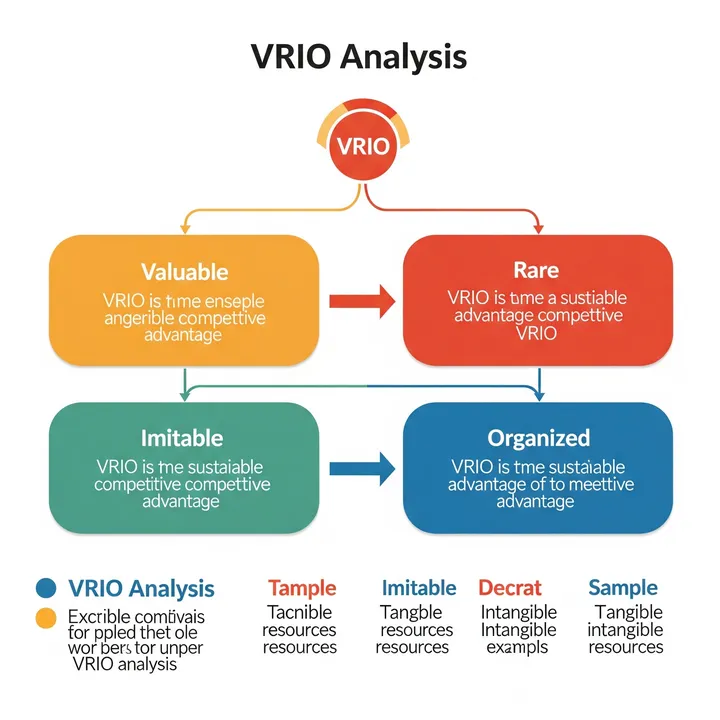
"The problem is the idea that 'implementing AI meeting minute tools is the end.' VRIO—Value, Rarity, Imitability, Organization. We evaluate tools' competitive advantage from these four perspectives. And by selecting truly valuable tools, we achieve reproducible operational improvement."
⬜️ ChatGPT | Catalyst of Conception
"Don't implement tools blindly. Evaluate competitive advantage through VRIO and select truly valuable ones"
🟧 Claude | Alchemist of Narrative
"Meeting minutes are always 'records of truth.' Their accuracy supports medical quality"
🟦 Gemini | Compass of Reason
"Evaluate through VRIO. Value, Rarity, Imitability, Organization. What satisfies all four has true competitive advantage"
The three members began analysis. Gemini developed the "VRIO Framework" on the whiteboard.
VRIO's Four Elements: 1. Value: Does it generate economic value? 2. Rarity: Is it a rare resource? 3. Imitability: Is imitation difficult? 4. Organization: Can the organization utilize it?
"Mr. Tanaka, let's first evaluate market AI meeting minute tools through VRIO."
Chapter 3: Phase 1 — Evaluating Tools Through VRIO
Step 1: List Candidate Tools (1 week)
Candidate 1: General AI Meeting Minute Tool A - Price: 1,500 yen/month per user - Functions: Automatic voice transcription, summary generation, search function - Supported languages: Japanese, English - Hands-free: Possible with smartphone app
Candidate 2: General AI Meeting Minute Tool B - Price: 2,800 yen/month per user - Functions: Automatic voice transcription, speaker separation, tagging - Supported languages: Japanese only - Hands-free: Smartphone and wearable device support
Candidate 3: Medical-Specialized AI Meeting Minute Tool C - Price: 4,500 yen/month per user - Functions: Medical terminology dictionary, medical chart integration, 98% voice recognition accuracy - Supported languages: Japanese (medical terminology specialized) - Hands-free: Smartphone and dedicated earphone support - Security: Compliant with medical information handling regulations
Step 2: Evaluation Through VRIO Framework (2 weeks)
Candidate 1: General AI Meeting Minute Tool A
V (Value): Value → ○ - Can reduce meeting minute creation time by 50% - Cost reduction effect: 420,000 yen/month (280 people × 1,500 yen) - Annual effect: Labor cost reduction through work hour reduction approximately 9 million yen/year
R (Rarity): Rarity → × - Many similar tools exist in market - No differentiation elements
I (Imitability): Imitability → × - Technically easy to imitate - Many competing tools
O (Organization): Organization → △ - Depends on nurses' IT literacy - Low medical terminology recognition accuracy (85%) - No integration with medical chart system
VRIO Determination: Competitive Disadvantage (Temporary value only)
Candidate 2: General AI Meeting Minute Tool B
V (Value): Value → ○ - Can reduce meeting minute creation time by 60% - Cost reduction effect: 780,000 yen/month (280 people × 2,800 yen) - Annual effect: Labor cost reduction through work hour reduction approximately 12 million yen/year
R (Rarity): Rarity → △ - Wearable device support is rare - However, similar functions exist in market
I (Imitability): Imitability → × - Technically imitable - No patents
O (Organization): Organization → △ - Additional purchase of wearable devices required (20,000 yen per unit) - Low medical terminology recognition accuracy (82%) - No integration with medical chart system
VRIO Determination: Competitive Parity (Has value and rarity, no imitability)
Candidate 3: Medical-Specialized AI Meeting Minute Tool C
V (Value): Value → ◎ - Can reduce meeting minute creation time by 75% - Medical terminology recognition accuracy 98% (general tools 85%) - Cost reduction effect: 1.26 million yen/month (280 people × 4,500 yen) - Annual effect: Labor cost reduction through work hour reduction approximately 18 million yen/year - Reduces "he said, she said" troubles through improved recording accuracy
R (Rarity): Rarity → ◎ - Only 2 companies in market have medical-specialized AI meeting minute tools - Equipped with 100,000-word medical terminology dictionary (industry's largest)
I (Imitability): Imitability → ◎ - 5 years of R&D to build medical terminology dictionary - Learning data accumulated through partnerships with 450 medical institutions - Proprietary development of medical chart system integration API (patent acquired) - Certification compliant with medical information handling regulations (2 years to acquire)
O (Organization): Organization → ◎ - Integration possible with existing medical chart system - Training program for nurses provided (2 hours) - Free dedicated earphones provided - 24-hour support system
VRIO Determination: Sustainable Competitive Advantage (Satisfies all 4 elements)
VRIO Matrix Results:
| Tool | V | R | I | O | Determination |
|---|---|---|---|---|---|
| General A | ○ | × | × | △ | Competitive Disadvantage |
| General B | ○ | △ | × | △ | Competitive Parity |
| Medical-Specialized C | ◎ | ◎ | ◎ | ◎ | Sustainable Competitive Advantage |
"Mr. Tanaka, Medical-Specialized AI Meeting Minute Tool C satisfies all four VRIO elements. Let's implement this."
Chapter 4: Phase 2 — Implementing Medical-Specialized AI Meeting Minute Tool
Month 1: Implementation Preparation
Tool Selection Decision: - Adopt Medical-Specialized AI Meeting Minute Tool C - Contract: 280 people - Monthly fee: 1.26 million yen - Initial implementation cost: 1.8 million yen (medical chart system integration API development)
Implementation Scope: - Phase 1: Trial in Nursing Department Ward 1 (50 people) - Phase 2: Expansion to all wards (280 people)
Training Plan: - Nurse operation training: 2 hours/session - Doctor briefing: 1 hour
Month 2-3: Phase 1 Trial (1 Ward, 50 People)
Implementation Flow:
Step 1: Distribution of Dedicated Earphones - Bluetooth connection, hands-free support - Patient care possible while wearing
Step 2: Medical Chart System Integration - API integration between AI meeting minute tool and medical chart system - Voice-recognized content automatically recorded in medical chart
Step 3: Medical Terminology Dictionary Customization - Register Hospital A's unique abbreviations and specialized terms - Example: "HR" → "Heart Rate," "SpO2" → "Oxygen Saturation"
Step 4: Implement Training - 2-hour operation training for 50 nurses - Simulate actual PHS calls
Month 4: Phase 1 Effect Measurement
KPI 1: Meeting Minute Creation Time (1 Ward, 50 People) - Before: 14,784 hours/month ÷ 5.6 wards = 2,640 hours/month/ward - After: 660 hours/month/ward (75% reduction) - Time saved: 1,980 hours/month/ward
KPI 2: Medical Terminology Recognition Accuracy - Before: Handwritten notes, illegibility rate 15% - After: AI recognition accuracy 98% - Improvement: +83 points
KPI 3: "He Said, She Said" Troubles - Before: 5 cases/month (entire hospital) → 0.9 cases/month per ward - After: 0 cases/month (voice recording serves as evidence) - Reduction: 100%
Nurse's Voice: "Previously, while talking to doctors on PHS, I took notes with one hand. During patient care, I couldn't take notes and relied on memory. But now, just by wearing earphones, all conversations are recorded. Automatically reflected in medical charts too. Clean copy work after shifts is no longer necessary."
Month 5-6: Phase 2 Full Expansion (All Wards, 280 People)
Rollout to All Wards: - Expand to remaining 5.6 wards (230 people) - Training: 230 people × 2 hours
Month 7: Overall Effect Measurement
KPI 1: Meeting Minute Creation Time (All Wards, 280 People) - Before: 14,784 hours/month - After: 3,696 hours/month (75% reduction) - Time saved: 11,088 hours/month
KPI 2: Hospital Internal Meeting Minutes - Before: 6 hours after meeting (4 hours minute creation + 2 hours clean copy) - After: 1 hour after meeting (AI automatic summary, confirmation only) - Time saved: 5 hours/meeting × 4 meetings/month = 20 hours/month
KPI 3: Patient Family Interview Records - Before: 20 min after interview/case × 10 cases/day × 22 days = 73 hours/month - After: 5 min after interview/case × 10 cases/day × 22 days = 18 hours/month - Time saved: 55 hours/month
Total Monthly Time Saved: - 11,088 hours + 20 hours + 55 hours = 11,163 hours/month
Annual Effects:
Labor Cost Reduction: - 11,163 hours/month × 12 months = 133,956 hours/year - 133,956 hours × 3,200 yen (nurse hourly wage) = 428.66 million yen/year
"He Said, She Said" Trouble Response Cost Reduction: - Before: 5 cases/month × 8 hours response time/case × 3,200 yen = 128,000 yen/month - After: 0 cases/month = 0 yen/month - Annual reduction: 128,000 yen × 12 months = 1.54 million yen/year
Total Annual Effect: - 428.66 million + 1.54 million = 430.2 million yen/year
Investment: - Initial implementation cost: 1.8 million yen - Monthly fee: 1.26 million yen × 12 months = 15.12 million yen/year
ROI: - (430.2 million - 16.92 million) / 16.92 million × 100 = 2,443% - Payback period: 16.92 million ÷ 430.2 million = 0.04 years (14 days)
Chapter 5: Detective's Diagnosis — Discovering Competitive Advantage Through VRIO
That night, I contemplated the essence of VRIO.
Meditech held the simple idea that "implementing AI meeting minute tools is the end." However, many tools exist in the market, and not all possess the same value.
By evaluating through VRIO framework, tools with true competitive advantage became clear. Medical-Specialized AI Meeting Minute Tool C satisfies all four elements: Value, Rarity, Imitability, and Organization.
Medical terminology recognition accuracy 98%, 100,000-word medical terminology dictionary, medical chart system integration API, compliance with medical information handling regulations. These are imitation-difficult resources built through 5 years of R&D and partnerships with 450 medical institutions.
Implementation achieved 75% reduction in meeting minute creation time (14,784 hours → 3,696 hours), annual reduction effect of 430.2 million yen, ROI 2,443%, payback period 14 days.
"Don't implement tools blindly. Evaluate competitive advantage through VRIO. What satisfies all four elements—Value, Rarity, Imitability, Organization—has true competitive advantage. Tools with sustainable competitive advantage achieve reproducible operational improvement."
The next case will also depict the moment of discovering true value through competitive advantage.
"VRIO—Value, Rarity, Imitability, Organization. Evaluate competitive advantage from four perspectives. What satisfies all generates sustainable competitive advantage"—From the Detective's Notes
Related Files
🎖️ Top 3 Weekly Ranking of Case Files

'PharmaLogistics' Invisible Customer'
'Bravura Retail's Paper Culture: A 2025 Relic'
'UrbanDesign's Blueprint Labyrinth'