ROI Case File No.374 | 'Globex Inc.'s HR Inquiry Trap of Knowledge Dependency'
📅 2026-01-04 23:00
🕒 Reading time: 10 min
🏷️ LOGIC

- Chapter 1: Single Point of Concentration with Two Staff—Collapse Triggered by Resignation
- Chapter 2: The Leap to AI Chatbot Implementation—Problem Structure Is Invisible
- Chapter 3: Phase 1—Identifying Root Causes with LOGIC Trees
- Chapter 4: Phase 2—Ensuring Reproducibility Through Phased Implementation
- Chapter 5: Detective's Diagnosis—Structuring Problems Through Logical Thinking
- Related Files
Chapter 1: Single Point of Concentration with Two Staff—Collapse Triggered by Resignation
The day after resolving WonderWorks Inc.'s LEAN case, a consultation arrived regarding HR inquiry response efficiency. Volume 30, "The Pursuit of Reproducibility," Case 374 tells the story of structuring problems through logical thinking.
"Detective, our HR department is on the brink of collapse. Two people handle inquiry responses: Yamada-san and Suzuki-san. However, Yamada-san will resign in 3 months. And Suzuki-san is going on maternity leave. We receive 450 inquiries monthly. Average 15 minutes per inquiry. 112 hours per month. But we have no successors."
Misaki Takahashi, HR Director of Globex Inc. from Shinagawa, visited 221B Baker Street with an expression full of crisis. In her hands were an Excel file recording 3 years of inquiry history, and in stark contrast, a simple proposal titled "AI Chatbot Implementation Proposal 2026."
"We are a general trading company. 1,200 employees. Annual revenue of 35 billion yen. But the HR department has only 8 people. Two of them are dedicated to inquiry response. Or more accurately, they 'have become' dedicated."
Globex Inc.'s Current State: - Founded: 1985 (general trading company) - Employees: 1,200 - Annual revenue: 35B yen - HR department: 8 people (2 dedicated to inquiry response) - Issues: Knowledge dependency, workload burden, difficult succession, impossible knowledge transfer
Deep anxiety permeated Takahashi's voice.
"The inquiry breakdown is as follows: Salary/bonuses: 120/month (26%), Social insurance/pensions: 90/month (20%), Leave/attendance: 80/month (18%), HR transfers/placements: 60/month (13%), Welfare benefits: 50/month (11%), Other: 50/month (11%). Total 450 inquiries monthly."
Inquiry Response Reality:
Response Methods: - Phone: 280/month (62%) - In-person visits: 120/month (27%) - Email: 50/month (11%)
Response Time: - Simple questions (how to read pay stubs, etc.): 5 minutes - Medium questions (social insurance procedures, etc.): 15 minutes - Complex questions (HR system details, etc.): 30 minutes Average response time: 15 minutes/inquiry
Monthly Response Effort: - 450 inquiries × 15 minutes = 6,750 minutes (112 hours) - Shared by 2 people: 56 hours each/month - Annual response effort: 112 hours × 12 months = 1,344 hours
Knowledge Dependency Reality:
Yamada-san (15 years tenure): - Specialty: Social insurance, pensions, welfare benefits - Knowledge: 15 years of accumulation, remembers all system change history - Inquiry response: 250/month (55%)
Suzuki-san (8 years tenure): - Specialty: Salary, bonuses, attendance - Knowledge: 8 years of accumulation, expert in salary calculation details - Inquiry response: 200/month (45%)
Takahashi sighed deeply.
"There's another problem. Knowledge is not documented. Yamada-san and Suzuki-san have everything in their heads. Decision criteria like 'in this case, do this,' past cases—everything depends on memory. And both will be absent in 3 months. The remaining 6 people have no inquiry response experience. We're considering an AI chatbot, but we don't understand the cost-effectiveness."
Chapter 2: The Leap to AI Chatbot Implementation—Problem Structure Is Invisible
"Takahashi-san, do you believe implementing an AI chatbot will solve all problems?"
My question left Takahashi looking confused.
"Isn't that the case? I thought if AI answers questions, we won't need human resources."
Current Understanding (AI Implementation Approach): - Expectation: Solve everything at once with AI - Problem: Problem structure is invisible
I explained the importance of structuring problems through logical thinking.
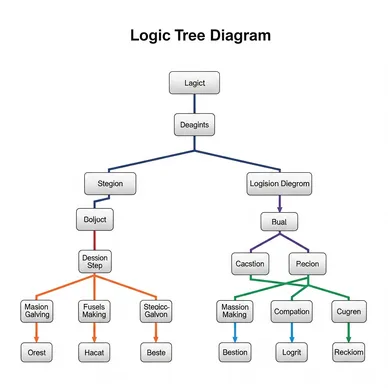
"The problem is thinking 'an AI chatbot will solve it.' LOGIC Tree—a thinking method that logically decomposes problems to identify root causes. By drilling down 'Why is inquiry response knowledge-dependent?' we can see the true solution."
⬜️ ChatGPT | Catalyst of Concepts
"Don't implement AI. First decompose the problem with LOGIC Trees and identify root causes"
🟧 Claude | Story Alchemist
"Problems are always 'root causes hidden beneath superficial symptoms.' Drilling down is essential"
🟦 Gemini | Compass of Reason
"Repeat Why Tree (5 Whys analysis) 5 times. Root causes become visible"
The three members began their analysis. Gemini displayed "LOGIC Tree" on the whiteboard.
Types of LOGIC Trees: 1. Why Tree (Root cause investigation): Identify problem root causes 2. How Tree (Solution development): Deploy solutions 3. What Tree (Element decomposition): Decompose components
"Takahashi-san, let's first analyze 'Why is inquiry response knowledge-dependent?'"
Chapter 3: Phase 1—Identifying Root Causes with LOGIC Trees
Step 1: Why Tree (5 Whys Analysis) (1 week)
Problem: HR inquiry response is knowledge-dependent
Why 1: Why is it knowledge-dependent? → Answer: Because only Yamada-san and Suzuki-san have the knowledge
Why 2: Why do only these 2 people have knowledge? → Answer: Because knowledge is not documented
Why 3: Why is knowledge not documented? → Answer A: No time to document due to inquiry response workload → Answer B: Even if documented, becomes obsolete without updates → Answer C: Benefits of documentation unclear
Why 4A: Why overwhelmed by inquiry response? → Answer: Same questions repeat (not FAQ-ified)
Why 4B: Why do documents become obsolete without updates? → Answer: No document update process during system changes
Why 4C: Why are documentation benefits unclear? → Answer: Even with documents, employees can't find or don't read them
Why 5: Why can't employees find/read documents? → Answer: Poor searchability, unknown document locations, difficult-to-read documents
Root Cause Identification:
Root Cause 1: Not FAQ-ified (same questions repeat) - Of 450 monthly inquiries, approximately 70% (315) are previously answered questions - But not FAQ-ified, so humans respond every time
Root Cause 2: No knowledge base exists (not documented) - Knowledge exists only in Yamada-san and Suzuki-san's heads - No time or process for documentation
Root Cause 3: Poor searchability (can't find documents even when they exist) - Some past documents created in Word (approximately 80 files) - But scattered in shared folders, inconsistent file names - Employees "don't know where things are" so they contact HR
Step 2: How Tree (Solution Development) (1 week)
Countermeasure for Root Cause 1: FAQ-ification → AI Chatbot Implementation - Auto-generate FAQs from past inquiry records - AI chatbot provides automatic responses 24/7/365
Countermeasure for Root Cause 2: Knowledge Base Construction → Knowledge Base System - Systematically document Yamada-san and Suzuki-san's knowledge - Establish update flow during system changes
Countermeasure for Root Cause 3: Improve Searchability → Semantic Search - Natural language search with AI ("When can I take maternity leave?" displays relevant documents) - Improve discoverability with tags and category classification
Step 3: Determine Implementation Scope with What Tree (Element Decomposition) (1 week)
AI Chatbot Components:
Component 1: Automatic FAQ Generation - Analyze past 3 years of inquiry records (Excel 1,350 rows) - Extract Top 100 frequent questions - Generate answer text with GPT-4
Component 2: Knowledge Base Construction - Interviews with Yamada-san and Suzuki-san (8 hours each) - Integrate 80 existing Word documents into knowledge base - Category classification: Salary, Social Insurance, Leave, HR Transfers, Welfare, Other
Component 3: AI Chatbot Development - Platform: Microsoft Bot Framework + Azure OpenAI - UI: Slack integration (used company-wide) - Functions: Natural language questions, semantic search, similar question suggestions
Component 4: Human Escalation - Questions AI cannot answer escalate to HR - Escalation conditions: Confidence score below 70%, or explicitly states "want to talk to HR"
Chapter 4: Phase 2—Ensuring Reproducibility Through Phased Implementation
Months 1-2: Automatic FAQ Generation + Knowledge Base Construction
Automatic FAQ Generation: 1. Analyze past 3 years of inquiry Excel 2. Extract Top 100 frequent questions (covers 85% overall) 3. Input each question to GPT-4, generate answer text 4. Yamada-san and Suzuki-san proofread answers (20 hours each)
Top 5 Frequent Questions: 1. "How do I read my pay stub?" (35/month) 2. "I want to check my paid leave balance" (28/month) 3. "What are the conditions for social insurance dependent coverage?" (25/month) 4. "How do I apply for commuting allowance?" (22/month) 5. "When can I take maternity/childcare leave?" (20/month)
Knowledge Base Construction: - Categories: 6 classifications (Salary, Social Insurance, Leave, HR Transfers, Welfare, Other) - Documents: 180 files (existing 80 + new 100) - Total characters: Approximately 450,000
Months 3-4: AI Chatbot Development
Architecture:
[Employee asks question in Slack] ↓ [Azure Bot Service] ↓ [Azure OpenAI GPT-4 (RAG)] ↓ Semantic search [Knowledge Base (Azure Cognitive Search)] ↓ [Answer generation + confidence score calculation] ↓ [Confidence 70%+ → Answer in Slack] [Confidence <70% → Escalate to HR]
Feature Implementation: - Natural language question support (colloquial expressions like "when's payday?" accepted) - Similar question suggestions ("Is this your question?" confirmation) - Feedback collection (👍👎 buttons to evaluate answer quality)
Month 5: Pilot Operation (Sales Department 100 people)
KPI Measurement:
KPI 1: Answer Success Rate - Total questions: 250 (100 sales staff × 2.5 questions/person) - AI answer success (confidence 70%+): 213 (85%) - HR escalation: 37 (15%)
KPI 2: Response Time - AI response: Average 8 seconds - Human response (traditional): Average 15 minutes - Reduction rate: 99%
KPI 3: Employee Satisfaction - Survey conducted (92 respondents) - "Satisfied": 78 (85%) - "Neutral": 12 (13%) - "Dissatisfied": 2 (2%)
Feedback: - 👍 (Helpful): 189 (89%) - 👎 (Not helpful): 24 (11%)
Month 6: Company-wide Deployment (1,200 people)
Post-Deployment Results:
KPI 1: Inquiry Reduction - Before: 450/month (all human response) - After: 90/month (AI handles 360, humans only 90) - Reduction rate: 80%
KPI 2: Response Effort Reduction - Before: 112 hours/month - After: 22 hours/month (90 inquiries × 15 minutes = 22.5 hours) - Reduction rate: 80% - Time saved: 90 hours/month
KPI 3: Answer Quality Improvement - AI answer consistency: 100% (human answers vary by staff) - 24/7/365 availability (traditional: business hours only)
Annual Effects:
Personnel Cost Reduction: - Time saved: 90 hours/month × 12 months = 1,080 hours/year - Cost reduction: 1,080 hours × 3,800 yen = 4.1M yen/year
Knowledge Dependency Risk Resolution Effects: - Cost reduction from Yamada-san's resignation handover: Estimated 2M yen - Substitute personnel cost reduction during Suzuki-san's maternity leave: Estimated 1.8M yen
Employee Productivity Improvement: - Traditional: Inquiry → Wait for response (average 2 hours) - Improved: AI instant answer (8 seconds) - Productivity improvement from reduced wait time: Estimated 3M yen/year
Total Annual Effects: - 4.1M + 2M + 1.8M + 3M = 10.9M yen/year
Investment: - Automatic FAQ generation: 500K yen - Knowledge base construction: 1.2M yen - AI chatbot development: 2.8M yen - Total initial investment: 4.5M yen - Annual Azure costs: 600K yen
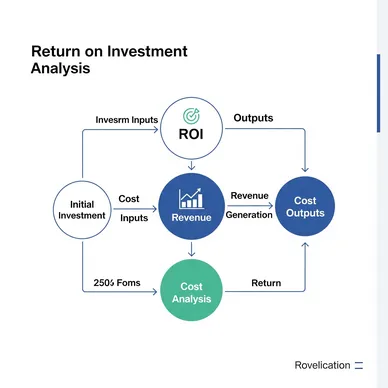
ROI: - (10.9M - 0.6M) / 4.5M × 100 = 229% - Payback period: 4.5M ÷ 10.3M = 0.44 years (5.2 months)
Chapter 5: Detective's Diagnosis—Structuring Problems Through Logical Thinking
That evening, I contemplated the essence of LOGIC Trees.
Globex Inc. had the leap of thinking "an AI chatbot will solve it." However, repeating "Why" 5 times with a Why Tree revealed root causes.
Root Cause 1: Not FAQ-ified (same questions repeat) Root Cause 2: No knowledge base exists (not documented) Root Cause 3: Poor searchability (can't find documents even when they exist)
We deployed solutions with a How Tree and determined implementation scope with a What Tree. The AI chatbot is one solution; true effectiveness emerges when combined with knowledge base construction and semantic search.
What's important is that we logically decomposed the problem structure. Because we identified root causes (not FAQ-ified, no knowledge base, poor searchability) rather than superficial symptoms (many inquiries), we could design reproducible solutions.
Annual effect of 10.3M yen, ROI of 229%, payback in 5.2 months. And inquiry response effort was reduced 80% (112 hours → 22 hours).
"Don't implement AI. First decompose the problem with LOGIC Trees. Why, How, What. By logically structuring and identifying root causes, reproducible solutions emerge."
The next case will also depict the moment of finding root causes through logical thinking.
"LOGIC Tree—Logically decompose problems. Why (root cause), How (solution), What (implementation scope). Through structuring, true solutions become visible"—From the Detective's Notes
Related Files
🎖️ Top 3 Weekly Ranking of Classified Case Files
What is ROI
What is the ECRS Principle

What is the RICE Framework