ROI Case File No.387 | 'Globex Corporation's Monthly 100 Cases Quagmire'
📅 2026-01-17 23:00
🕒 Reading time: 11 min
🏷️ ROI

- Chapter 1: Monthly 100 Cases Quagmire—The Despair of Subdivision Creation Taking 2 Days Per Case
- Chapter 2: The Illusion of AI Implementation—Return on Investment Not Visible
- Chapter 3: Phase 1—Determining Priorities with ROI Analysis
- Chapter 4: Phase 2—Ensuring Reproducibility Through Phased AI Implementation
- Chapter 5: The Detective's Diagnosis—Quantify Return on Investment, Prioritize
- Related Files
Chapter 1: Monthly 100 Cases Quagmire—The Despair of Subdivision Creation Taking 2 Days Per Case
The day after resolving TechWave's Agile incident, a new consultation arrived regarding AI utilization in the real estate industry. Volume 31, "The Pursuit of Reproducibility," Episode 387, tells the story of quantifying return on investment.
"Detective, we have a quagmire. Land subdivision creation. 100 cases monthly. 1-2 days per case. Simple calculation: 200 days of work. But we only have 22 working days per month. Five staff members. 22 days × 5 people = 110 days. We constantly carry twice the workload. Overtime, holiday work. Still can't keep up."
Hiroshi Tanabe, Land Development Manager at Globex Corporation from Shinjuku, visited 221B Baker Street with an exhausted expression. In his hands were complex subdivision CAD drawings, contrasting sharply with an ambitious plan titled "Digital Transformation Plan 2026-2028."
"We're a comprehensive developer. 850 employees. Annual revenue of 42 billion yen. Main business is residential land development. Annual 1,200 subdivision cases. But the land department is constantly on fire. Subdivision creation can't keep up. Cost calculation can't keep up. Everything is manual."
Globex Corporation's Current Situation: - Established: 1985 (comprehensive developer) - Employees: 850 - Annual Revenue: 42 billion yen - Main Business: Residential land development (1,200 cases annually) - Problem: Subdivision creation delays, cost calculation personnel dependency, manual work inefficiency
There was deep frustration in Tanabe's voice.
"The president's directive is clear: 'Streamline subdivision auto-generation and cost calculation with AI by summer 2026. It's the first phase of the digital mid-term plan.' But we have nothing. No AI knowledge. No system development experience. We don't know where to start."
Subdivision Creation Quagmire Reality:
Case 1: Residential Land A (1,200㎡, expected 10 lots) - Work process: 1. Site survey (regulations, road access, elevation): 2 hours 2. Subdivision pattern study (5-10 patterns): 4 hours 3. CAD drawing creation: 6 hours 4. Regulation check (building coverage ratio, floor area ratio): 2 hours 5. Cost calculation (development costs, infrastructure costs): 3 hours 6. Revenue simulation (sales price forecast): 1 hour - Total: 18 hours (2.25 days)
Case 2: Residential Land B (800㎡, expected 6 lots) - Similar process: 12 hours (1.5 days)
Monthly Reality: - Cases: 100 cases/month - Average work time: 1.5 days/case - Total work days: 150 days - Staff: 5 people - Work days per person: 30 days (exceeds 22 working days by 8 days)
Desperate Reality: - 30 days of work against 22 working days - Compensated with overtime: 60 hours overtime per person/month (8 days × 7.5 hours) - Still can't keep up, holiday work: 2 times/month
Cost Calculation Personnel Dependency Reality:
Case 1: Veteran Staff C (20 years tenure, 58 years old) - Cost calculation time: 3 hours per case - Accuracy: 95% (high accuracy from past experience and intuition) - Problem: Difficult to transfer knowledge (much tacit knowledge)
Case 2: Mid-level Staff D (5 years tenure, 32 years old) - Cost calculation time: 5 hours per case - Accuracy: 85% (inexperienced, estimates too optimistic) - Problem: Needs confirmation from veteran C (increases C's burden)
Case 3: New Staff E (1 year tenure, 26 years old) - Cost calculation time: 8 hours per case - Accuracy: 70% (many oversights) - Problem: Needs constant senior supervision
Cost Calculation Average: - 5 people average work time: (3h + 3h + 5h + 5h + 8h) ÷ 5 = 4.8 hours/case - Monthly 100 cases: 4.8 hours × 100 cases = 480 hours - 5 people monthly working hours: 7.5 hours × 22 days × 5 people = 825 hours - Cost calculation alone consumes 58% of working hours
Tanabe sighed deeply.
"There's another problem. We're planning long-term projects of 2-3 years. Phased development. But we don't know what to prioritize. Subdivision auto-generation or cost calculation. Which should we start with. And will it really work. We can't see the return on investment."
Chapter 2: The Illusion of AI Implementation—Return on Investment Not Visible
"Tanabe-san, do you think implementing AI will solve all problems?"
Tanabe showed a puzzled expression at my question.
"Huh, isn't that the case? I thought entrusting subdivision creation and cost calculation to AI would automate everything."
Current Understanding (AI Panacea Model): - Expectation: Full automation with AI implementation - Problem: Return on investment (ROI) not quantified
I explained the importance of quantifying return on investment with ROI Thinking.
"The problem is thinking 'implementing AI will solve it.' ROI Thinking—Return on Investment Thinking. By quantifying how much return is gained against investment amount and prioritizing, we achieve reproducible phased AI implementation."
⬜️ ChatGPT | Concept Catalyst
"Don't solve with AI implementation. Quantify return on investment with ROI Thinking."
🟧 Claude | Story Alchemist
"Investment is always 'numbers' not 'expectations.' The key is quantification."
🟦 Gemini | Compass of Reason
"Apply ROI analysis 3 steps: Calculate Current Cost, Estimate Savings, Calculate Payback."
The three members began their analysis. Gemini developed the "ROI Analysis Framework" on the whiteboard.
ROI Analysis 3 Steps: 1. Calculate Current Cost: How much does it cost now 2. Estimate Savings: How much can AI reduce 3. Calculate Payback: How many years to break even
"Tanabe-san, let's first accurately calculate current costs."
Chapter 3: Phase 1—Determining Priorities with ROI Analysis
Step 1: Calculate Current Cost (2 weeks)
Annual Cost of Subdivision Creation:
| Item | Value |
|---|---|
| Monthly cases | 100 cases |
| Annual cases | 1,200 cases |
| Work time per case | 18 hours (average) |
| Annual work time | 21,600 hours |
| Staff hourly rate | 4,000 yen (annual salary 7.2M yen ÷ 1,800 hours) |
| Annual personnel cost | 86.4 million yen |
Breakdown: - Regular work: 5 people × 7.5 hours × 22 days × 12 months = 9,900 hours - Overtime: 5 people × 60 hours × 12 months = 3,600 hours - Holiday work: 5 people × 2 days × 7.5 hours × 12 months = 900 hours - Total: 14,400 hours (actual subdivision work is 21,600 hours, so outsourcing also used)
Outsourcing Cost: - Shortage: 21,600 hours - 14,400 hours = 7,200 hours - Outsourcing unit price: 150,000 yen per case (average) - Outsourced cases: 7,200 hours ÷ 18 hours = 400 cases - Annual outsourcing cost: 60 million yen
Annual Total Cost of Subdivision Creation: - Personnel cost: 86.4 million yen - Outsourcing cost: 60 million yen - Total: 146.4 million yen/year
Annual Cost of Cost Calculation:
| Item | Value |
|---|---|
| Annual cases | 1,200 cases |
| Work time per case | 4.8 hours (average) |
| Annual work time | 5,760 hours |
| Staff hourly rate | 4,000 yen |
| Annual personnel cost | 23.04 million yen |
Loss from Accuracy Shortage: - Cost calculation error: Average 10% (estimates too optimistic) - Average cost per case: 20 million yen - Loss from error: 20 million yen × 10% = 2 million yen/case - Annual error occurrence: 120 cases (10% of total) - Annual loss: 240 million yen
Annual Total Cost of Cost Calculation: - Personnel cost: 23.04 million yen - Error loss: 240 million yen - Total: 263.04 million yen/year
Step 2: Estimate Savings (2 weeks)
Option 1: Subdivision Auto-generation AI Implementation
Expected Technology: - AI Model: GPT-4 + architectural CAD plugin - Training data: 2,000 subdivision drawings from past 5 years - Auto-generation accuracy: 85% (15% human review)
Savings: - Work time per case: 18 hours → 3 hours (AI auto-generates, humans review) - Reduction rate: 83% - Annual time saved: 21,600 hours × 83% = 17,928 hours - Personnel cost saved: 17,928 hours × 4,000 yen = 71.71 million yen/year - Outsourcing reduction: 400 cases → 50 cases (350 cases reduced) - Outsourcing cost saved: 350 cases × 150,000 yen = 52.5 million yen/year - Total savings: 124.21 million yen/year
Investment: - AI development cost: 20 million yen - Annual AI operation cost: 3 million yen
ROI: - (124.21 million yen - 3 million yen) / 20 million yen × 100 = 606% - Payback period: 20 million yen ÷ 121.21 million yen = 0.165 years (2 months)
Option 2: Cost Calculation AI Implementation
Expected Technology: - AI Model: GPT-4 + past cost database - Training data: 5,000 past cost records from past 10 years - Auto-calculation accuracy: 95% (error within 5%)
Savings: - Work time per case: 4.8 hours → 1 hour (AI auto-calculates, humans review) - Reduction rate: 79% - Annual time saved: 5,760 hours × 79% = 4,550 hours - Personnel cost saved: 4,550 hours × 4,000 yen = 18.2 million yen/year - Error reduction: Error 10% → 5% (halved) - Loss reduction: 240 million yen × 50% = 120 million yen/year - Total savings: 138.2 million yen/year
Investment: - AI development cost: 15 million yen - Annual AI operation cost: 2 million yen
ROI: - (138.2 million yen - 2 million yen) / 15 million yen × 100 = 908% - Payback period: 15 million yen ÷ 136.2 million yen = 0.110 years (1.3 months)
Step 3: Priority Decision
ROI Comparison:
| Measure | Annual Savings | Investment | ROI | Payback Period | Priority |
|---|---|---|---|---|---|
| Cost Calculation AI | 138.2M yen | 15M yen | 908% | 1.3 months | 1st |
| Subdivision Auto-gen AI | 124.21M yen | 20M yen | 606% | 2 months | 2nd |
Decision: - Phase 1 (Year 1): Cost Calculation AI Implementation - Phase 2 (Year 2): Subdivision Auto-generation AI Implementation - Phase 3 (Year 3): Design Department AI Implementation (future plan)
Chapter 4: Phase 2—Ensuring Reproducibility Through Phased AI Implementation
Step 4: Year 1 Implementation (Cost Calculation AI)
Months 1-3: Data Preparation and AI Training - Collect past 10 years cost record data: 5,000 cases - Data cleansing (remove outliers, unify format) - Fine-tune GPT-4
Months 4-6: Prototype Development - Build test environment - Verify AI accuracy with 100 past data cases - Achieve 95% accuracy
Months 7-9: Pilot Operation - Calculate 50 new cases with AI - Veteran staff C reviews - Reflect feedback
Months 10-12: Production Operation - Handle all 1,200 cases with AI + human review
Year 1 Effectiveness Measurement:
KPI 1: Work Time Reduction - Before: 4.8 hours/case - After: 1 hour/case - Reduction rate: 79% - Annual time saved: 4,550 hours
KPI 2: Accuracy Improvement - Before: Average error 10% - After: Average error 5% - Loss reduction: 120 million yen/year
KPI 3: Personnel Dependency Resolution - Transfer veteran C's tacit knowledge to AI - Even new hire E can achieve 95% accuracy cost calculation
Year 2 Implementation (Subdivision Auto-generation AI)
Months 1-6: AI Development - Train with 2,000 subdivision drawings from past 5 years - CAD data → AI auto-generates
Months 7-12: Production Operation - Handle all 1,200 cases with AI + human review
Year 2 Effectiveness Measurement:
KPI 1: Work Time Reduction - Before: 18 hours/case - After: 3 hours/case - Reduction rate: 83% - Annual time saved: 17,928 hours
KPI 2: Outsourcing Reduction - Before: 400 cases outsourced - After: 50 cases outsourced - Reduction: 350 cases
Year 2 Cumulative Effect:
Annual Savings: - Cost Calculation AI: 138.2 million yen/year - Subdivision Auto-generation AI: 124.21 million yen/year - Total: 262.41 million yen/year
Cumulative Investment: - Year 1: 15 million yen - Year 2: 20 million yen - Total: 35 million yen
Cumulative ROI: - (262.41 million yen - 5 million yen) / 35 million yen × 100 = 735% - Payback period: 35 million yen ÷ 257.41 million yen = 0.136 years (1.6 months)
Chapter 5: The Detective's Diagnosis—Quantify Return on Investment, Prioritize
That night, I reflected on the essence of ROI Thinking.
Globex Corporation held the illusion that "implementing AI will solve it." However, they didn't know which to prioritize: subdivision auto-generation or cost calculation.
Through ROI analysis, we calculated current costs (subdivision 146.4 million yen/year, cost calculation 263.04 million yen/year), estimated savings (Cost Calculation AI: 138.2 million yen savings, ROI 908%), and calculated payback period (1.3 months).
Cost Calculation AI had higher ROI at 908% and shorter payback period at 1.3 months, so we decided to prioritize implementation in Year 1. Added Subdivision Auto-generation AI in Year 2, achieving cumulative savings of 262.41 million yen/year and ROI of 735%.
The key is judging by "numbers" not "expectations." By quantifying return on investment and prioritizing by ROI and payback period, reproducible phased AI implementation is achieved.
"Don't solve with AI implementation. Quantify return on investment with ROI Thinking. Prioritize by numbers, implement in phases, and reproducible success emerges."
The next case will also depict the moment of quantifying return on investment.
"ROI Thinking—Return on Investment Thinking. Quantify return on investment. Judge by numbers not expectations, prioritize by ROI and payback period, and reproducible investment decisions are achieved."—From the Detective's Notes
Related Files
🎖️ Top 3 Weekly Ranking of Classified Case Files
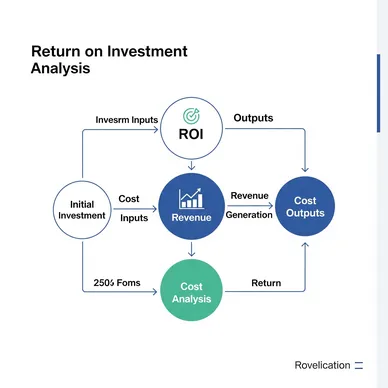
What is ROI
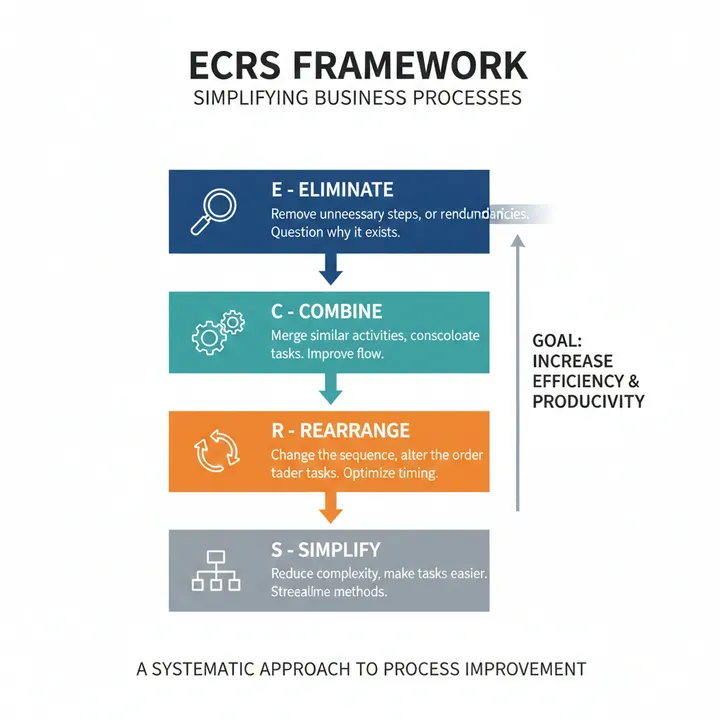
What is the ECRS Principle
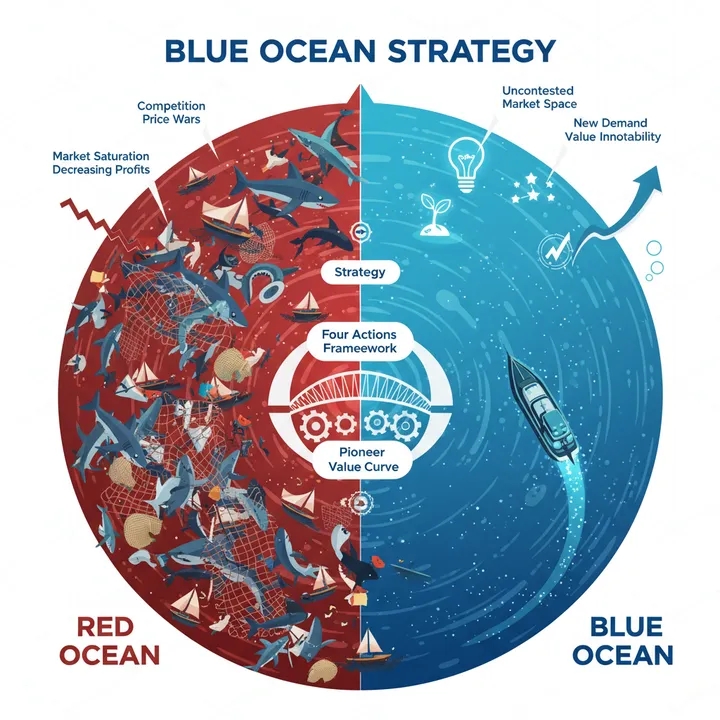
What is Blue Ocean Strategy