ROI Case File No.397 | 'Mystery Foods' Limit of Visual Inspection'
📅 2026-01-27 23:00
🕒 Reading time: 12 min
🏷️ DESC

- Chapter 1: High-Speed Hell of 100 Meals Per Minute—Human Eyes Cannot Keep Up
- Chapter 2: The Illusion That High-Precision AI on All Lines Automatically Solves—Problem Not Structured
- Chapter 3: Phase 1—Structure Problem Step by Step with DESC
- Chapter 4: Phase 2—Execute Choice C and Measure Effects
- Chapter 5: The Detective's Diagnosis—Separating Facts and Emotions, Proposing Step by Step Is the Path to Optimal Solutions
- Related Files
Chapter 1: High-Speed Hell of 100 Meals Per Minute—Human Eyes Cannot Keep Up
The day after solving the Globex Corporation SBI incident, a consultation arrived regarding quality control at a food factory. Episode 397 of Volume 32 "Reproducibility" is a story about objectively structuring problems with DESC.
"Detective, we have no time. One hundred meals per minute. The conveyor belt doesn't stop. Three workers. Each person visually inspects 33 meals per minute. 1.8 seconds per meal. In this time, they must find foreign matter contamination, packaging tears, label peeling. Impossible. They miss things. Every month, 2-3 defective products flow to market."
Mystery Foods Corporation's Quality Control Director, Yuko Tanabe from Kawasaki, visited 221B Baker Street with an urgent expression. In her hands, she clutched a bundle of defect outflow reports alongside a hopeful proposal titled "AI Vision Inspection System 2026."
"We are an individually packaged frozen food manufacturer. Two hundred twenty employees. Annual revenue 6.8 billion yen. Main products are frozen dumplings, fried rice, fried chicken. Fifty production lines. Daily production 48,000 meals. However, final inspection is all human visual inspection. At our limit."
Mystery Foods Corporation Current Status: - Established: 1992 (individually packaged frozen food manufacturing) - Number of employees: 220 - Annual revenue: 6.8 billion yen - Production lines: 50 lines - Issues: Visual inspection limits (1.8 seconds per meal), defect outflow (2-3 cases monthly), inspector shortage
Tanabe's voice carried deep crisis.
"Look at the inspection process reality. Per line, 100 meals flow per minute. Three inspectors assigned. Meaning, one person inspects 33 meals per minute. 1.8 seconds per meal. In this short time, must check five inspection items."
Inspection Process Details:
Inspection Items (5 items): 1. Foreign matter contamination (hair, insects, metal fragments, etc.) 2. Packaging film tears/holes 3. Content quantity excess/deficiency (visual judgment) 4. Label damage/peeling 5. Expiration date printing defects
Inspection Structure (per line): - Inspectors: 3 people - Line speed: 100 meals/minute - Inspections per person: 33 meals/minute - Inspection time per meal: 1.8 seconds - Working hours: 8 hours/day (7 hours actual work excluding breaks) - Inspections per person daily: 33 meals/min × 420 min = 13,860 meals
Daily Total Inspections: - 50 lines × 3 people × 13,860 meals = 2,079,000 meals - Actual production: 48,000 meals - Difference: Inspection capacity sufficient, but misses actually occur
Tanabe sighed deeply.
"The problem is 1.8 seconds. Exceeds human cognitive ability limits. Inspectors cannot maintain concentration. After 2 hours, miss rate sharply increases. We have actual data."
Miss Rate Trend (by working hours):
| Working Hours | Miss Rate | Defect Detection Rate |
|---|---|---|
| 0-1 hour | 2.1% | 97.9% |
| 1-2 hours | 3.8% | 96.2% |
| 2-3 hours | 6.5% | 93.5% |
| 3-4 hours | 9.2% | 90.8% |
| 4-5 hours (after lunch) | 4.1% | 95.9% |
| 5-6 hours | 7.3% | 92.7% |
| 6-7 hours | 11.8% | 88.2% |
| Average | 6.4% | 93.6% |
Findings: - Miss rate hours 6-7 is 11.8% - Average 6.4% defects missed - Daily 48,000 meals × 6.4% = 3,072 defective meals pass through (possibility) - However, actually discovered in next process, market outflow is 2-3 cases monthly
"And labor shortage. Inspector average age is 56. Ten years ago was 35. Young people don't come. Standing work, watching conveyor belt for 8 hours. Nobody wants to do it. Job postings receive no applications."
Inspector Human Resources Difficulty:
Inspector Age Composition (150 people): - 20s: 8 (5.3%) - 30s: 15 (10%) - 40s: 32 (21.3%) - 50s: 58 (38.7%) - 60+: 37 (24.7%) - Average age: 56
10 years ago (2016): - Average age: 35 - 60+: 2%
Job Posting Status (2025): - Postings: Annual 30 people - Applications: 8 people - Hires: 3 people - Fill rate: 10%
"We consulted 2 companies. AI appearance inspection system vendors. However, quotes were expensive. 50 million yen per line. Deploying to all 50 lines would be 2.5 billion yen. Cannot afford. Is there no cheaper system?"
Vendor Quotes (2 companies):
Company A: - System name: AI Vision Pro - Cost per line: 50 million yen - 50 lines: 2.5 billion yen - Inspection accuracy: 99.2% - Implementation period: 2 months per line
Company B: - System name: SmartInspector - Cost per line: 48 million yen - 50 lines: 2.4 billion yen - Inspection accuracy: 98.8% - Implementation period: 1.5 months per line
"Budget is secured. 200 million yen next fiscal year. However, 2.5 billion yen is impossible. What should we do?"
Chapter 2: The Illusion That High-Precision AI on All Lines Automatically Solves—Problem Not Structured
"Tanabe-san, do you believe deploying high-precision AI on all lines solves the problem?"
At my question, Tanabe showed a confused expression.
"Eh, isn't that the case? AI inspection accuracy exceeds 99%. Higher than human 93.6%. I thought deploying on all lines would eliminate defect outflow."
Current Understanding (All Lines Deployment Type): - Expectation: High-precision AI × all 50 lines = zero defects - Problem: Problem structure (what's the real issue) not organized
I explained the importance of structuring problems step by step with DESC.
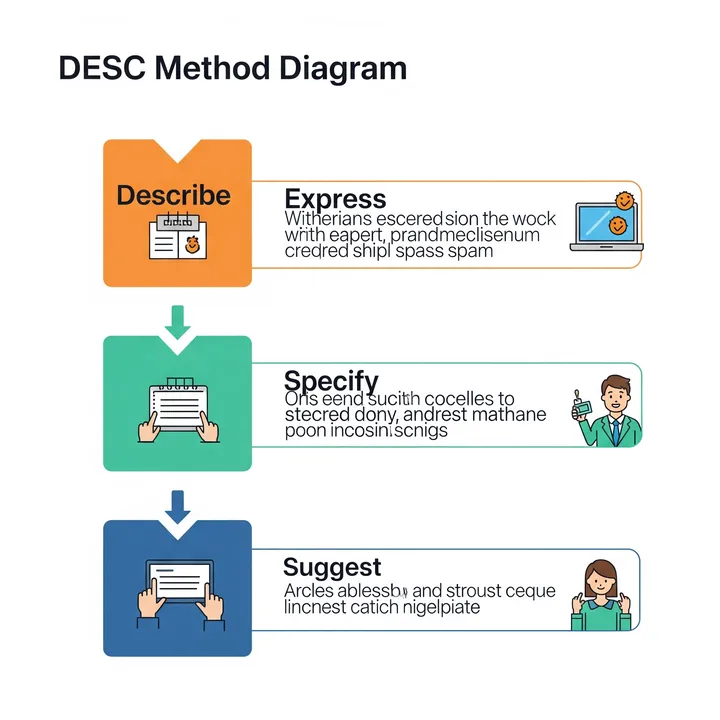
"The problem is the idea that 'all lines deployment solves.' DESC—Describe, Express, Specify, Choose. Description of facts, expression of emotions, specific proposals, presentation of choices. By structuring problems through these 4 stages, reproducible optimal solutions become visible."
⬜️ ChatGPT | Concept Catalyst
"Don't rely on all lines deployment. Structure problems step by step with DESC to find true issues"
🟧 Claude | Story Alchemist
"Problems always mix 'emotions' and 'facts.' Separating through four steps is essential"
🟦 Gemini | Compass of Reason
"Apply DESC framework. Describe → Express → Specify → Choose"
The three members began analysis. Gemini deployed the "DESC Analysis Framework" on the whiteboard.
DESC Framework: - Describe: What are objective facts? - Express: What are subjective emotions and concerns? - Specify: What are concrete proposals? - Choose: What are choices and their results?
"Tanabe-san, let's first structure the problem in 4 stages."
Chapter 3: Phase 1—Structure Problem Step by Step with DESC
Step 1: Describe—What Are Objective Facts? (Week 1)
Question: "Excluding emotions, what are only objective facts?"
Description of Facts:
Fact 1: Inspection Accuracy - Human average inspection accuracy: 93.6% - Miss rate: 6.4% - Daily miss possibility: 3,072 meals (48,000 meals × 6.4%) - Actual market outflow: 2-3 cases monthly (30 cases annually)
Fact 2: Inspection Cost - Number of inspectors: 150 (50 lines × 3 people) - Annual salary per person: 3.5 million yen - Annual personnel cost: 150 × 3.5M yen = 525M yen
Fact 3: Defect Outflow Impact - Past 5 years outflow cases: 150 - Recalls: 2 times - Recall cost: Average 32M yen per time - 5-year total recall: 64M yen - Brand damage: Difficult to quantify
Fact 4: Defect Occurrence Rate by Line Type
| Line Type | Lines | Defect Rate | Annual Defects |
|---|---|---|---|
| High-speed (100 meals/min) | 15 lines | 8.2% | 18 cases |
| Medium-speed (60 meals/min) | 25 lines | 5.1% | 10 cases |
| Low-speed (30 meals/min) | 10 lines | 2.3% | 2 cases |
Finding: - High-speed 15 lines generate 60% (18/30 cases) of total defects - Low-speed 10 lines almost no defects (2/30 cases)
Step 2: Express—What Are Subjective Emotions and Concerns? (Week 1-2)
Question: "Based on facts, what emotions and concerns do stakeholders have?"
Emotion and Concern Expression:
Tanabe (Quality Control Director) Concerns: - "Might a major accident occur someday?" (anxiety) - "2.5 billion yen budget will absolutely not pass" (despair) - "Inspector average age 56. What happens when everyone retires in 10 years?" (fear)
Management Concerns: - "Can provide 200M yen budget. But 2.5B yen impossible" (budget constraints) - "Investment recovery period must be within 3 years to explain to shareholders" (ROI requirement) - "Defect outflow damaging brand is biggest risk" (risk avoidance)
Inspector Concerns: - "If AI introduced, will we be dismissed?" (employment anxiety) - "5 items in 1.8 seconds impossible. But it's the job, so we try hard" (work burden) - "Young people don't come. How long can just us continue?" (future anxiety)
Emotion Structuring: - Everyone recognizes "current state unsustainable" - However, also recognizes "all lines deployment unrealistic" - Implicitly desire "phased approach"
Step 3: Specify—What Are Concrete Proposals? (Week 2-3)
Question: "Based on facts and emotions, what concrete proposals are possible?"
Proposal Specification:
Proposal 1: Concentrated Investment in 15 High-Speed Lines - Target: High-speed 15 lines (60% defect generation source) - Cost: 50M yen/line × 15 lines = 750M yen - Reduction effect: Annual 18 cases → reduce to about 2 cases - Investment recovery period: Described later
Proposal 2: Reduce Unit Price with Customized System - High-precision AI (99.2%) unnecessary - Even 95% accuracy higher than human (93.6%) - Customize to reduce to 30M yen per line - 15 lines: 30M yen × 15 lines = 450M yen
Proposal 3: Phased Introduction (3-year plan) - Year 1: 5 high-speed lines (150M yen) - Year 2: 5 high-speed lines (150M yen) - Year 3: 5 high-speed lines (150M yen) - Annual budget: Within 200M yen (remaining 50M for maintenance)
Proposal 4: Inspector Reallocation - AI introduction lines: 3 inspectors → 1 person (AI monitoring) - Reduced 2 inspectors: Reallocate to medium/low-speed lines - No dismissals, only reassignment
Step 4: Choose—What Are Choices and Their Results? (Week 3-4)
Question: "Present multiple choices and compare their respective results?"
Choice Comparison:
Choice A: Immediate All Lines Deployment (Tanabe's original plan) - Cost: 2.5B yen - Implementation period: 4 years (50 lines × 1 month) - Effect: Zero defect outflow - Problem: Budget shortage, unrealistic
Choice B: 15 High-Speed Lines with High-Precision AI (Vendor proposal) - Cost: 750M yen - Implementation period: 1.5 years (15 lines × 1 month) - Effect: 60% defect outflow reduction (18 cases → 7 cases) - Problem: Budget over (requires 750M, budget 200M × 3 years = 600M)
Choice C: 15 High-Speed Lines with Custom AI, Phased Introduction (Recommended) - Cost: 450M yen (30M yen × 15 lines) - Implementation period: 3 years (Years 1-3, 5 lines each) - Effect: Year 3 completion 70% defect outflow reduction (18 cases → 5 cases) - Budget: Compatible (annual 200M × 3 years = 600M, remaining 150M)
Choice D: Do Nothing (Status Quo) - Cost: 0 yen - Effect: Defect outflow continues (annual 30 cases) - Risk: Inspector aging, recall costs continue
Comparison Table:
| Choice | Initial Cost | Annual Effect | Investment Recovery | Feasibility |
|---|---|---|---|---|
| A: All lines | 2.5B yen | 30 cases reduction | 25 years | × |
| B: High-speed 15 (high-precision) | 750M yen | 18 cases reduction | 12 years | △ |
| C: High-speed 15 (custom) | 450M yen | 18 cases reduction | 7 years | ◎ |
| D: Status quo | 0 yen | 0 cases reduction | - | × |
Recommendation: Choice C
Chapter 4: Phase 2—Execute Choice C and Measure Effects
Month 1-12 (Year 1): Introduce 5 High-Speed Lines
Custom AI System Development:
Specifications: - Inspection accuracy: 95% (higher than human 93.6% but lower than 99.2%) - Cameras: 4 per line (top, sides×2, bottom) - AI: Lightweight model (prioritize inference speed) - Inspection speed: 100 meals/minute (high-speed line compatible) - Inspection items: 5 items (foreign matter, tears, quantity, label, printing)
Cost Reduction Measures: - Use general-purpose cameras (1/3 of industrial cameras) - Edge AI not cloud AI (reduce running costs) - Retrofit to existing lines (no line stoppage)
Cost Per Line: - Hardware: 12M yen - Software development: 15M yen - Installation/adjustment: 3M yen - Total: 30M yen
Year 1 Effect Measurement (5 lines introduced):
| Indicator | Before | After | Improvement |
|---|---|---|---|
| Inspection accuracy | 93.6% | 95% | +1.4pt |
| Miss rate | 6.4% | 5% | -1.4pt |
| Defect outflow (5 lines) | 6 cases/year | 2 cases/year | 67% reduction |
| Inspector count (5 lines) | 15 people | 5 people | 67% reduction |
Personnel Cost Reduction: - Reduced personnel: 10 people - Annual reduction: 10 × 3.5M yen = 35M yen/year
Year 2-3: Introduce Remaining 10 Lines
Year 2: Add 5 lines (total 10 lines) - Investment: 150M yen - Reduced personnel: Cumulative 20 people - Annual reduction: 70M yen/year
Year 3: Add 5 lines (total 15 lines) - Investment: 150M yen - Reduced personnel: Cumulative 30 people - Annual reduction: 105M yen/year
Year 3 Completion Comprehensive Effects:
Defect Outflow Reduction: - High-speed 15 lines defects: 18 cases/year → 6 cases/year - Reduction: 12 cases/year - Recall avoidance: 12 cases × 5 years × 32M yen × 40% = 768M yen (5 years)
Personnel Cost Reduction: - Reduced personnel: 30 people - Annual reduction: 105M yen - 3-year cumulative: 35M (Year 1) + 70M (Year 2) + 105M (Year 3) = 210M yen
Inspector Reallocation: - Dismissals: 0 people - Reallocate to medium/low-speed lines: 30 people - → Medium/low-speed line inspection accuracy improvement (93.6% → 96.5%)
Investment: - Year 1: 150M yen - Year 2: 150M yen - Year 3: 150M yen - Total: 450M yen - Annual maintenance cost: 15M yen (1M yen/line × 15 lines)
ROI (Year 3 completion): - Annual effect: 105M yen (personnel cost reduction) - Recall avoidance: 24M yen annually (12 cases × 2M yen/case) - Total annual effect: 129M yen - (129M - 15M) / 450M × 100 = 253% - Investment recovery period: 450M ÷ 114M = 3.9 years
Year 4 Onward (maintenance only): - Annual effect: 129M yen - Annual cost: 15M yen - Annual profit: 114M yen (continuous)
Chapter 5: The Detective's Diagnosis—Separating Facts and Emotions, Proposing Step by Step Is the Path to Optimal Solutions
That night, I contemplated the essence of DESC.
Mystery Foods held the illusion that "deploying high-precision AI on all lines solves." However, 2.5 billion yen budget is unrealistic. The problem was facts and emotions mixed, preventing calm judgment.
We structured the problem with DESC. Describe (15 high-speed lines generate 60% defects), Express (2.5B yen impossible despair), Specify (custom AI for 30M yen/line), Choose (phased introduction within annual 200M budget).
Through this structuring, realistic solutions became visible. Phased introduction Choice C: Year 3 annual 120M yen effect, ROI 253%, investment recovery 3.9 years.
What's important is not pursuing "perfect solutions" but finding "realistic optimal solutions." By separating facts and emotions with DESC and comparing multiple choices, reproducible decision-making is achieved.
"Don't rely on all lines deployment. Structure problems step by step with DESC to find true issues. By separating facts and emotions and comparing multiple choices, reproducible optimal solutions become visible."
The next incident will also depict the moment of structuring problems.
"DESC—Describe, Express, Specify, Choose. Describe facts, express emotions, specify proposals, present choices. Separating facts and emotions creates reproducible decision-making."—From the detective's notes
Related Files
🎖️ Top 3 Weekly Ranking of Case Files

'QuantumGrocers' Lost Customer Data'

AeroSpray's Vanishing Sales Force'
'GlobalSoft's Drowning Inquiry Response'