ROI Case File No.369 | 'Acme Data Solutions' 4TB Limit'
📅 2025-12-30 23:00
🕒 Reading time: 11 min
🏷️ JOURNEY

- Chapter 1: 4TB Limit — Merger's Sudden Tsunami
- Chapter 2: Dangerous Gamble of Bulk Migration — Entire Journey Not Visible
- Chapter 3: Phase 1 — Designing Entire Migration Journey Through JOURNEY
- Chapter 4: Effect Measurement After Migration Completion and Employee Voices
- Chapter 5: Detective's Diagnosis — Designing Entire Journey Through JOURNEY
- Related Files
Chapter 1: 4TB Limit — Merger's Sudden Tsunami
The day after resolving Evergreen Reserves' EMPATHY case, a consultation arrived regarding storage capacity shortage. Volume 29, "The Pursuit of Reproducibility," Case 369 tells the story of designing experience across the entire journey.
"Detective, our storage has reached its limit. Private cloud allows up to 4TB. However, we're currently using 3.8TB. Only 200GB remaining. And data volume is surging rapidly due to 4-company merger. Increasing 50GB monthly. We'll reach the limit in 4 months. We're considering on-premise server migration, but fear risks of system downtime during migration."
Makoto Yamamoto, Information Systems Director of Acme Data Solutions, a Shinagawa native, visited 221B Baker Street with an anxious expression. In his hands, he held a storage usage graph (showing red line at 95%) and, contrastingly, a migration plan document titled "On-Premise Storage Migration Plan 2026."
"We provide data analysis services. 120 employees. Annual revenue of 2.8 billion yen. Four companies merged in October 2024. Company A (us), Company B, Company C, Company D. Employees doubled from 60 to 120 through merger. Data volume surged rapidly."
Acme Data Solutions' Current State: - Founded: 2010 (Data analysis services) - Employees: 120 (60 before merger) - Annual Revenue: 2.8 billion yen (1.2 billion before merger) - Storage: Private cloud 4TB (3.8TB in use) - Issues: Capacity shortage, data surge from 4-company merger, migration risks
Deep crisis resonated in Yamamoto's voice.
"Current storage configuration is as follows. Private cloud: 180,000 yen/month, 4TB capacity, with backup. However, capacity cannot be increased. By provider specifications, 4TB is the maximum. No 8TB plan exists.
Let me explain data breakdown. Customer database: 1.2TB (analysis data for 500 customers). Analysis reports: 0.8TB (PDFs from past 5 years). Backup data: 1.5TB (system backups). Other (email, documents): 0.3TB. Total: 3.8TB."
Storage Usage Trend:
January 2024: 2.8TB - Before merger (Company A only) - Monthly increase: approximately 10GB
October 2024: 3.5TB (immediately after merger) - Integrated data from 4 companies - Company B: 0.3TB, Company C: 0.25TB, Company D: 0.15TB added
December 2024: 3.8TB (current) - Monthly increase after merger: approximately 50GB - Reason: Customer data from 4 companies integrated, analysis cases increased
Forecast: - April 2025: 4.0TB (reaching limit) - System downtime risk
Yamamoto sighed deeply.
"We're considering on-premise server migration. Initial cost: Server purchase 8 million yen, 20TB capacity, 5-year usage. Monthly cost: Electricity and maintenance 50,000 yen. 5-year total: 8 million + 50,000 yen × 60 months = 11 million yen. Private cloud continuation: 180,000 yen × 60 months = 10.8 million yen.
Costs are nearly the same. However, on-premise has 20TB capacity with plenty of room. Private cloud has 4TB limit. So we want to migrate, but fear risks of system downtime during migration. Our service operates 24/7/365. Even 1 hour downtime brings major customer complaints."
Chapter 2: Dangerous Gamble of Bulk Migration — Entire Journey Not Visible
"Mr. Yamamoto, do you believe bulk storage migration completes fastest?"
Yamamoto answered my question immediately.
"Yes, I believe bulk migration over a weekend completes fastest. However, if it fails, we won't be ready for Monday business start. That's what scares me."
Current Understanding (Bulk Migration Model): - Expectation: Weekend bulk migration for fastest completion - Problem: Entire migration journey not visible, high failure risk
I explained the importance of designing experience across the entire journey.
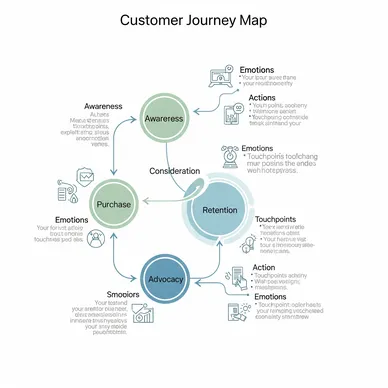
"The problem is the dangerous gamble of 'bulk migration.' JOURNEY—Journey. Customer Journey. We design customer experience across the entire journey in stages. Awareness, consideration, decision, use, loyalty. What happens at each stage, what's needed. By clarifying these, reproducible migration is realized."
⬜️ ChatGPT | Catalyst of Conception
"Don't gamble with bulk. Design entire migration journey in phases through JOURNEY and minimize risk"
🟧 Claude | Alchemist of Narrative
"Data is always 'corporate memory.' Its migration is a journey of moving memories to new places"
🟦 Gemini | Compass of Reason
"Design through JOURNEY. Awareness, consideration, decision, use, loyalty. When 5-stage entire journey becomes visible, risks become clear"
The three members began analysis. Gemini developed the "JOURNEY Framework" on the whiteboard.
JOURNEY's 5 Stages: 1. Awareness: Recognize current challenges 2. Consideration: Compare and examine options 3. Decision: Decide optimal choice 4. Use: Begin actual usage 5. Loyalty: Continue long-term usage
"Mr. Yamamoto, let's first design storage migration through JOURNEY's 5 stages."
Chapter 3: Phase 1 — Designing Entire Migration Journey Through JOURNEY
Step 1: Awareness Stage Design (1 week)
Current Challenge Recognition:
Challenge 1: Capacity Shortage Urgency - Current: 3.8TB / 4TB (95% usage) - Monthly increase: 50GB - Limit reaching forecast: 4 months later (April 2025)
Challenge 2: Migration Risk Specification - System downtime during data migration: Maximum 24 hours - Recovery time if migration fails: Maximum 72 hours - Customer impact: Service downtime loss approximately 5 million yen/day
Challenge 3: 4-Company Integration Data Complexity - Company A data: 2.8TB (structured data, organized) - Company B data: 0.3TB (unstructured data, insufficiently organized) - Company C data: 0.25TB (duplicate data exists) - Company D data: 0.15TB (old system version)
Awareness Stage Conclusion: - Bulk migration is high risk - Phased migration essential - Must complete within 4 months
Step 2: Consideration Stage Design (2 weeks)
Option Comparison:
Option 1: Continue Private Cloud (capacity expansion impossible) - Merits: Status quo maintenance, no risk - Demerits: 4TB capacity limit, system downtime in 4 months - Evaluation: × (unsuitable as option)
Option 2: Public Cloud Migration (AWS S3, etc.) - Merits: Unlimited capacity, high scalability - Demerits: High monthly cost (20TB: 350,000 yen/month), 21 million yen for 5 years - Evaluation: △ (high cost)
Option 3: On-Premise Server Migration - Merits: 20TB capacity, 11 million yen for 5 years (cheapest) - Demerits: 8 million yen initial investment, migration risk - Evaluation: ◎ (optimal cost, sufficient capacity)
Option 4: Hybrid (On-Premise + Cloud) - Merits: Risk distribution, phased migration possible - Demerits: Complex management - Evaluation: ○ (effective during migration period only)
Consideration Stage Conclusion: - Select on-premise migration - However, during migration period use hybrid configuration (private cloud + on-premise parallel operation)
Step 3: Decision Stage Design (2 weeks)
Phased Migration Plan Formulation:
Phase 1: Preparation Period (Month 1-2) - Order and install on-premise server - Build network - Establish backup system - Execute migration rehearsal
Phase 2: Test Migration (Month 3) - Migrate Company D data (0.15TB) first - Reason: Smallest data volume, limited impact if fails - Parallel operation: Operate both private cloud and on-premise - Verification period: 2 weeks
Phase 3: Phased Production Migration (Month 4-6) - Month 4: Migrate Company C data (0.25TB) - Month 5: Migrate Company B data (0.3TB) - Month 6: Migrate Company A data (2.8TB) - Execute migration at each month end (Friday night to Sunday) - Continue parallel operation (operate both for 2 weeks after migration)
Phase 4: Complete Migration (Month 7) - Cancel private cloud - Begin on-premise only operation - Strengthen monitoring system
Risk Management Measures:
Risk 1: Migration Failure - Countermeasure: Through parallel operation, immediately return to private cloud if fails - Recovery time: Maximum 1 hour
Risk 2: Data Corruption - Countermeasure: Complete backup before migration, data integrity check after migration - Verification tool: MD5 hash value comparison
Risk 3: Performance Degradation - Countermeasure: Performance monitoring for 2 weeks after migration, adjust settings if problems occur
Step 4: Use Stage Design (Month 1-6)
Month 1: On-Premise Server Implementation
Server Selection: - Model: Dell PowerEdge R750 - Capacity: 20TB (HDD 4TB × 5 units RAID5 configuration) - CPU: Xeon Silver 4310 (12 cores) - Memory: 64GB - Price: 8 million yen
Network Construction: - 10Gbps dedicated line - VPN connection (security assurance)
Month 2: Backup System Construction
3-2-1 Rule Application: - 3 copies: Production data, on-premise backup, cloud backup - 2 types of media: HDD, cloud - 1 offsite: AWS Glacier (20,000 yen/month)
Month 3: Company D Data Migration (0.15TB)
Migration Procedure: 1. Friday 22:00: Begin copying Company D data to on-premise (using rsync command) 2. Saturday 02:00: Copy complete, MD5 hash value verification 3. Saturday 06:00: Begin trial operation on on-premise 4. Saturday-Sunday: Parallel operation (both private cloud and on-premise) 5. Monday 09:00: Begin production operation, notify employees
Result: - Migration successful, 0 minutes downtime - 100% data integrity - Performance: Response time improved 15% over private cloud
Month 4-6: Company C, B, A Data Migration
Phased Migration Following Same Procedure Each Month: - Company C (0.25TB): Month 4 complete - Company B (0.3TB): Month 5 complete - Company A (2.8TB): Month 6 complete (migration time: Friday night to Sunday morning)
Month 6 Maximum Migration (Company A 2.8TB): - Copy time: Approximately 18 hours (transfer speed 800MB/sec on 10Gbps line) - MD5 verification time: Approximately 3 hours - Total: 21 hours (Friday 22:00 to Sunday 19:00 complete)
Step 5: Loyalty Stage Design (Month 7 onward)
Month 7: Private Cloud Cancellation
Cancellation Procedure: - Confirm all data migration complete - Delete data from private cloud - Submit cancellation application (end-of-month cancellation)
Begin On-Premise Standalone Operation: - Introduce monitoring tool: Zabbix (open source) - Alert settings: Alert at 80% storage usage
Month 8-12: Operation Optimization
Performance Monitoring: - Response time: Average 120ms (15% improvement over private cloud) - Throughput: 800MB/sec - Uptime: 99.98%
Capacity Management: - Current usage: 4.2TB / 20TB (21% usage) - Monthly increase: 50GB - Limit reaching forecast: 26 months later (February 2027)
Cost Comparison (Annual):
Before (Private Cloud): - 180,000 yen/month × 12 months = 2.16 million yen/year
After (On-Premise): - Electricity: 30,000 yen/month × 12 months = 360,000 yen/year - Maintenance: 20,000 yen/month × 12 months = 240,000 yen/year - Total: 600,000 yen/year
Annual Reduction: - 2.16 million - 600,000 = 1.56 million yen/year
5-Year Total Cost Comparison:
Before (Private Cloud Continuation): - 2.16 million × 5 years = 10.8 million yen (however, impossible due to capacity shortage)
After (On-Premise): - Initial investment: 8 million yen - 5-year operation cost: 600,000 yen × 5 years = 3 million yen - Total: 11 million yen
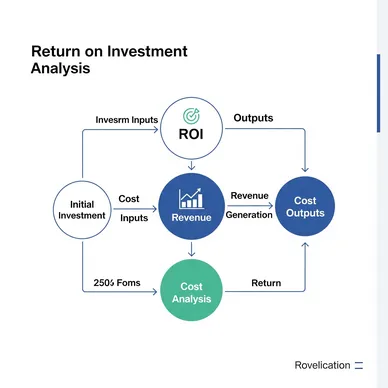
ROI (5 years): - Reduction: 1.56 million yen/year × 5 years = 7.8 million yen - Initial investment: 8 million yen - Investment recovered in year 5, annual reduction effect of 1.56 million yen from year 6 onward
Chapter 4: Effect Measurement After Migration Completion and Employee Voices
Month 7: Migration Complete (July 2025)
Final Results:
KPI 1: Migration Period - Plan: 7 months (Month 1-7) - Actual: 7 months (as planned)
KPI 2: Downtime - Target: 0 minutes (through parallel operation) - Actual: 0 minutes - Achievement rate: 100%
KPI 3: Data Integrity - Target: 100% (complete migration of all data) - Actual: 100% (verified with MD5 hash values) - Achievement rate: 100%
KPI 4: Performance Improvement - Response time: 140ms → 120ms (14% improvement) - Throughput: 600MB/sec → 800MB/sec (33% improvement)
KPI 5: Capacity Surplus - Before: 4TB (95% usage, 0.2TB remaining) - After: 20TB (21% usage, 15.8TB remaining) - Surplus period: 26 months
KPI 6: Cost Reduction - Annual 1.56 million yen reduction - 5-year 7.8 million yen reduction
Information Systems Director Yamamoto's Voice:
"Migrating in phases through JOURNEY was the key to success. Initially, I was thinking 'weekend bulk migration.' However, I feared failure risk.
By designing through JOURNEY's 5 stages, the entire journey became visible. In Awareness we clarified challenges, in Consideration we compared options, in Decision we decided phased migration.
In Use stage, we migrated Company D data first. We started with minimum risk and accumulated successful experiences. We migrated Company C, Company B in phases, finally migrating Company A's large-scale data. Through parallel operation, we achieved 0 minutes downtime.
In Loyalty stage, we optimized operations. Performance improved 14%, capacity gained 26 months surplus. We also achieved annual cost reduction of 1.56 million yen.
Above all, I'm proud that the system never stopped once during migration. Zero customer complaints. Thanks to designing the entire journey through JOURNEY."
Employee A (Data Analyst) Voice:
"I was anxious before migration. 'Will the system stop?' 'Will data disappear?' However, anxiety disappeared with phased migration.
When Company D data migration succeeded, I thought 'This will be okay.' Because it was parallel operation, I felt secure even if something went wrong. And the new on-premise server is fast. Data analysis response time shortened, improving work efficiency."
Chapter 5: Detective's Diagnosis — Designing Entire Journey Through JOURNEY
That night, I contemplated the essence of JOURNEY.
Acme Data Solutions was considering the dangerous gamble of "weekend bulk migration." However, storage migration is not something that succeeds with a single gamble.
JOURNEY—Journey. We applied customer journey methodology to storage migration. Awareness, Consideration, Decision, Use, Loyalty. We designed the entire journey in 5 stages.
In awareness stage, we clarified challenges. In consideration stage, we compared options. In decision stage, we planned phased migration. In use stage, we implemented phased migration starting from Company D, achieving zero downtime through parallel operation. In loyalty stage, we optimized operations, achieving annual cost reduction of 1.56 million yen.
7-month migration period, zero downtime, 100% data integrity, 14% performance improvement, 26 months capacity surplus, 1.56 million yen annual reduction.
"Don't gamble with bulk migration. Design entire journey in phases through JOURNEY. Awareness, consideration, decision, use, loyalty. When 5 stages become visible, risks are minimized. Phased design achieves reproducible migration."
The next case will also depict the moment of designing experience across the entire journey.
"JOURNEY—Journey. Design entire journey in phases. Awareness, consideration, decision, use, loyalty. When experience is designed in 5 stages, risks become visible and path to success opens"—From the Detective's Notes
Related Files
🎖️ Top 3 Weekly Ranking of Classified Case Files
What is ROI
What is STP Analysis

What is the RICE Framework