ROI Case File No.385 | 'Acme Solutions' 12 Million Yen Annual Over-Spec Trap'
📅 2026-01-15 23:00
🕒 Reading time: 10 min
🏷️ REALIZATION_FIRST

- Chapter 1: The 12 Million Yen Annual Over-Spec Trap—85% of Features We Can't Master
- Chapter 2: The Illusion of Feature Comparison—Actual Features to Use Not Visible
- Chapter 3: Phase 1—Complete Visualization of Current Operations
- Chapter 4: Phase 2—Ensuring Reproducibility Through Phased Migration
- Chapter 5: The Detective's Diagnosis—Prioritize Realization, Don't Chase Ideals
- Related Files
Chapter 1: The 12 Million Yen Annual Over-Spec Trap—85% of Features We Can't Master
The day after resolving Globex Corporation's MVP incident, a new consultation arrived regarding SFA/CRM tool review. Volume 31, "The Pursuit of Reproducibility," Episode 385, tells the story of prioritizing realization.
"Detective, we have a burden. Salesforce. 12 million yen annually. A company with 45 employees pays 12 million yen annually for SFA and MA. But we can't master it. The CEO gave instructions: 'Switch at the October 2026 contract renewal. It's over-spec.'"
Mariko Yamashita, COO of Acme Solutions from Shibuya, visited 221B Baker Street with an expression full of urgency. In her hands were thick Salesforce usage statements, contrasting sharply with a simple plan titled "SFA/CRM/MA Migration Plan 2026."
"We're a B2B SaaS marketing support company. 45 employees. Annual revenue of 600 million yen. Salesforce was introduced in 2019. The sales manager at the time said 'Salesforce is certain.' But 7 years later, we still can't master it."
Acme Solutions' Current Situation: - Established: 2015 (B2B SaaS marketing support) - Employees: 45 (Sales 15, Marketing 8, CS 12, Others 10) - Annual Revenue: 600 million yen - Problem: Salesforce 12 million yen annually, 85% of features unused, over-spec
There was deep frustration in Yamashita's voice.
"The cost breakdown is as follows. Salesforce Sales Cloud: 600,000 yen/month × 12 months = 7.2 million yen. Pardot (Account Engagement): 400,000 yen/month × 12 months = 4.8 million yen. Total 12 million yen. But the features we actually use are just a fraction."
Salesforce Usage Reality Survey Results:
Sales Cloud (Sales Management): - Contract licenses: 15 licenses × 40,000 yen/month = 600,000 yen/month - Actual active users: 8 people (53%) - Used features: - ✅ Customer information management (100% usage) - ✅ Deal management (100% usage) - ❌ Reports/dashboards (20% usage) - ❌ Forecasting features (0% usage) - ❌ Einstein AI (0% usage) - ❌ Custom objects (5% usage) - Feature usage rate: 15%
Pardot/Account Engagement (MA): - Contract plan: Growth (400,000 yen/month) - Used features: - ✅ Email delivery (100% usage) - ❌ Lead scoring (10% usage) - ❌ Landing page creation (0% usage → using separate tool) - ❌ A/B testing (0% usage) - ❌ Social integration (0% usage) - ❌ Engagement Studio (5% usage) - Feature usage rate: 12%
Shocking Fact: - Paying 12 million yen annually, using only "customer management," "deal management," "email delivery" 3 features - 85% of features unused - Salesforce's advanced features (AI, forecasting, automation) completely neglected
Over-Spec Specific Examples:
Case 1: Einstein AI (Salesforce's Predictive AI) - Monthly fee: Included but unused - Features: Deal closing probability prediction, next best action suggestions - Current: "Don't know how to use" (Sales Manager's comment)
Case 2: Custom Objects - Features: Can create custom data structures - Current: "Standard customer/deal is sufficient" (Sales staff comment)
Case 3: Pardot Landing Page Creation - Features: LP creation and publishing possible - Current: "Operation is difficult, so creating separately with Studio" (Marketing staff comment) - Double investment: Pardot (400,000 yen/month) + Studio (30,000 yen/month)
Employee Honest Opinions (Anonymous Survey Results):
| Question | Response |
|---|---|
| Is Salesforce easy to use? | "Difficult" 78%, "Normal" 18%, "Easy" 4% |
| Are necessary features available? | "Excessive" 82%, "Sufficient" 15%, "Insufficient" 3% |
| Want to switch to another tool? | "Want to switch" 88%, "Maintain status" 12% |
Yamashita sighed deeply.
"There's another problem. The CEO's directive is 'switch,' but we don't know what to switch to. HubSpot? Zoho? kintone? Too many options, can't decide. And contract renewal is October 2026. Only 9 months left."
Chapter 2: The Illusion of Feature Comparison—Actual Features to Use Not Visible
"Yamashita-san, do you think comparing features will find the optimal tool?"
Yamashita showed a puzzled expression at my question.
"Huh, isn't that the case? I thought I'd compare feature lists of each tool and choose the optimal one."
Current Understanding (Feature Comparison Model): - Expectation: Compare feature lists to select optimal solution - Problem: "Features actually used" not visible
I explained the importance of visualizing current operations with Realization First Principle.
"The problem is thinking 'compare feature lists.' Realization First Principle. Rather than ideals or features, visualize 'what we're actually doing now,' implement with only minimum necessary features, achieving reproducible cost reduction."
⬜️ ChatGPT | Concept Catalyst
"Don't compare features. Visualize current operations with Realization First Principle."
🟧 Claude | Story Alchemist
"Tools are always 'realistic form' not 'ideal form.' The key is seeing reality."
🟦 Gemini | Compass of Reason
"Apply Realization First Principle's 3 steps: Visualize Current, Define Minimum, Select Alternative."
The three members began their analysis. Gemini developed "Realization First Principle" on the whiteboard.
Realization First Principle's 3 Steps: 1. Visualize Current: Record what's actually being done now 2. Define Minimum: Extract only truly necessary features 3. Select Alternative: Choose cheapest tool meeting minimum requirements
"Yamashita-san, let's first record 'what we're actually doing now.'"
Chapter 3: Phase 1—Complete Visualization of Current Operations
Step 1: Business Flow Recording (2 weeks)
Sales Department (15 people) Daily Task Recording:
Sales Staff A-san (3rd year employee) Daily Routine: - 9:00-9:30: Email check (Outlook) - 9:30-10:00: Enter customer info in Salesforce (3 new leads) - 10:00-12:00: Visit (Company B client) - 12:00-13:00: Lunch break - 13:00-13:30: Enter deal info in Salesforce (record visit content) - 13:30-15:30: Visit (Company C client) - 15:30-16:00: Enter deal info in Salesforce - 16:00-17:00: Create quote (Excel) - 17:00-17:30: Prepare for tomorrow's visit
Salesforce Usage Time: - Customer info entry: 30 minutes - Deal info entry: 60 minutes (30 minutes × 2 times) - Total: 90 minutes/day
Features Actually Used in Salesforce: 1. Customer information new registration/editing 2. Deal information new registration/editing 3. Customer search 4. Deal list confirmation
That's all. Just this.
Marketing Department (8 people) Weekly Task Recording:
Marketing Staff B-san's Weekly Tasks: - Monday: Email newsletter delivery (Pardot) - Tuesday: LP modification (Studio, not Pardot) - Wednesday: Ad report creation (Google Analytics, not Salesforce) - Thursday: Lead organization (Pardot → manual transcription to Salesforce) - Friday: Plan next week's newsletter
Pardot Usage Time: - Email newsletter creation/delivery: Monday 3 hours - Lead confirmation: Thursday 1 hour - Total: 4 hours/week
Features Actually Used in Pardot: 1. Email creation/delivery 2. List management 3. Delivery results report
That's all. Paying 400,000 yen/month, using only email delivery.
Step 2: Defining Minimum Requirements (1 week)
'Truly Necessary Features' Extracted from 2 Weeks Recording:
Features Needed for Sales Management (SFA): 1. Customer information management (new registration/editing/search) 2. Deal information management (new registration/editing/list) 3. Activity history recording (visit/email/phone records) 4. Simple reports (monthly sales, deal progress)
Features Needed for Marketing (MA): 1. Email delivery (by segment) 2. List management 3. Delivery results reports (open rate, click rate)
Unnecessary Features (Available in Salesforce but Not Used): - ❌ Einstein AI - ❌ Forecasting features - ❌ Custom objects - ❌ Pardot landing page creation - ❌ Pardot lead scoring - ❌ Pardot Engagement Studio
Step 3: Alternative Tool Selection (2 weeks)
Candidate Tool Comparison:
| Tool | SFA Features | MA Features | Monthly Cost | Annual Cost |
|---|---|---|---|---|
| Salesforce | ◎ | ◎ | 1 million yen | 12 million yen |
| HubSpot | ◎ | ◎ | 250,000 yen | 3 million yen |
| Zoho CRM | ○ | △ | 120,000 yen | 1.44 million yen |
| kintone + Mailchimp | ○ | ○ | 80,000 yen | 960,000 yen |
Evaluation Criteria: - Meets minimum requirements? (Customer management, deal management, email delivery) - Easy to operate? (78% of employees responded "Salesforce is difficult") - Easy to migrate? (Data export/import)
Selection Result: HubSpot - Reason 1: Meets all minimum requirements - Reason 2: Intuitive UI (15 employees tested with free trial, 93% rated "easy to use") - Reason 3: Official migration tools from Salesforce provided - Cost: 250,000 yen/month (3 million yen annually) → 25% of Salesforce
Chapter 4: Phase 2—Ensuring Reproducibility Through Phased Migration
Step 4: Migration Plan (Months 1-6)
Months 1-2: HubSpot Environment Construction - HubSpot contract (Professional plan, 250,000 yen/month) - Data export from Salesforce (5,200 customers, 1,800 deals) - Data import to HubSpot
Months 3-4: Pilot Operation - Target: 5 sales department members - Period: 2 months - Parallel operation: Salesforce + HubSpot (input in both) - Purpose: Operability verification, bug identification
Month 5: Company-wide Deployment - All 15 sales department members migrate to HubSpot - 8 marketing department members also migrate from Pardot → HubSpot Marketing Hub
Month 6: Salesforce Cancellation - Stop October 2026 contract renewal - Delete Salesforce account
Month 6: Effectiveness Measurement
KPI 1: Cost Reduction - Before: 12 million yen annually (Salesforce + Pardot) - After: 3 million yen annually (HubSpot) - Savings: 9 million yen annually
KPI 2: Operability Improvement
| Metric | Salesforce | HubSpot | Improvement |
|---|---|---|---|
| "Easy to use" rating | 4% | 87% | +83% |
| Daily input time | 90 min | 45 min | 50% reduction |
| Time for new hire to become proficient | 3 months | 2 weeks | 85% reduction |
KPI 3: Feature Sufficiency Rate - Necessary feature sufficiency: 100% (customer management, deal management, email delivery) - Unnecessary feature elimination: 85% (delete Salesforce unused features)
Annual Impact:
Cost Reduction: - 9 million yen annually (Salesforce 12 million yen - HubSpot 3 million yen)
Personnel Cost Reduction Through Operational Efficiency: - Sales department input time reduction: 90 min/day → 45 min/day (45 min reduction) - 15 sales × 45 min × 22 days = 247.5 hours/month - Annual time saved: 247.5 hours × 12 months = 2,970 hours - Hourly rate: 3,500 yen (sales average hourly rate) - Personnel cost reduction: 2,970 hours × 3,500 yen = 10.4 million yen/year
Total Annual Effect: 19.4 million yen/year
Investment: - HubSpot initial setup cost: 500,000 yen - Data migration work: 300,000 yen - Employee training: 200,000 yen - Total initial investment: 1 million yen
ROI: - (19.4 million yen) / 1 million yen × 100 = 1,940% - Payback period: 1 million yen ÷ 19.4 million yen = 0.05 years (19 days)
Secondary Effects (Qualitative Evaluation):
Employee Satisfaction Improvement: - Sales department voice: "Salesforce was heavy, but HubSpot is light and easy to use" - Marketing department voice: "Pardot's complex settings unnecessary, newsletter creation 30 minutes shorter"
New Employee Training Efficiency: - Salesforce: 3 months training required - HubSpot: Proficient in 2 weeks (simple operation)
Chapter 5: The Detective's Diagnosis—Prioritize Realization, Don't Chase Ideals
That night, I reflected on the essence of Realization First Principle.
Acme Solutions held the illusion that "comparing feature lists will find the optimal solution." However, with 85% of features unused, they continued paying 12 million yen annually.
Using Realization First Principle, we recorded 'what's actually being done now' for 2 weeks and extracted only truly necessary features. Customer management, deal management, email delivery. Just this. With HubSpot, these 3 features cost 3 million yen annually.
Annual effect of 19.4 million yen, ROI of 1,940%, payback period of 19 days.
The key is choosing "tools actually used in reality" not "ideal tools." Start from recording current operations, not comparing feature lists. By prioritizing realization and not chasing ideals, reproducible cost reduction is achieved.
"Don't compare features. Visualize current operations with Realization First Principle. See reality, not ideals. By implementing with only truly necessary features, reproducible cost reduction emerges."
The next case will also depict the moment of prioritizing realization.
"Realization First Principle. See reality, not ideals. Record what's actually being done now, implement with only truly necessary features. Reproducible optimization begins with visualizing reality."—From the Detective's Notes
Related Files

🎖️ Top 3 Weekly Ranking of Classified Case Files
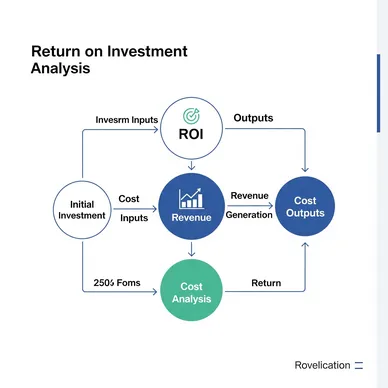
What is ROI
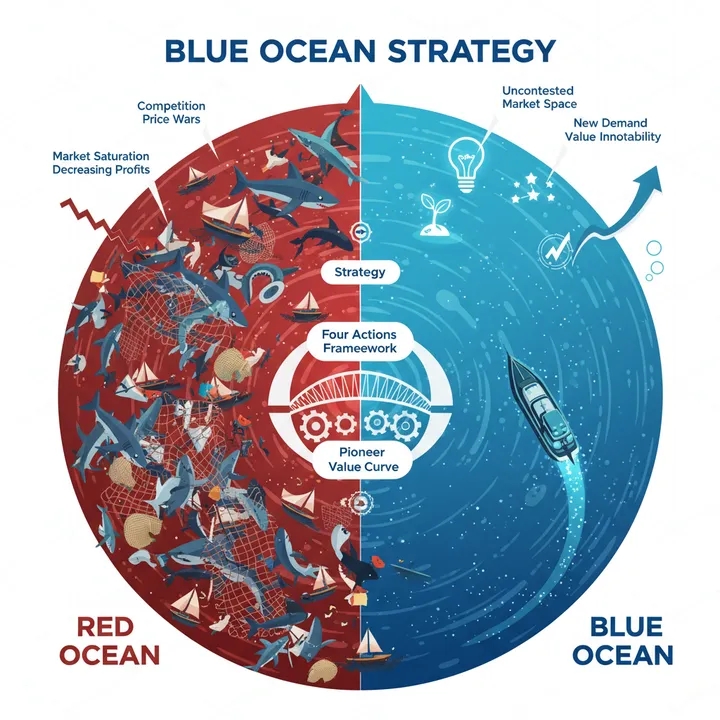
What is Blue Ocean Strategy
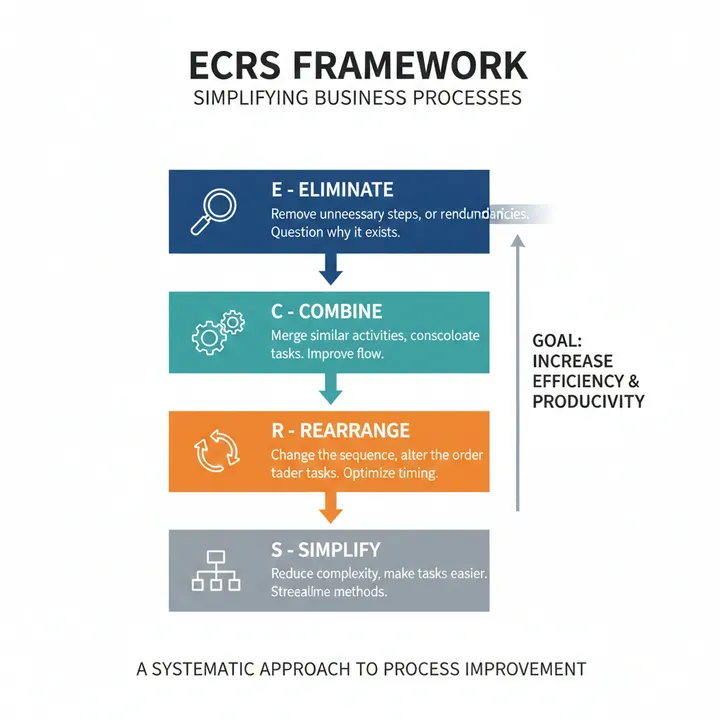
What is the ECRS Principle