ROI Case File No.396 | 'Globex Corporation's Fragmented Systems'
📅 2026-01-26 23:00
🕒 Reading time: 13 min
🏷️ SBI

- Chapter 1: The Chaos of 8 Fragmented Branches—Field Resists with Each System Introduction
- Chapter 2: The Illusion That System Unification Automatically Solves—Field Behavior Patterns Not Analyzed
- Chapter 3: Phase 1—Structure Field Resistance with SBI
- Chapter 4: Phase 2—Phased DX Promotion Based on SBI
- Chapter 5: The Detective's Diagnosis—Understanding Situation, Behavior, Impact Is the Key to Overcoming Resistance
- Related Files
Chapter 1: The Chaos of 8 Fragmented Branches—Field Resists with Each System Introduction
The day after solving the GlobalSoft PEST incident, a consultation arrived regarding DX promotion at a large corporation. Episode 396 of Volume 32 "Reproducibility" is a story about structuring field resistance with SBI.
"Detective, we have eight kingdoms. Headquarters and 8 sales offices. Each operates its own systems. Five types of inventory management systems. Three types of customer management systems. Two types of accounting systems. All separate. When we try to introduce new systems, the field always resists. 'Current way is fine' 'New system is difficult to use' 'Who will teach us?' The same voices rise every time."
Globex Corporation's DX Promotion Director, Kenichi Sasaki from Marunouchi, visited 221B Baker Street with an exhausted expression. In his hands, he clutched a system list for 8 locations alongside an ambitious plan titled "Digital Transformation Roadmap 2026-2028."
"We are a specialized trading company for industrial machinery. Forty-eight years established. Four hundred eighty employees (headquarters 120, 8 sales offices 360). Annual revenue 42 billion yen. Main clients are 500 manufacturing companies. However, as each location independently introduced systems, company-wide integration hasn't been achieved."
Globex Corporation Current Status: - Established: 1978 (industrial machinery specialized trading) - Number of employees: 480 (headquarters 120, sales offices 360) - Locations: Headquarters + 8 sales offices (Tokyo, Osaka, Nagoya, Fukuoka, Sendai, Sapporo, Hiroshima, Takamatsu) - Annual revenue: 42 billion yen - Issues: Different system operations at each location, duplicate master registration work, field resistance during system introduction
Sasaki's voice carried deep anxiety.
"Look at the system reality. Five types just for inventory management. Tokyo location uses Company A product, Osaka uses Company B, Nagoya uses in-house development, Fukuoka uses Excel, Sendai uses Access. To check the same product inventory, we need to log into five systems. Headquarters inventory staff spend one hour every morning manually aggregating all location inventory into Excel."
Each Location's System Configuration (January 2026):
| Location | Inventory Mgmt | Customer Mgmt | Accounting | Employees |
|---|---|---|---|---|
| HQ (Tokyo) | Company A | Salesforce | Kanjo Bugyo | 120 |
| Tokyo Sales | Company A | Salesforce | Kanjo Bugyo | 85 |
| Osaka Sales | Company B | kintone | Kanjo Bugyo | 72 |
| Nagoya Sales | In-house | Excel | Kanjo Bugyo | 58 |
| Fukuoka Sales | Excel | Access | Yayoi Kaikei | 45 |
| Sendai Sales | Access | Excel | Yayoi Kaikei | 38 |
| Sapporo Sales | Excel | kintone | Yayoi Kaikei | 32 |
| Hiroshima Sales | Company B | Excel | Kanjo Bugyo | 28 |
| Takamatsu Sales | Excel | Access | Yayoi Kaikei | 22 |
System Types: - Inventory management: 5 types (Company A, Company B, in-house, Excel, Access) - Customer management: 3 types (Salesforce, kintone, Excel/Access) - Accounting: 2 types (Kanjo Bugyo, Yayoi Kaikei)
"In this state, what happens? Duplicate master registration work. Every time one new product is added, master registration is needed at all 8 locations. Product name, model number, supplier, price. Input the same data 8 times. Staff at 8 locations totaling 8 people. Fifteen minutes per product. Eighty new products monthly. Calculate that."
Duplicate Master Registration Reality:
Monthly New Product Registration: - New products: 80 products/month - Registration locations: 8 locations - Registration time per location: 15 minutes per product - Monthly time per location: 80 products × 15 minutes = 1,200 minutes (20 hours) - All 8 locations total: 20 hours × 8 locations = 160 hours/month - Annual: 160 hours × 12 months = 1,920 hours
Personnel Costs: - Hourly rate: 3,500 yen (clerical average) - Monthly: 160 hours × 3,500 yen = 560,000 yen - Annual: 1,920 hours × 3,500 yen = 6.72M yen
Sasaki sighed deeply.
"Furthermore, the problem is field resistance during new system introduction. Last year, we attempted chatbot introduction. To automate customer inquiry response. However, sales office reaction was 'Not necessary' 'Current way is fine' 'Who will teach usage?' In the end, introduction didn't proceed. Development cost 3 million yen was wasted."
Past System Introduction Failure Cases:
Case 1: Chatbot Introduction (March 2025): - Purpose: Automated customer inquiry response - Investment: 3 million yen - Planned introduction locations: All 9 locations - Actual introduction: Headquarters only (1 location) - Failure reasons: - Sales offices: "Customers want to talk to humans. Chatbot unnecessary" - No usage training → Nobody can use it - HQ-led decision without hearing field voices
Case 2: Integrated Inventory Management System Introduction (August 2024): - Purpose: Centralized management of all location inventory - Investment: 8 million yen (deploy Company A system to all locations) - Planned introduction locations: All 9 locations - Actual introduction: HQ + Tokyo sales only (2 locations) - Failure reasons: - Osaka: "Company B product works adequately. No need to change" - Nagoya: "In-house developed system is easy to use. New system is complex" - Fukuoka: "Can manage with Excel. Expensive system unnecessary"
Case 3: Salesforce Company-Wide Deployment (December 2023): - Purpose: Unified customer management - Investment: 12 million yen (licenses + customization) - Planned introduction locations: All 9 locations - Actual introduction: HQ + Tokyo sales only (2 locations) - Failure reasons: - Osaka: "kintone is sufficient" - Nagoya onward: "Managing in Excel. No reason to change"
3-Year Failed Investment: - Chatbot: 3 million yen - Inventory management: 8 million yen - Salesforce: 12 million yen - Total: 23 million yen
"The field has no digital human resources. Many veteran employees in their 60s with strong resistance to new systems. The voice 'Current way is fine' always rises. We want to consult DX consulting firms but don't know where to request. How to overcome field resistance? We don't know."
Chapter 2: The Illusion That System Unification Automatically Solves—Field Behavior Patterns Not Analyzed
"Sasaki-san, do you believe that unifying systems makes the field use them?"
At my question, Sasaki showed a confused expression.
"Eh, isn't that the case? I thought introducing good systems would convince the field."
Current Understanding (System Unification Type): - Expectation: Unified system introduction → Field automatically uses it - Problem: Field behavior patterns (why they resist) not analyzed
I explained the importance of structuring field behavior with SBI.
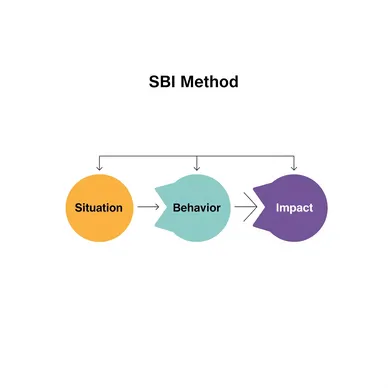
"The problem is the idea that 'system unification solves.' SBI—Situation, Behavior, Impact. By structuring field resistance through three elements of situation, behavior, and impact, reproducible DX promotion is achieved."
⬜️ ChatGPT | Concept Catalyst
"Don't rely on systems. Structure field Situation, Behavior, Impact with SBI to understand root causes of resistance"
🟧 Claude | Story Alchemist
"Resistance always has 'reasons.' By viewing through three lenses, the true nature of resistance becomes visible"
🟦 Gemini | Compass of Reason
"Apply SBI framework. Situation → Behavior → Impact"
The three members began analysis. Gemini deployed the "SBI Analysis Matrix" on the whiteboard.
SBI Framework: - Situation: What situation is the field in? - Behavior: What behaviors does the field take? - Impact: What impact does that behavior create?
"Sasaki-san, let's first structure the field's situation, behavior, and impact."
Chapter 3: Phase 1—Structure Field Resistance with SBI
Step 1: Situation—What Situation Is the Field In? (Week 1-2)
Question: "When the field resists new systems, what situation are they in?"
Field Interviews (2 people per location, total 16):
Osaka Sales Office (72 people): - Age composition: Average 58 years (65% are 50s+) - Digital literacy: "Can use Excel" "Don't know Salesforce" - Current system satisfaction: "Company B inventory system is sufficient" (78% satisfaction) - New system anxiety: "No time to learn usage" "Swamped with current work"
Nagoya Sales Office (58 people): - Age composition: Average 52 years - Digital literacy: "Using in-house system for 15 years" "Don't know others" - Current system satisfaction: "System we built ourselves is easiest to use" (85% satisfaction) - New system anxiety: "Can't understand why we need to change"
Fukuoka Sales Office (45 people): - Age composition: Average 54 years - Digital literacy: "Managing in Excel" "Don't need advanced features" - Current system satisfaction: "Excel is sufficient" (72% satisfaction) - New system anxiety: "Will we be burdened with expensive system introduction costs?"
Situation Structuring:
| Situation Element | Content |
|---|---|
| Age | Average late 50s, not digital natives |
| Experience | Using current system 10+ years, proficient |
| Work burden | Swamped with daily work, no spare time to learn new things |
| Satisfaction | Certain satisfaction with current system (72%~85%) |
| Anxiety | Insufficient learning time, cost burden, fear of change |
Findings: - Field is "satisfied with current state" - Don't feel "necessity to change" - Don't see "new system benefits"
Step 2: Behavior—What Behaviors Does the Field Take? (Week 2-3)
Question: "Given the situation, what specific behaviors does the field take?"
Behavior Pattern Analysis (from past 3 years of introduction failure cases):
Pattern 1: Passive Resistance (Silent Resistance) - Behavior: - Attend introduction briefings but don't ask questions - Say "Understood" but don't actually use - System login rate: First month 30% → 3 months later 5% - Occurrence frequency: 65% of all sales offices
Pattern 2: Active Resistance (Active Resistance) - Behavior: - Explicitly state "Current system is sufficient" - Repeatedly ask negative questions at introduction briefings - Express dissatisfaction "HQ doesn't understand the field" - Occurrence frequency: 25% of all sales offices
Pattern 3: System Avoidance (System Avoidance) - Behavior: - Install new system but don't use - Continue dual management in Excel - Report "New system is too complex" - Occurrence frequency: 10% of all sales offices
Behavior Structuring:
| Behavior Pattern | Specific Behavior | Result |
|---|---|---|
| Passive resistance | Don't use | System usage rate 5% |
| Active resistance | Express opposition | Introduction cancelled |
| System avoidance | Dual management | Cost increase |
Step 3: Impact—What Impact Does That Behavior Create? (Week 3-4)
Question: "What impact does field resistance behavior have on the entire company?"
Impact Quantification:
Impact 1: Wasted Investment (23 million yen) - System investment failed introduction over 3 years: 23 million yen - System maintenance cost with 5% usage rate: Annual 1.8 million yen - Total: 24.8 million yen loss
Impact 2: Decreased Operational Efficiency - Duplicate master registration: Annual 1,920 hours (6.72M yen) - Manual inventory aggregation: Annual 480 hours (1.68M yen) - Data inconsistency correction: Annual 360 hours (1.26M yen) - Total: Annual 9.66M yen loss
Impact 3: Lost Business Opportunities - Can't see company-wide inventory → Can't utilize other location inventory - Opportunity loss: Estimated annual 20 million yen (5% sales opportunity loss)
Impact 4: DX Promotion Stagnation - New system introduction doesn't proceed → Gap with competitors expands - Industry average DX investment: 0.8% of revenue (Globex is 0.3%)
Total Impact: - Annual loss: 24.8M + 9.66M + 20M = 54.46M yen - 3 years: 163.38M yen
Chapter 4: Phase 2—Phased DX Promotion Based on SBI
Month 1-3: Addressing Situation—Resolve Field Anxiety
Measure 1: Listen to Field Voices (1on1 Interviews) - 1on1 with each location manager (1 hour per person) - Questions: - "What troubles you about the current system?" - "What is your ideal system?" - "What are your anxieties about new systems?" - Results: - Troubles: "Can't see inventory between locations" (85%) - Ideal: "Simple and easy to use" (92%) - Anxiety: "Insufficient learning time" (78%)
Measure 2: Pilot Location Selection - Not simultaneous deployment to all locations, verify at 1 location - Selection criteria: - Relatively high digital literacy - Medium-sized employee count (opinions easily reflected) - Dissatisfaction with current system - Selection result: Hiroshima sales office (28 people, average age 48, dissatisfied with Company B)
Measure 3: Field-Led Design - Appoint 3 Hiroshima sales office employees as "DX Promotion Members" - They lead new system requirements definition - HQ focuses on support
Month 4-6: Addressing Behavior—Phased Learning Support
Measure 1: Small Start (From Minimum Functions) - Don't introduce all functions at once - Phase 1: Inventory inquiry function only (can see other location inventory) - Phase 2: Inventory registration function (new product registration) - Phase 3: Customer management integration
Measure 2: Accompanying Support - DX consultant visits weekly (3 months) - Environment to ask immediately when in trouble - Open question channel on Slack
Measure 3: Create Success Experiences - 1 month after introduction: - "Could see Fukuoka inventory and answer customer immediately!" - "Master registration completed in one go!" - Share success cases in company newsletter
Month 7-9: Impact Visualization—Show Effects with Numbers
Effect Measurement at Hiroshima Sales Office (3 months):
| Indicator | Before | After | Improvement |
|---|---|---|---|
| Master registration time | 20 hours monthly | 2 hours monthly | 90% reduction |
| Inventory check time | 15 hours monthly | 1 hour monthly | 93% reduction |
| Other location inventory utilization | 0 cases | 12 cases monthly | - |
| Sales increase | - | +8% (monthly) | - |
Effect Monetary Conversion: - Time reduction: 33 hours/month × 3,500 yen = 116,000 yen/month - Sales increase: 8% × monthly sales 35M yen = 2.8M yen/month - Monthly effect: 2.916M yen - Annual effect: 34.99M yen (Hiroshima 1 location only)
Share These Results with Other Locations: - Feature article in company newsletter - Hiroshima staff conduct briefings at other locations - Not "HQ imposition" but "field success case"
Month 10-12: Company-Wide Deployment
2nd Location: Osaka Sales Office - Seeing Hiroshima success, voluntarily raised hand "Want to try" - Introduction period: 2 months - Effect: Equivalent to Hiroshima
3rd Location: Nagoya Sales Office - Resisted with "In-house system is sufficient" but attitude softened seeing Osaka success - Introduction period: 3 months - Effect: Equivalent to Hiroshima
Year 1 Results (3 Locations Introduced): - Introduction locations: Hiroshima, Osaka, Nagoya (total 158 people) - Annual effect: 34.99M yen × 3 locations = 104.97M yen
Year 2 Plan (Remaining 6 Locations): - All 9 locations completion planned - Company-wide effect: 34.99M yen × 9 locations = 314.91M yen/year
Investment: - DX consulting: Monthly 1M yen × 12 months = 12M yen - Integrated system development: 15M yen - Each location introduction support: 500,000 yen per location × 3 locations = 1.5M yen - Training/support: 2M yen - Total initial investment: 30.5M yen - Annual running cost: System maintenance 3M yen
ROI (Year 1): - (104.97M - 3M) / 30.5M × 100 = 334% - Investment recovery period: 30.5M ÷ 101.97M = 0.3 years (approximately 4 months)
ROI (Year 2 Onward, Company-Wide Deployment): - (314.91M - 3M) / 0 yen × 100 = ∞ - Annual profit: 311.91M yen (continuous)
Chapter 5: The Detective's Diagnosis—Understanding Situation, Behavior, Impact Is the Key to Overcoming Resistance
That night, I contemplated the essence of SBI.
Globex Corporation held the illusion that "unifying systems makes the field use them." However, 23 million yen of investment was wasted over 3 years. The problem wasn't systems but field resistance.
We structured the field with SBI. Situation (average 58 years, satisfied with current system, anxiety about change), Behavior (passive resistance 65%, active resistance 25%), Impact (annual loss 54.46M yen).
Through this structuring, countermeasures became visible. Address situation (listen to field voices), address behavior (small start + accompanying support), visualize impact (Hiroshima success case).
Result: Year 1 introduced 3 locations, effect 104.97M yen, ROI 334%. Year 2 company-wide deployment, annual continuous profit 314.91M yen.
What's important is not "imposing top-down" but "understanding field situation, behavior, impact." By structuring with SBI, reproducible DX promotion is achieved.
"Don't rely on systems. Structure field Situation, Behavior, Impact with SBI to understand root causes of resistance. Resistance has reasons. By viewing through three lenses, paths to overcome resistance become visible."
The next incident will also depict the moment of structuring field resistance.
"SBI—Situation, Behavior, Impact. Structure situation, behavior, impact. Resistance is not the enemy. By understanding and addressing it, reproducible transformation emerges."—From the detective's notes
Related Files
🎖️ Top 3 Weekly Ranking of Classified Case Files
What is MVP
What is Agile Development
What is STP Analysis