ROI Case File No.420 'The Wisdom Dwelling in Water'

The Wisdom Dwelling in Water
Chapter 1: Electronic Soul in Plastic
"We have the technology to mold plastic. But we know nothing about electronic devices."
The Technical Development Director of SmartWaterTech picked up a water pipe fitting from the desk. It was a simple plastic product the company had manufactured for 40 years.
"We're a plastic molding manufacturer producing water and sewage pipe parts and elderly care products. However, the market has matured and price competition has intensified."
Crisis filled the Technical Development Director's voice.
"So we want to add electronic devices to existing products and provide new value as IoT products. For example, embed flow sensors in water pipes to detect leaks. Or embed pressure sensors in care beds to monitor user status."
The materials he spread out described a PoC (Proof of Concept) plan. However, many blanks remained.
"The problem is we lack knowledge of electronic device development. Which sensors are optimal? Which communication methods should we use? How to process data?—everything is trial and error."
"Furthermore," he continued, "it's unclear whether we want to provide new value to existing customers or develop new markets—our strategy isn't defined either."
It was not just a technical challenge, but a problem of lacking marketing strategy.
Chapter 2: Four Perspectives
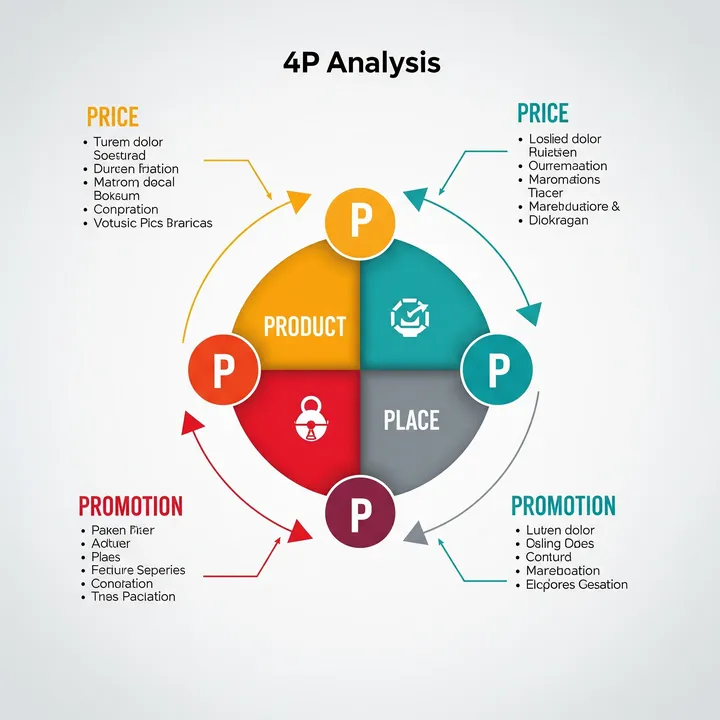
"This case needs organization with the 4P model."
Gemini drew four quadrants on the whiteboard. Product, Price, Place, Promotion—the basic elements of marketing, the Marketing Mix.
"The 4P model," I began explaining, "is a framework that structures product strategy from four perspectives."
"Many product developments fail," Claude continued, "because they focus only on technology without considering to whom, at what price, where, and how to sell."
The Technical Development Director asked. "But we're still at the PoC stage. Should we think about marketing before the product is even decided?"
"It's the opposite," I answered. "Think about marketing strategy before making the product. By doing so, the direction of what product to make becomes clear."
[Product: What to Make]
"First, Product—clarify what to make," Gemini explained.
"You said adding electronic devices to existing products," Claude asked, "but specifically, which product will you start with?"
The Technical Development Director answered. "Water pipe fittings and care bed mattresses. We're considering both."
"Is developing both simultaneously possible resource-wise?" I asked.
"No, it's difficult."
"Then let's narrow to one," Gemini proposed. "The judgment criterion is which can better leverage existing strengths."
"What are SmartWaterTech's strengths?" Claude asked.
"In water pipe parts, we have 40 years of track record. We also have a network with water construction contractors nationwide," the Technical Development Director answered.
"Meanwhile, for care products," I prompted.
"We entered 5 years ago. Sales channels are still limited."
"Then the answer is clear," Gemini organized. "Product—water pipe leak detection sensor-equipped fittings. Start with products that can leverage existing strengths."
"And," Claude added, "clarify the 'new value.' Customers won't feel value from just 'having sensors.'"
"How serious a problem is water leakage?" I asked.
The Technical Development Director answered. "Japan's water pipe aging is serious. Annual losses from leaks are about 600 million cubic meters. In monetary terms, about 100 billion yen."
"In other words," Gemini organized, "Product value is—preventing water resource loss through early leak detection and reducing repair costs. This is clear value for customers."
[Price: At What Price to Sell]
"Next, Price—pricing," I continued.
"Existing fittings sell for about 500 yen each," the Technical Development Director answered.
"With sensors, how much would it be?" Claude asked.
"Sensor and communication module costs are about 1,500 yen. Considering manufacturing costs, sales price would be about 3,000 yen."
"In other words, 6 times the price," Gemini pointed out. "Will customers think 6 times the price is worth it?"
The Technical Development Director hesitated. "That's our anxiety."
"Let's change the pricing approach," I proposed. "Think not in terms of unit price, but overall system value."
"For example," Claude explained, "when leaks occur, how much do repair costs run?"
"Excavating roads and replacing pipes costs about 500,000 yen per location."
"And if leaks are detected early, how much cost can be reduced?"
"If excavation scope is minimized, about 300,000 yen can be saved."
"Then," Gemini organized, "Price strategy is—not selling fittings alone for 3,000 yen, but providing as a 'leak monitoring system' through monthly subscription. Provide fittings inexpensively and earn revenue from data monitoring service."
"Specifically," I proposed, "sell fittings for 2,000 yen. Provide data monitoring service for 500 yen monthly. 6,000 yen annually in revenue. This lowers the initial investment hurdle for customers."
[Place: Where to Sell]
"Third is Place—distribution channels," Claude explained.
"What are existing distribution channels?" Gemini asked.
"We sell to water construction contractors through wholesalers," the Technical Development Director answered.
"Can IoT products also sell through the same channel?" I asked.
"Probably possible. We already have trading relationships."
"But," Claude pointed out, "can wholesalers and contractors explain IoT product value? Selling like conventional fittings won't move high-priced products."
"So," Gemini proposed, "divide Place strategy into two phases. Phase one—trial sales through existing channels. However, SmartWaterTech directly holds briefing sessions for contractors."
"Phase two," I continued, "direct sales to municipal waterworks bureaus. Leak prevention is an important issue for municipalities. By approaching decision-makers with budgets directly, large-scale implementation possibilities expand."
"In other words," Claude organized, "Place—small-scale rollout through existing channels and large-scale rollout through new channel (direct municipal sales). This two-pronged approach."
[Promotion: How to Communicate]
"Finally, Promotion—how to communicate product value," I explained.
"What should we do at the PoC stage?" the Technical Development Director asked.
"Collect data," Gemini answered. "Verify whether early leak detection is actually possible and how much cost reduction effect exists."
"Specifically," Claude proposed, "select 3 cooperative water construction contractors and trial implement at 5 pipe locations each. Collect data for 3 months and measure effectiveness."
"And," I continued, "compile those results as 'case studies.' 'Company A detected leaks 2 weeks early and reduced repair costs by 40%'—such concrete results become the most powerful Promotion."
"Furthermore," Gemini added, "to resolve technical anxieties, utilize external technical advisors. Sensor selection, communication method decisions, data processing design—getting expert advice increases PoC success probability."
Chapter 3: Layering New on Existing
The Technical Development Director gazed at the 4Ps organized on the whiteboard.
"Until now, I only thought about 'how to make the technology.' But when organized with 4P, 'to whom, at what price, where, how to sell' is decided first."
"The essence of the 4P model," I answered, "is not separating product development and marketing. Not thinking about how to sell after making it, but deciding how to sell before making it."
Claude quietly added words. "And in SmartWaterTech's case, though it's a new business, it's not starting from zero. Customer relationships cultivated over 40 years, technical capabilities, sales channels—layer new value on these existing assets."
Gemini added. "That's precisely why start with water pipes. Create success cases in fields where you can leverage existing strengths, then expand to care fields afterward. This is the strategy that minimizes risk."
The Technical Development Director stood and bowed deeply. "Thank you. Next month, we'll hold a PoC kickoff meeting with 3 partner contractors."
After he left, Claude said admiringly, "The 4P model is classic but universal."
"Yes," I answered. "Marketing's essence doesn't change with the times. Aligning these four elements—product, price, distribution, promotion—is the path to success."
Outside the window, spring rain began falling. That rain would flow through water pipes somewhere, reaching someone.
Four months later, a report arrived from SmartWaterTech.
Results from trial implementation at 3 companies in 15 locations: minute leaks detected early at 2 locations. Detected at stages that would conventionally go unnoticed, reducing total repair costs by about 1 million yen.
Based on these results, negotiations with the local waterworks bureau began. The bureau is considering trial implementation at 200 locations in "priority aging countermeasure districts."
And the most important discovery was that contractors were starting to understand "this isn't just a part, but a service." The monthly subscription business model was also being evaluated as "recurring revenue."
The 4P alignment was reliably moving the market.
"New products aren't born from technology alone. Only when Product, Price, Place, and Promotion—four elements align—are products accepted by the market. And by leveraging existing strengths, testing small, and proving results, new business reliably grows into a revenue source. That is the strategic path shown by the 4P model."
Related Files