
ROI【🔏Classified File】 No. X032 | What is Design Thinking
- What is Design Thinking - Case Overview
- Basic Structure of Design Thinking - Evidence Analysis
- Design Thinking Implementation Procedures - Investigation Methods
- The Power of Design Thinking - Hidden Truths
- Limitations and Cautions of Design Thinking - Potential Dangers
- Applications and Related Methods of Design Thinking - Related Case Files
- Industry-Specific Design Thinking Applications - Special Evidence
- Design Thinking Implementation Challenges and Solutions in Japanese Companies - Special Investigation
- Evolution and Future of Design Thinking - Additional Investigation
- Role of Design Thinking in Organizational Transformation - Special Investigation
- Success Indicators and Effect Measurement - Evaluation System
- Conclusion - Investigation Summary
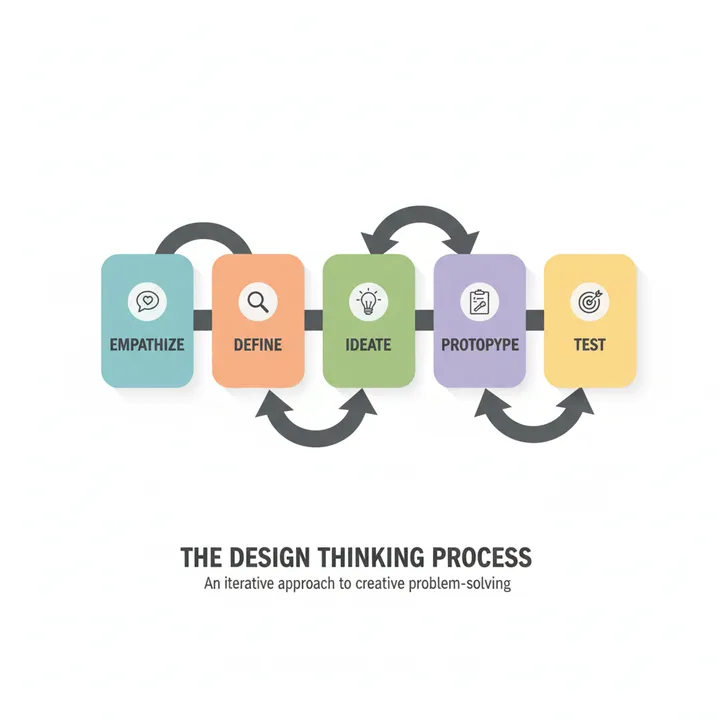
Detective Notes: The creative problem-solving methodology "Design Thinking" secretly practiced by Silicon Valley's innovative companies. Many misunderstand it as a "designer-only method," but its true identity is a "5-stage system for creating innovation from deep human needs." Why did this methodology, born at Stanford University's d.school, become the transformation engine for global companies like Apple, Google, and IBM? How does the thinking process that begins with empathy and iterates through prototyping and testing generate innovative solutions that traditional logical analysis cannot discover? Uncover the true nature of this new innovation creation paradigm woven from "human-centricity" and "experimentation focus."
What is Design Thinking - Case Overview
Design Thinking, formally known as "Human-Centered Creative Problem-Solving Methodology," is an innovation creation framework systematized in the 1990s by David Kelley of IDEO and Stanford University's d.school. Comprising five stages: "Empathize → Define → Ideate → Prototype → Test," it is recognized among our clients as a method for systematically creating and validating solutions starting from users' deep needs. However, in actual practice, it is often understood merely as "systematized brainstorming," with most companies failing to grasp its true revolutionary value: the fundamental transformation of existing thinking paradigms through human-centricity and experimentalism.
Investigation Notes: Design Thinking is not simply a "creativity enhancement method" but a "system for reverse-engineering innovation from fundamental human desires." We need to clarify why it begins with "empathy" and why it emphasizes the experimental cycle of "Prototype → Test" rather than logical analysis.
Basic Structure of Design Thinking - Evidence Analysis
Primary Evidence: Five-Stage Thinking Process
Empathize - Deepening Human Understanding
"Experiential understanding of users' worldviews, emotions, and contexts"
・Observe: Detailed observation of behaviors, environments, interactions
・Engage: Direct dialogue and interviews with users
・Immerse: Pseudo-real experience of user experiences

Empathy Methods Examples:
・Fieldwork and ethnographic research
・Shadowing and accompanying experiences
・Depth interviews and life story collection
・Persona and empathy map creation
・User journey mapping
・Extreme user research

Key Principles:
・Suspend judgment, focus on understanding
・Attention to actions and emotions, not just words
・Understanding including context, environment, relationships
・Continuously questioning one's assumptions and common sense
Define - Structuring Insights
"Converting insights from observation and empathy into problems"
・Pattern Recognition: Extracting common themes from collected information
・Insight Discovery: Converting surface needs to deep desires
・POV (Point of View) Creation: Problem definition from user perspective
・HMW (How Might We) Creation: Restructuring into solvable problems

Problem Definition Structure:
"[Specific User] needs [Specific Experience/Emotion] in [Specific Situation]
because [Deep Reason/Insight]."

Good Problem Definition Criteria:
・Human-centered: Starting from human desires and emotions
・Specific: Concrete situations and experiences, not abstract
・Actionable: Indicating direction for solution creation
・Inspiring: Stimulating team and organizational creative motivation
Ideate - Divergent Solution Generation
"Mass generation of creative solutions beyond constraints"
・Quantity Focus: Prioritizing quantity over quality, generation over criticism
・Constraint Liberation: Temporarily ignoring existing conventions and resource limitations
・Combination: Combining ideas from different fields and industries
・Perspective Shift: Reframing and changing angles of problems

Creative Methods Examples:
・Brainstorming and brainwriting
・SCAMPER method and Osborn checklist
・Analogical thinking and biomimetics
・Worst idea method and reverse thinking
・Storytelling and role-playing
・Crazy 8s (8 ideas in 8 minutes)

Four Principles of Creation:
・Defer Judgment: Postpone criticism and evaluation
・Welcome Wild Ideas: Embrace outlandish and unrealistic ideas
・Go for Quantity: Maximize diversity and options
・Build on Others: Develop and improve others' ideas
Prototype - Materializing Ideas
"Rapid materialization and visualization of ideas"
・Low Fidelity: Quick creation with paper, cardboard, simple materials
・Learning Purpose: Means for learning and validation, not finished products
・Iterative Improvement: Create → break → recreate cycle
・Experience Creation: Converting concepts into experienceable forms

Prototype Types:
・Paper Prototypes: Screen and interface design
・Physical Prototypes: Cardboard and 3D printer modeling
・Digital Prototypes: Simple apps and websites
・Service Prototypes: Role-playing and experience simulation
・Business Model Prototypes: Revenue structure and operation trials

Prototype Creation Principles:
・Speed: Creation within hours to days
・Low Cost: Realization with minimal resources
・Learning Focus: Creating learning opportunities over functional completion
・Shareable: Facilitating dialogue and feedback with others
Test - Experimental Learning
"Hypothesis validation and learning through prototypes"
・User Testing: Observing actual user experiences
・Hypothesis Validation: Discovering gaps between design intent and actual experience
・Learning Extraction: Finding next improvement directions from failures and unexpected results
・Iterative Design: Reflecting test results in next prototypes

Testing Methods Examples:
・Usability testing and A/B testing
・Field testing and pilot implementation
・Feedback sessions and observational research
・Preference testing and concept testing

Key Testing Principles:
・Welcome Failure: Maximizing learning opportunities from failures
・Early and Frequent: Early and frequent implementation before completion
・Observation Focus: Emphasizing user actions and reactions over words
・Iterative Improvement: Cyclical Test → Improve → Re-test
Evidence Analysis: The innovation of Design Thinking lies in creating innovative solutions that traditional logical analysis cannot discover through the combination of "reverse engineering from deep human needs" and "step-by-step solution construction through experimentation."
Design Thinking Implementation Procedures - Investigation Methods
Investigation Finding 1: Specific Application Example (Healthcare Service Improvement)
Case Evidence (Development of Medication Management Service for Elderly):

【Empathize Phase】(3 weeks)
User Understanding Activities:
・Home visits to elderly (20 people × half day each)
・Detailed recording of behaviors, emotions, difficulties during medication
・Interviews with family, caregivers, doctors, pharmacists (40 people total)
・Behavioral observation at pharmacies and hospitals
・Real experience of existing service usage

Discovered Deep Needs:
Surface Issue: "Forgetting to take medication"
Deep Insights:
・"Anxiety and fear about declining health management ability"
・"Guilt about burdening family"
・"Cognitive fatigue from complex systems"
・"Desire to maintain dignity and autonomy"
・"Thirst for sense of security and being supported"

【Define Phase】(1 week)
Insight Structuring:
・Issue categorization through affinity mapping
・Persona creation: "Ms. Tanaka (73), former teacher who values independence"
・Empathy map: Integrated understanding of emotions, thoughts, actions, statements

Problem Definition (POV):
"Elderly who value independence need an experience that provides
a sense of security while maintaining dignity in medication management,
because they seek both emotional reassurance of 'being watched over'
and self-efficacy of 'being able to do it myself,' not just functional support."

HMW (How Might We) Question:
"How might we enable elderly to simultaneously gain self-efficacy and security in medication management?"

【Ideate Phase】(2 weeks)
Idea Generation Activities:
・Co-creation workshops with elderly, families, healthcare professionals
・Analogies from other industries (education, entertainment, hotels)
・"What if medication management were like ○○?" analogical thinking

Generated Ideas (excerpts):
1. "Medication Management Gamification"
   - RPG-like progress and achievement system
2. "AI Medication Management Partner"
   - Conversational AI with personalized support
3. "Family Connection Medication Management"
   - Family oversight and encouragement messaging
4. "Medication Management Community"
   - Peer encouragement and information sharing
5. "Medication Management Learning Program"
   - Knowledge and confidence building system

【Prototype Phase】(3 weeks)
Selected Concept: "AI Medication Management Partner" + "Family Connection" Integration

Prototype Creation:
Week 1: Paper Prototypes
・Medication management app screen design (hand-drawn, sticky notes)
・User flow and information structure visualization

Week 2: Digital Prototypes
・Simple app (Clickable prototype in Figma)
・AI conversation simulation (Wizard of Oz method)

Week 3: Service Prototypes
・Experience simulation using actual medications
・Role-play experience with family and AI roles

【Test Phase】(2 weeks)
Validation Activities:
・User testing with elderly using prototypes (15 people)
・Family interaction testing (10 households)
・Professional evaluation by healthcare providers

Test Results:
Expected Reactions:
・Sense of security and friendliness toward AI conversation
・Positive response to family connection feeling

Unexpected Discoveries:
・"Anxiety about over-reliance on AI"
・"Privacy concerns (medication information)"
・"Emphasis on interface visibility over operational complexity"

Learning and Improvement Points:
・"I did it myself" emphasis function to resolve AI dependency anxiety
・Selective adjustment function for family shared information
・Voice operation and large text for improved visibility

Improved Prototype Results:
・User satisfaction: 85%→92%
・Continued use intention: 70%→88%
・Family peace of mind: 78%→91%
Investigation Finding 2: Detailed Success Requirements by Stage
Stage-by-Stage Implementation Guidelines:

Empathize Success Requirements:
・Temporary suspension of preconceptions and assumptions
・Deep diving with "Why?" and "How do you feel?"
・Attention to contradictions and gaps between actions and statements
・Learning from extreme users (heavy users and non-users)
・Prioritizing qualitative insights over quantitative data

Define Success Requirements:
・Converting from "user words" to "deep needs"
・Reframing from "technical problems" to "human challenges"
・Clarifying specific users, situations, experiences
・Balancing solvability and inspiration
・Unifying problem recognition within the team

Ideate Success Requirements:
・Temporary suspension of evaluation and criticism
・Ignoring "feasibility" constraints
・Active learning from other fields and industries
・"And" thinking (not "or")
・Promoting understanding through visualization and concretization

Prototype Success Requirements:
・Prioritizing "speed" over "perfection"
・Designing for maximum learning opportunities
・Welcoming failure and experimentation culture
・Concrete reproduction of user experiences
・Facilitating common understanding within team

Test Success Requirements:
・Emphasizing "learning" over "proving correctness"
・Detailed observation of user behaviors and reactions
・Active learning from unexpected results and failures
・Multiple rounds of testing and improvement iteration
・Integrating learning into next cycles
Investigation Finding 3: Organizational Design Thinking Implementation Patterns
Stage-by-Stage Implementation Approach:

Implementation Preparation (1-2 months):
・Design thinking understanding and experience workshops
・Cultivating promoters and champions
・Selecting pilot project candidates
・Environment setup (physical space, time, tools)

Pilot Implementation (3-6 months):
・Full process implementation on limited challenges
・Utilizing external facilitator support
・Detailed recording of implementation process, results, learning
・Organizational sharing and feedback collection

Expansion (6-12 months):
・Parallel implementation across multiple departments and projects
・Internal facilitator training and certification
・Design thinking community formation
・Organizational customization of tools and methods

Cultural Establishment (12+ months):
・Integration into daily business processes
・Reflection in performance evaluation and reward systems
・Continuous learning and improvement system construction
・External partner and ecosystem formation
The Power of Design Thinking - Hidden Truths
Warning File 1: Creation of Human-Centered Innovation Creates innovative solutions from deep human needs that cannot be discovered through traditional technology-driven or competitive analysis approaches. Starting from users' unspoken desires and emotions enables value creation beyond existing market frameworks.
Warning File 2: Learning Speed Enhancement Through Experimental Culture Dramatically improves learning and improvement speed through the shift from "perfect analysis" to "rapid experimentation." Welcomes failure and enables early, frequent prototyping and testing to maximize innovation while minimizing risk.
Warning File 3: Enhanced Organizational Creativity and Collaboration Systematically improves organizational creativity through processes and methods rather than relying on individual creativity. Utilizes collective intelligence through diverse expertise and perspectives, and creates active idea exchange through psychological safety.
Warning File 4: Improved Implementation Success Through Customer Co-creation Gains natural customer support by involving customers as "co-creation partners" rather than "research subjects." Significantly improves solution market fit and implementation success rates.
Limitations and Cautions of Design Thinking - Potential Dangers
Warning File 1: Formalization Through Process Obsession Most frequent failure pattern. Risk of Design Thinking "implementation" becoming an end in itself, neglecting actual problem-solving and value creation. Risk of being satisfied with "going through the 5 stages" while overlooking results and impact.
Warning File 2: Shallow Insights from Surface-Level User Understanding Risk of observation and interviews in the empathy phase remaining superficial, failing to discover true deep needs and insights. Danger of mistakenly "understanding" by just "hearing user voices" due to time constraints and skill deficiency.
Warning File 3: Feasibility Neglect Due to Creativity Overconfidence Risk of overemphasizing creativity in ideation and prototype phases while neglecting feasibility, business value, and technical constraints. Risk of "interesting ideas" not converting to "executable solutions."
Warning File 4: Lack of Continuity Due to Short-term Thinking Problem of ending with one-off project implementation without achieving organizational learning and capability accumulation. Risk of treating Design Thinking as a "special method" without integration into daily business processes or cultural establishment.
Warning File 5: Misapplication Due to Universal Solution Fallacy Excessive expectation of applying Design Thinking to all challenges. Risk of inefficiency from forced application in areas where other approaches are more appropriate, such as technical issues, operational efficiency, or regulatory compliance.
Applications and Related Methods of Design Thinking - Related Case Files
Related Evidence 1: Integration with Double Diamond Model
Problem-Solving Process × Design Thinking:
Discover → Integrated implementation of Empathize and Define
Define → More structured problem definition from Design Thinking
Develop → Solution creation through Ideate and Prototype
Deliver → Validation, implementation, improvement through Test

Fusion of process systematicity and user-centricity
Related Evidence 2: Collaborative Use with Jobs Theory
Customer Job Discovery × Design Thinking:
Empathize → Deep discovery of customers' true jobs and situations
Define → Job-based problem definition and challenge structuring
Ideate → Creative solution ideation for job achievement
Prototype → Concrete materialization and visualization of job experience
Test → Validation and improvement of job achievement and satisfaction

Mutual reinforcement of human understanding and job understanding
Related Evidence 3: Deepening Empathy Maps and Personas
User Understanding Methods × Design Thinking:
Empathize → Foundation for empathy map and persona creation
Define → Precise problem definition through user understanding
Ideate → Persona-oriented solution ideation
Prototype → User experience-focused prototyping
Test → Persona-based testing and validation

Utilizing and deepening user understanding methods through Design Thinking
Related Evidence 4: Fusion with Lean Startup
Business Hypothesis Validation × Design Thinking:
Empathize・Define → Deep exploration and precision of customer problem hypotheses
Ideate・Prototype → Creation and materialization of solution hypotheses
Test → Continuous validation through Build-Measure-Learn cycles

Integrated approach of human-centered design and business hypothesis validation
Related Evidence 5: Continuous Improvement through PDCA
Continuous Improvement × Design Thinking:
Plan → Challenge and solution planning in Define and Ideate
Do → Implementation and experimentation in Prototype and Test
Check → Effect measurement and learning extraction in Test
Act → Reflection in next cycle's Empathize and Define

Integrating Design Thinking into continuous improvement systems
Industry-Specific Design Thinking Applications - Special Evidence
Related Evidence 6: Product and Service Innovation in Manufacturing
Manufacturing-Specific Applications:
Empathize → Deep observation in factory floors and customer usage environments
Define → Integrated challenge definition of functionality and humanity
Ideate → Creative function and experience ideation beyond technical constraints
Prototype → Functional and experience prototypes
Test → Integrated evaluation of technical performance and human experience

Innovation integrating technical superiority and human-centricity
Related Evidence 7: Service and Experience Design in Financial Services
Financial Industry Applications:
Empathize → Deep exploration of customer financial behaviors, emotions, anxieties
Define → Identifying solvable challenges under regulatory constraints
Ideate → Fintech and digital technology utilization ideas
Prototype → Service experience and interface prototypes
Test → Integrated validation of convenience, safety, reliability

Balancing innovation with safety and trust in regulated industries
Related Evidence 8: Learning Experience Innovation in Education
Educational Applications:
Empathize → Deep understanding of learner motivation, barriers, emotions
Define → Integrated challenge setting of learning outcomes and experience
Ideate → Creative combinations of educational methods and technology
Prototype → Learning experience and curriculum prototypes
Test → Integrated evaluation of learning effectiveness and satisfaction

Learner-centered educational experience design and innovation
Design Thinking Implementation Challenges and Solutions in Japanese Companies - Special Investigation
Related Evidence 9: Cultural Adaptation Strategies
Japan-Specific Challenges and Solutions:

Challenge 1: "Failure Avoidance and Perfectionism Culture"
Solutions:
・Cultivating "prototypes are for failure" culture
・Management messaging welcoming experimentation and failure
・Building and sharing small success stories

Challenge 2: "Consensus Building and Approval Culture"
Solutions:
・Incorporating step-by-step consensus building processes
・Understanding facilitation through visual prototypes
・Stakeholder-inclusive workshops

Challenge 3: "Specialization Focus and Departmental Silos"
Solutions:
・Institutionalizing cross-departmental team formation
・Project composition emphasizing diversity
・Active utilization of external perspectives and cross-industry experience

Challenge 4: "Efficiency and Productivity Focus"
Solutions:
・Visualizing Design Thinking ROI and effect measurement
・Integrated and efficient approaches with existing operations
・Management understanding of long-term investment value

Success Requirements:
・Top management understanding and support
・Ensuring psychological safety and experimental culture
・Appropriate time, space, and resource allocation
・Continuous learning and improvement system construction
Evolution and Future of Design Thinking - Additional Investigation
Related Evidence 10: Design Thinking in the Digital Age
Digital Technology × Design Thinking:

AI and Machine Learning Applications:
・Deep need discovery from user behavior data
・Large-scale personalization realization
・Automated prototype generation and A/B test optimization

Virtual and Remote Environment Implementation:
・Development of online empathy and observation methods
・Utilization of digital prototyping tools
・Remote collaboration and co-creation platforms
・Experience prototypes using VR/AR technology

Data-Driven Design Thinking:
・Integrated analysis of quantitative data and qualitative insights
・Real-time user feedback collection
・Automated continuous experimentation and learning systems
・Predictive user need forecasting
Role of Design Thinking in Organizational Transformation - Special Investigation
Related Evidence 11: Design Thinking as Organizational Culture Transformation Engine
Organizational Transformation × Design Thinking:

Mindset Transformation:
・Shift from "finding correct answers" to "experimentation and learning"
・Change from "risk avoidance" to "failure welcome"
・Transition from "company perspective" to "customer perspective"
・Conversion from "perfectionism" to "rapid iteration"

Organizational Capability Enhancement:
・Organizational acquisition of creative problem-solving abilities
・Improved diversity utilization and collaboration
・Enhanced adaptability and flexibility to environmental changes
・Establishment of continuous learning and improvement culture

Leadership Development:
・Enhanced empathy and human understanding
・Leadership allowing experimentation and failure
・Diversity-focused and inclusive decision-making
・Development of vision creation and inspiration capabilities

Innovation Creation System:
・Systematic innovation creation processes
・Customer co-creation and open innovation
・Consistency from idea creation to implementation
・Continuous innovation and competitive advantage securing
Success Indicators and Effect Measurement - Evaluation System
Related Evidence 12: Design Thinking Outcome Measurement and Evaluation
Effect Measurement Framework:

Short-term Outcome Indicators (1-3 months):
・Number of projects implemented and participants
・User insights and ideas generated
・Prototype creation and testing frequency
・Participant satisfaction and learning perception

Medium-term Outcome Indicators (3-12 months):
・Implementation success rate of created solutions
・Customer satisfaction and user experience score improvement
・New product and service development success rate
・Organizational Design Thinking adoption expansion

Long-term Outcome Indicators (12+ months):
・Innovation creation and market launch frequency
・Customer loyalty and brand value improvement
・Revenue, market share, competitive advantage improvement
・Organizational culture and employee engagement improvement

Qualitative Evaluation Indicators:
・Organizational penetration of "customer perspective" thinking
・Establishment of failure tolerance and experimental culture
・Cross-departmental collaboration and diversity utilization
・Penetration of continuous learning and improvement mindset
Conclusion - Investigation Summary
Final Investigation Report:
Design Thinking represents a "systematic methodology for creating innovation from deep human needs." This revolutionary framework, systematized by Stanford University's d.school and IDEO, fundamentally transforms traditional technology-driven and competitive analysis approaches, enabling truly human-centered innovation creation.
The most impressive finding in this investigation was the depth and quality of human understanding that begins with "empathy." Going beyond mere customer research to experientially understand users' worldviews, emotions, and contexts discovers previously overlooked deep needs and innovative opportunities. This forms the source of competitive advantage for innovative companies like Apple, Google, and IBM.
The "Prototype → Test" experimental cycle was also a crucial discovery. Rather than perfect analysis and planning, step-by-step solution construction through rapid experimentation and learning maximizes innovation while minimizing risk. This represents a thinking paradigm optimized for today's rapidly changing business environment.
The interconnectedness of the five-stage process was confirmed as a notable characteristic. Functioning not as isolated methods but as a coherent system of human understanding → problem definition → creation → experimentation → learning, it enables systematic innovation creation independent of chance.
The integration potential with other business frameworks was also an important finding. Design Thinking serves as an integration platform that significantly enhances the effectiveness of other methods, including problem-solving systematicity through the Double Diamond Model, customer understanding through Jobs Theory, and business validation through Lean Startup.
However, cultural challenges in Japanese company implementation were also highlighted. Inconsistencies with experimental culture and diversity emphasis—prerequisites for Design Thinking—such as failure avoidance and perfectionism, consensus-building emphasis, and specialization and departmental silos, create implementation barriers. Gradual cultural transformation alongside parallel initiatives is necessary.
The function as an organizational transformation engine was also a noteworthy discovery. Design Thinking functions as a system that fundamentally transforms organizational mindset, capabilities, and culture beyond mere problem-solving methods. This establishes continuous innovation creation capability within organizations rather than one-time innovation.
Evolution in the digital age was confirmed as an important perspective. Combinations with AI and machine learning, VR/AR, and remote collaboration technologies dramatically expand Design Thinking's precision, efficiency, and application scope.
The most important finding is that Design Thinking represents a fundamental thinking revolution from the traditional "analyze → plan → execute" paradigm to an "empathize → experiment → learn" paradigm through the fusion of "human-centricity" and "experimentalism." This represents not merely a methodological difference but a fundamental transformation in innovation creation approach.
The key to success lies not in mechanical process implementation but in establishing deep empathy for humans and courage for experimentation as organizational culture. Organizations that master Design Thinking acquire the capability to discover customers' unspoken needs, create solutions beyond existing frameworks, and continuously generate innovation.
Human-Centered Innovation Maxim: "Technology expands possibilities, but human understanding determines the direction of innovation"
【ROI Detective Agency Classified File Series X032 Complete】
Case Closed


