
ROI Case File No.489 'The Evening the Stamp Was Pressed'

The Evening the Stamp Was Pressed
Chapter One: Evenings Walking Between Desks to Press a Stamp
"Every evening, I walk around three departments to press approval stamps."
Masato Ohno, General Affairs Director at RealEstatePro, placed a bundle of documents on the table. Expense reports, paid-leave applications, internal approval documents—all paper, with three or four approval stamps on each.
"The construction and real-estate industries have particularly many paper flows," Ohno continued. "Contract original storage, paper drawing management, paper ledgers of site photos—there are industry-specific practices. Running internal flows on paper on top of that no longer makes sense. But trying to change it brings resistance from the field."
"Have you attempted digitization before?" Claude confirmed.
"Two years ago we examined an electronic-contract service," Ohno answered. "But we stopped on the cost-benefit estimate. We couldn't show the reduction effect in numbers. We couldn't refute the 'paper is cheaper' voices."
"What's the concrete content of field resistance?" Gemini asked.
"It varies by generation," Ohno answered. "Young staff say, hurry up and digitize. Mid-career conditionally agree. Veterans—particularly older site supervisors and sales staff—have operational anxiety. 'Can I use a tablet?' 'Can I remember passwords?' These are real, not excuses."
"What happens if you change everything at once?" Claude confirmed.
"Chaos," Ohno answered immediately. "If a salesperson fumbles the UI during a customer meeting and loses a document, there's no recovery. I want to proceed gradually, but I don't see in what order, from what scope to start."
"That's a question of the order for moving the organization," I said. "AARRR is suited to that design."
Chapter Two: The Five Phases AARRR Demands
"This case needs AARRR."
Claude wrote five letters on the whiteboard. A, A, R, R, R.
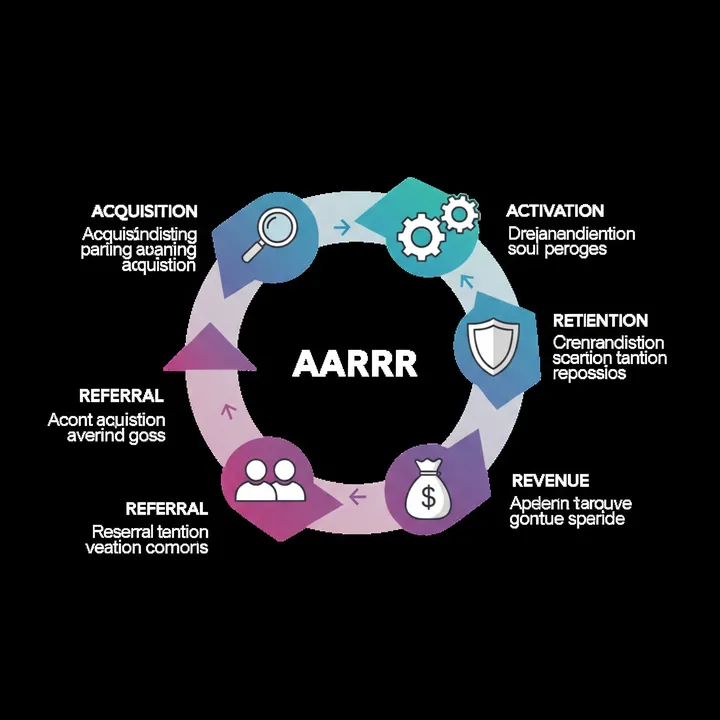
"AARRR stands for Acquisition, Activation, Retention, Referral, Revenue—a framework for designing the flow of user establishment across five phases," I explained. "Originally used in startup growth analysis, it's also effective for designing the establishment of internal systems. Paperless doesn't complete with tool introduction; only when staff continue using does paper disappear. Designing the five stages up to continued use is the key to not repeating past digitization failures."
"Let's measure current cost first," Gemini said, opening ROI Polygraph. Ohno's operational data went in.
"Monthly paper-flow cost is out," Gemini read. "Expense-report processing across 180 employees averages 600 hours monthly—over three hours per person. At ¥2,800/hour, ¥1.68 million. Paid-leave and attendance application processing 200 hours at ¥560,000. Opportunity loss from approval lead-time delays averages ¥800,000 monthly. Paper storage and retrieval 120 hours at ¥336,000. Printing and supplies ¥180,000. Managers walking around to deliver stamps 100 hours, at manager rate ¥4,500/hour, ¥450,000. Total: ¥4.006 million monthly. Annualized: approximately ¥48 million."
Ohno stared at the figures. "Counting the manager walking time is a first."
"So, let's design with AARRR," I continued.
[A—Acquisition: Letting Staff Know the Tool]
"The first phase is staff knowing the new mechanism," Claude said. "Company-wide emails and bulletin boards, advance briefings for managers, individual explanations to each department's representative—three-stage information delivery. What matters is communicating not 'what changes' but 'what becomes easier.' Convey concretely that no more walking around to press stamps."
"Simple announcement emails don't reach some segments," Ohno said.
"For that segment, have managers of similar age explain," Gemini responded. "Receiving the same explanation from a field-level person rather than IT or General Affairs gets easier acceptance. Designing the transmission path for the acquisition phase is the first step."
[A—Activation: Getting Them to Use It Once]
"In the activation phase, the goal is staff using it even once," Claude continued. "Prepare mechanisms to lower the initial-login barrier. Easy password reset, operations manual provided in both video and PDF, operation-period-limited support desk for initial operations."
"Anything added for veterans?" Ohno asked.
"Prepare in-person support slots," I answered. "By appointment, General Affairs or IT staff perform the initial operation together individually. Thirty minutes is enough. The sense of 'can ask and be taught' dissolves half the resistance."
[R—Retention: Getting Them to Use It Continuously]
"The retention phase determines paperless success or failure," Gemini continued. "For one month after launch, run paper flow in parallel. Those not used to electronic applications can still submit on paper. But from the second month, phase out paper. Full unification to electronic begins in month three."
"Doesn't parallel operation create people who never move to electronic?" Ohno worried.
"It does," Claude responded. "So declare the parallel-operation deadline in advance. State explicitly, 'From month two, paper applications won't be available at the General Affairs counter.' Vague migration deadlines leave paper forever. Showing a deadline establishes continued use."
[R—Referral: Users Who Spread the Word]
"In the referral phase, users' voices are shared internally," Gemini continued. "Veterans' experience reports of using it for the first time, managers' impressions of no more walking around with stamps, expense-report approval-speed improvement cases—introduce periodically in internal newsletter and intranet. There are segments reached by testimony, not numbers."
"The idea of making the first successful users into endorsers," Ohno said.
"That idea," I responded. "Industry-cautious veterans especially reference testimonies from peers of the same generation. Intentionally creating endorsers is the referral-phase design."
[R—Revenue: Visualize the Effect]
"Finally, show the effect in numbers," Claude continued. "Aggregate cost savings monthly and share with executives and all staff. Also produce department-specific savings. Visibility of each department's contribution accelerates establishment."
"Let's simulate with ROI Proposal Generator," Gemini suggested.
- Initial cost: Electronic application workflow, electronic contracts, e-learning materials, migration support totaling ¥6.8 million
- Monthly cost: Cloud service usage ¥220,000/month
- Monthly savings: Expense-report labor reduction ¥1.008 million (60% reduction), paid-leave application reduction ¥336,000, opportunity-loss recovery from approval lead-time shortening ¥480,000, paper storage and retrieval reduction ¥200,000, printing and supplies reduction ¥120,000, manager walking-around reduction ¥270,000, totaling ¥2.414 million
- Net monthly savings: ¥2.414M − ¥220,000 = ¥2.194M
- Payback period: ¥6.8M ÷ ¥2.194M ≈ 3.1 months
"Three-month payback," Gemini summarized. "The reason examination stopped two years ago is resolved by today's numbers. Even adding phased-migration design cost, payback is certain within six months."
Ohno reviewed the figures. "Two years ago, we stopped unable to estimate savings. Today, it can be designed in the form of phased migration. Same examination, different conclusion."
Chapter Three: Order of Migration by Generation
"Let me organize the approach," I said at the whiteboard.
"Month one—digitize expense reports first. All staff use it at least monthly, and even failures are easily recoverable. Month two—digitize paid-leave and attendance applications. Months three and four—digitize internal approval. Handle high-amount approvals carefully. Month five—partial introduction of electronic contracts. Start with internal contracts; customer contracts from month six. Month seven onward—complete abolition of paper flow and establishment monitoring."
"Why start with expense reports?" Ohno confirmed.
"Balance of frequency and impact," Claude answered. "Everyone uses it, monthly, and even if trouble arises, it doesn't cause fatal damage to overall business. Optimal for creating the first success experience. When all staff experience electronic flow once here, migration to the next operation is smoother."
Ohno closed his notebook. "I was about to decide by intuition which operation to start with. Thinking through AARRR order makes the reason for starting with expense reports clear."
Chapter Four: The Day Stamps Left the Desk
Eight months later, a report from Ohno arrived.
Expense-report digitization reached 93% adoption rate in two months of operation. The remaining 7% of veterans were handled individually through in-person support slots. At four months of operation, adoption reached 99%, with nearly everyone migrated. "Of 12 staff who booked in-person support, 11 could operate alone from the second time," Ohno wrote.
The biggest change arose from a senior veteran. A veteran sales rep nearly 70 told a young colleague, "This is convenient," and it was featured in the internal newsletter. "I don't need to come back to the office just to press a stamp. I can go home directly from a customer site"—this one line greatly lowered resistance in the same generation. A moment when the referral-phase design functioned.
Approval lead time for internal approvals shortened from seven business days to 1.8 on average. Decision speed changed, and improvement proposals from the field tripled monthly. "Self-restraint of 'won't propose because approval takes time' disappeared," the report noted.
In partial introduction of electronic contracts, operations began with internal NDAs and outsourcing contracts. Contract conclusion that took five business days of paper round-trip completed within a day. "Reputation from business partners is good, and our response speed is being praised," the report said.
Ohno's report concluded, "Time managers spend walking around to press stamps disappeared from the department. In its place, time discussing at supervisors' desks seemed to increase. The task of pressing stamps was replaced by dialogue."
A day when managers could stay at their desks in the evening.
"Paperless doesn't complete with tool introduction. Only when staff continue to use does paper disappear. AARRR's five stages—acquisition, activation, retention, referral, revenue—are tools for designing human movement after tool introduction. Overwrite generation-specific resistance with generation-specific success experiences. By intentionally creating endorsers in the referral phase, the resistant segment moves itself. The day managers who walked around to press stamps began receiving consultations at their desks, paper didn't disappear—the use of time had changed."
Related Files
Tools Used
- ROI Polygraph — Visualizing paper-flow labor, walking time, and opportunity-loss cost
- ROI Proposal Generator — Phased paperless-office payback simulation


