
ROI Case File No.561: 'Too Many Problems, and No Center'

Too Many Problems, and No Center
Chapter 1: The Problems Could Be Counted, but Never Cleared
"I want to raise our factory's productivity. But there are so many issues, I don't know where to start."
Masatake Kota, factory manager at GlobalTech Industries, laid out his problems as he spoke. It was a plant in Katsuragi District, Nara Prefecture, handling the assembly of large machinery and metalworking. "Between the factory and the warehouse, about fifty meters, everything is moved by hand and forklift. The work environment needs improving. We haven't decided how to handle equipment maintenance. Dust and oil mist countermeasures, metal powder recovery from hard chrome plating, person-dependence in quality control, judging tool wear, air conditioning summer and winter, regulatory compliance—too many to count."
"Are you tackling these one at a time?" Claude asked.
"I am," Kota answered. "When transport comes up, I think about transport. When dust comes up, I think about dust. But every time I take a step, another problem rears its head. However hard I chase, the whole thing never clears."
"Are you looking at the connections between the problems?" I asked, to confirm.
"...I'm not," Kota answered. "I thought each was a separate problem. I've never considered what to place at the center, or how to arrange them around it."
"As long as you crush them one by one, you'll never see the gaps or the overlaps," I replied. "Let's break this down with MANDALA."
Chapter 2: MANDALA Asks—Set the Center, Fill the Eight Cells
"This case calls for MANDALA."
Claude drew a three-by-three grid on the whiteboard.
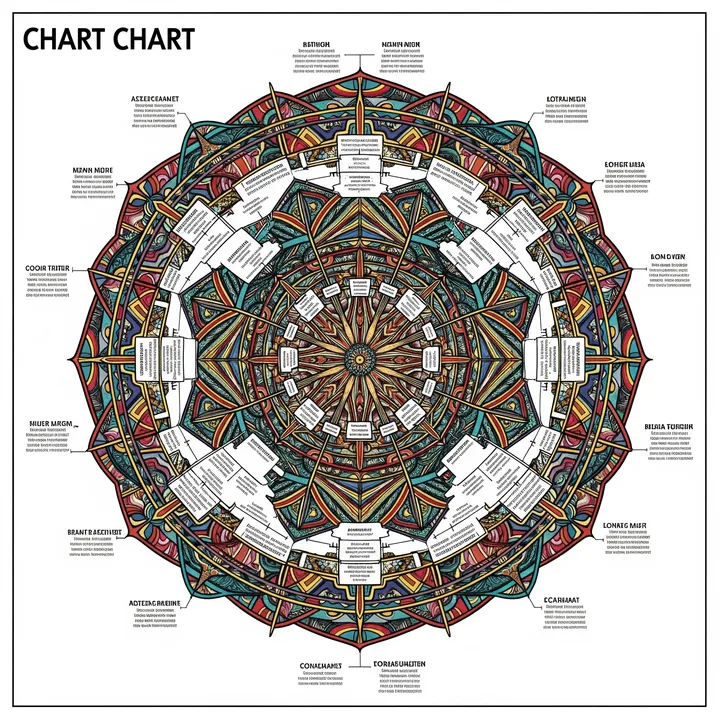
"MANDALA—the mandala chart—places a central theme in the middle and arranges related elements in the eight surrounding cells, so that problems are covered exhaustively," I explained. "The key is to fix the center and always fill all eight outer cells. Because there is a center, the problems connect along a single axis; because all eight are filled, nothing is missed or overlooked. It's a tool that turns scattered problems into a single map."
"First, let's measure the current cost," Gemini said, opening ROI Polygraph. The data Kota provided was entered.
"Here is the monthly cost," Gemini read out. "Inefficient labor from manual and forklift-dependent transport: 160 hours per month on average, at ¥3,600 per hour, ¥576,000 per month. Inadequate countermeasures for dust, oil mist, and metal powder—environmental response labor: ¥420,000 per month on average. Variance and rework from person-dependence in quality control: ¥360,000 per month. Machining defects and tool loss from experience-dependent tool-wear judgment: ¥320,000 per month. Increased power use from inefficient air conditioning, plus regulatory-compliance delay risk: ¥300,000 per month. A total of ¥1,976,000 per month. Roughly ¥23.71 million per year."
Kota stared at the figures. "I was looking at each problem individually. But once you add the cost of leaving them disconnected, it comes to this much."
"Then let's design it with MANDALA," I continued.
[Center—Place 'Productivity Improvement' in the middle]
"First, decide the center cell," Claude said. "In the middle goes 'factory productivity improvement.' Until this is fixed, there's no telling where the surrounding problems point. Only once the axis is set do the eight cells gain meaning."
[Perimeter—Arrange all problems across the eight cells]
"Next, fill the eight outer cells," Gemini continued. "Logistics, work environment, equipment maintenance, dust and metal powder, quality control, tool judgment, air conditioning, regulatory compliance—distribute the problems you're carrying, one to each of the eight cells around the center. Because there's a cell for each, none gets forgotten."
[Linkage—See the connections between cells]
"After arranging them, look at how the cells relate," I continued. "Dust countermeasures and air conditioning both connect through ventilation. Person-dependence in quality control and tool judgment both resolve through data. Problems that looked scattered bundle together through the center. Once you see the overlaps, one move fills two cells."
[Deployment—Turn each cell into a concrete measure]
"Finally, develop each cell into concrete measures," Claude continued. "Logistics: an automated transport system. Dust and metal powder: air filtering and a dedicated recovery unit. Quality: digital inspection that dissolves person-dependence. Tools: real-time sensor monitoring. Air conditioning: a high-efficiency system for seasonal response. Along the central axis, fill all eight cells."
[Estimating the payback]
"Let's run the numbers on ROI Proposal Generator," Gemini proposed.
- Initial cost: automated transport, air filtering, metal-powder recovery, digital inspection, sensor monitoring, and high-efficiency air conditioning—¥5.7 million total
- Monthly cost: operation and maintenance combined, ¥220,000
- Monthly savings: eliminating transport inefficiency via automation = ¥420,000 (assuming a 70% reduction); efficient environmental measures, metal-powder recovery, and regulatory response = ¥340,000; dissolving person-dependence through digital quality control = ¥340,000; loss and power reduction via tool monitoring and air-conditioning optimization = ¥420,000; totaling ¥1,520,000 per month
- Net monthly savings: ¥1,520,000 − ¥220,000 = ¥1,300,000 per month
- Payback period: ¥5.7 million ÷ ¥1.3 million = about 4.4 months
"Just over four months to recoup," Gemini summarized. "What works is not crushing problems one by one, but setting an axis at the center and seeing all eight cells at once. Strike at random and the cost thins out through gaps and overlaps. Fix the center, see the linkages, then deploy—so one move fills several cells. The investment doesn't miss."
Kota checked the figures. "I was about to budget separately for each problem. Fix the center, and they clear as a bundle."
"MANDALA is a tool for turning scattered problems into a single map," I replied.
Chapter 3: An Implementation Plan That Fixes the Center and Covers Eight Cells
"Let me lay out the approach," I said, standing at the whiteboard.
"Month one—fix the central axis and take inventory of problems across the eight cells. Month two—organize the linkages between cells and set priorities. Months three and four—introduce the automated transport system and the air-filtering and metal-powder recovery units. Month five—set up digital inspection, sensor monitoring, and high-efficiency air conditioning. Month six—trial operation and effect verification. Month seven onward—embed regulatory compliance and continuously review the eight cells."
"Will every problem really get cleared, with nothing missed?" Kota asked.
"Nothing will be missed," Claude replied. "Problems don't clear because you chase them one at a time and never see the whole at a glance. With MANDALA you set an axis at the center, arrange everything across the eight cells with nothing left out, and deploy after seeing the linkages. The cells to fill are visible from the start, so the chasing ends. You even catch overlaps—like dust and air conditioning—where one move fills two cells."
Kota took notes. "Before crushing them one by one, fix the center and lay out the whole. Now I see the order."
Chapter 4: The Day It Could All Be Seen on One Map
Ten months later, a report arrived from Kota.
Logistics changed dramatically after the automated transport system went in. "What we used to move fifty meters by hand and forklift now flows automatically. The hands tied up in transport went back to the machining itself," Kota wrote.
The work environment improved, too. Air filtering and a dedicated recovery unit tamed the dust and metal powder. "The dust and oil mist our countermeasures couldn't keep up with dropped visibly. We handled the tightened regulations without panic," the report read.
The biggest change showed in how the problems appeared. From chasing them scattered, to surveying them on a single map. "It used to be an endless loop—crush one, another pops up. Once I set an axis at the center and arranged everything across eight cells, I could see at a glance what remained," Kota wrote.
Person-dependence in quality control dissolved as well. Digital inspection and sensor monitoring replaced experience-bound judgment with data. "Inspection and tool judgment that varied by person came into alignment," the report read.
As a side effect, the way improvement was pursued changed. The mindset of fixing the center and laying out the whole took root on the floor. "We stopped crushing each problem in isolation as it appeared. We started thinking in terms of what the center is, and which of the eight cells a problem belongs to," Kota wrote.
At the end of Kota's report was this: "I thought raising factory productivity meant crushing the problems in front of me in order. But the real problem was that the issues had no central axis—I was chasing them scattered. The moment we set the center with MANDALA and filled the eight cells, the gaps and overlaps became visible. Before crushing them one by one, laying out the whole on a single page came first."
The day a factory of too many problems with no center became a factory that could survey it all on one map, productivity improvement had shifted from one-off problem-crushing to a design that sets an axis at the center and covers eight cells.
"Requests to raise productivity usually arrive as 'too many problems, no bandwidth.' But before crushing them one by one, there's a question to ask: what axis goes in the center? What MANDALA asks is the central theme and the eight cells around it. Set the center and fill the eight, and gaps and overlaps come into view at once. The day a factory of too many problems with no center could be surveyed on one map, what changed was not the performance of the equipment but the very perspective that turns scattered problems into a single map."
Related Files
Tools Used
- ROI Polygraph — Visualizing inefficient transport labor, environmental-response labor, and person-dependence risk
- ROI Proposal Generator — Payback simulation for factory productivity improvement, starting from centering an axis and covering eight cells


