
ROI Case File No.568: 'Trying to Nail It in One Shot, They Never Hit'
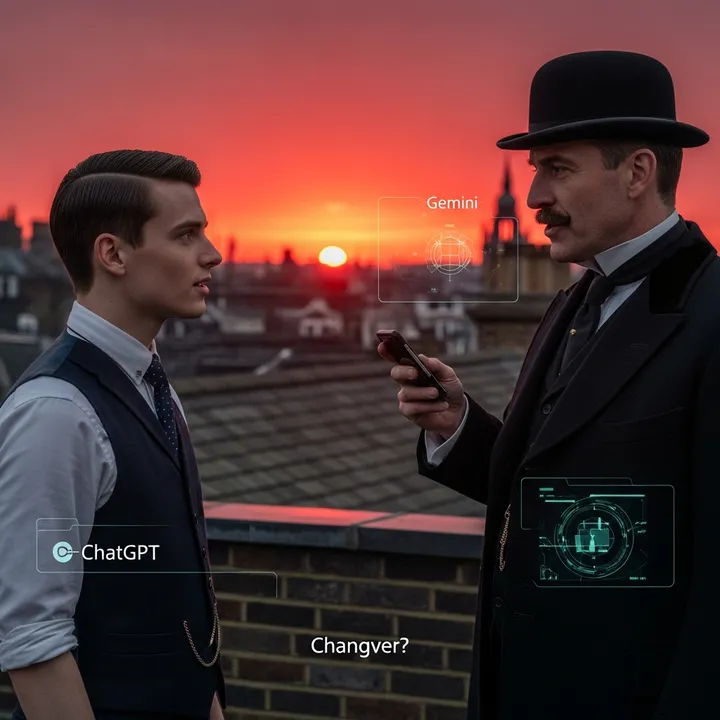
Trying to Nail It in One Shot, They Never Hit
Chapter 1: They Kept Waiting for the Perfect System
"I want to detect the position of sinkers underwater with AI. But in an environment where radio doesn't reach."
Joji Umihara, operations director at MarineTech, a company operating in the waters around Okinawa, described the situation. "The fish reefs are near the surface; the sinkers are on sandy bottom at a depth of 1,500 to 2,000 meters. They should be within fifty meters of a reef, but offline operation where radio doesn't reach is a must. I want to pinpoint the position accurately with AI and streamline the round-the-clock work."
"How do you search now?" Claude asked.
"A thirteen-person crew, twenty-four hours, from detection through recovery," Umihara answered. "A full day just to pinpoint a sinker's position. With our own recovery method there's a risk the rope snaps from friction, and sometimes a sinker stays lost underwater. It comes up in executive meetings, too."
"In what form do you want to bring in the system?" I asked, to confirm.
"...I was thinking of a perfect one, in one shot," Umihara answered. "Offline, at 2,000 meters, hitting for sure. Only once a system meeting every condition was built. But I've started to feel that waiting for that means it never begins."
"Rather than waiting for one perfect shot, raising accuracy while you cycle is steadier," I replied. "Let's break this down with PDCA."
Chapter 2: PDCA Asks—Cycle Plan, Do, Check, Act
"This case calls for PDCA."
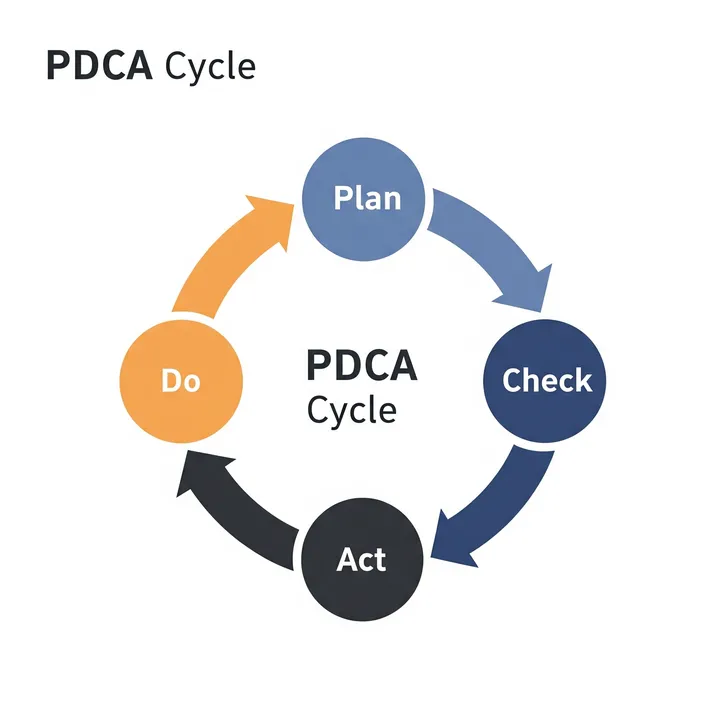
Claude wrote on the whiteboard: "Plan, Do, Check, Act."
"PDCA—Plan, Do, Check, Act—tries small, evaluates, and keeps cycling improvements to raise accuracy," I explained. "The key is not to aim for one perfect shot. Aim for full marks all at once in radio-less water, and it never begins. Try first, see the result, fix it. Accuracy rises with each cycle. Not a tool for waiting, but for finishing by cycling."
"First, let's measure the current cost," Gemini said, opening ROI Polygraph. The data Umihara provided was entered.
"Here is the monthly cost," Gemini read out. "Labor for a thirteen-person, twenty-four-hour sinker detection-and-recovery: 420 hours per month on average, at ¥3,600 per hour, ¥1,512,000 per month. Opportunity loss from operation delay because pinpointing takes a full day: ¥420,000 per month. Rework and material loss from rope-snap risk: ¥360,000 per month. Loss from sinkers that stay lost underwater and can't be recovered: ¥340,000 per month. Expected value of the safety risk from the person-bound recovery method: ¥300,000 per month. A total of ¥2,934,000 per month. Roughly ¥35.21 million per year."
Umihara stared at the figures. "I knew the work was grueling. But add the full-day delay and the loss of stranded sinkers, and it comes to this much."
"Then let's design it with PDCA," I continued.
[Plan—Design detection that runs offline]
"First, make the plan," Claude said. "Design an AI detection system that runs even where radio doesn't reach. Hear the site conditions in detail and factor in depth and sandy bottom. Not perfect from the start—plan a form that first runs."
[Do—Trial-run with sonar and AI]
"Next, do," Gemini continued. "Around 1,700 meters, light doesn't reach. Build a detection system combining sonar technology and AI, and trial-run it on site. Put it to sea first and run it. Only here do you get real data."
[Check—Measure detection accuracy and labor savings]
"After doing, check," I continued. "In the trial run, measure how accurately you pinpointed the sinker's position and how much labor dropped. See whether recovery grew safer, too. See the result in numbers and decide the next move."
[Act—Stack data and raise accuracy]
"Finally, act," Claude continued. "Keep collecting field data and update the AI's algorithm. Accuracy rises with each cycle. Applications to other tasks emerge from within this improvement, too. Not one shot—finish by cycling."
[Estimating the payback]
"Let's run the numbers on ROI Proposal Generator," Gemini proposed.
- Initial cost: building the offline-capable AI detection system, sonar integration, underwater-image learning, on-site test operation, and recovery-method improvement design—¥5.9 million total
- Monthly cost: system operation and model updates combined, ¥240,000
- Monthly savings: reduced detection-and-recovery labor = ¥1,060,000 (assuming a 70% reduction); eliminated operation delay via shorter pinpointing = ¥420,000; reduced rope-snap and stranding risk = ¥340,000; loss avoidance via improved safety = ¥280,000; totaling ¥2,100,000 per month
- Net monthly savings: ¥2,100,000 − ¥240,000 = ¥1,860,000 per month
- Payback period: ¥5.9 million ÷ ¥1.86 million = about 3.2 months
"Just over three months to recoup," Gemini summarized. "What works is not waiting for one perfect shot, but raising accuracy while you cycle. Aim for full marks offline from the start and it never begins. Run it first, then evaluate and improve, and accuracy rises steadily. Because you can begin, the investment doesn't miss."
Umihara checked the figures. "I was waiting for a perfect one to be built. Finish while cycling, and I can begin without waiting."
"PDCA is a tool for raising accuracy while you cycle," I replied.
Chapter 3: An Implementation Plan That Finishes by Cycling
"Let me lay out the approach," I said, standing at the whiteboard.
"Month one—plan the offline detection and hear the site conditions. Months two and three—build the sonar-integrated AI detection system and learn from underwater images. Month four—on-site trial operation (do). Month five—evaluate detection accuracy and labor savings. Month six onward—improve the algorithm through data collection, raise accuracy, and examine applications to other tasks."
"If it isn't perfect in one shot, won't the floor be thrown into confusion?" Umihara asked.
"Cycling causes less confusion," Claude replied. "Wait for perfect, and it stays a full day forever. PDCA begins in a running form first and fixes while evaluating. Even if accuracy is rough at first, it rises with each cycle. The floor moves forward feeling the traction of improvement. Better to cycle and improve steadily than to wait and see nothing change—the floor accepts that too."
Umihara took notes. "Before waiting for perfect, cycle first and finish it. Now I see the order."
Chapter 4: The Day It Hit More the More They Cycled
Ten months later, a report arrived from Umihara.
After the system went in, pinpointing sinker positions changed dramatically. "Pinpointing that took a full day was done in a short time. The sonar-and-AI combination began to hit with high accuracy even offline," Umihara wrote.
Recovery grew safer, too. Improving the method lowered the rope-snap risk. "The tightrope of friction-snapping decreased. Sinkers staying lost underwater decreased, too," the report read.
The biggest change showed in how the system was grown. From waiting for perfect, to finishing by cycling. "I was waiting for one that met every condition. Once we ran it first and fixed it by stacking data, accuracy rose with each cycle," Umihara wrote.
Labor dropped sharply as well. The thirteen-person crew's load eased. "The twenty-four-hour detection-and-recovery was streamlined. The strain on hands dropped visibly," the report read.
As a side effect, the way improvement was pursued changed. Cycling rather than waiting for perfect took root on the floor. "We stopped 'use it once it's complete.' We started thinking 'run it first, then grow it while fixing,'" Umihara wrote.
At the end of Umihara's report was this: "I thought the sinker-detection struggle was that we couldn't build a perfect system. But the real problem was that, trying to nail it in one shot, we could never begin. The moment we decided to finish while cycling with PDCA, accuracy began to rise steadily. Before waiting for perfect, cycling came first."
The day a company that never hit while trying for one shot became a company that could finish by cycling, adopting AI detection had shifted from the pursuit of one perfect shot to a design that cycles plan, do, check, and act.
"AI-use requests usually arrive as 'I want to bring in a perfect system.' But before waiting for one shot, there's a question to ask: if you finish while cycling, can't you begin without waiting? What PDCA asks is plan, do, check, and act. Run it first, evaluate, and improve, and accuracy rises with each cycle. The day a company that never hit while trying for one shot began to hit the more it cycled, what changed was not the AI's performance but the very perspective that finishes by cycling instead of waiting for perfect."
Related Files
Tools Used
- ROI Polygraph — Visualizing detection-and-recovery labor, opportunity loss from pinpointing delay, and stranding risk
- ROI Proposal Generator — Payback simulation for an offline AI detection system, starting from plan, do, check, and act


