ROI Case File No.290 | 'CircuitWorks' Small Proof of Concept'

📅 2025-11-01 11:00

🕒 Reading time: 10 min

🏷️ RCD


ICATCH


Chapter 1: The AI Implementation Wall — Fear of Large Investments

The week following the resolution of ElectroMart's SBI analysis case, a consultation arrived from northern Kanto regarding an electronic circuit board manufacturer's AI implementation. Episode 290, the final chapter of Volume 23 "The Pursuit of Reproducibility - Sequel," tells the story of avoiding big bets and advancing certainly by accumulating small proofs.

"Detective, management is considering AI image inspection implementation. But the investment amount is $317,000. If it fails, it's a responsibility issue. The field is skeptical: 'Will it really work?' No one can make the decision, and consideration has continued for over a year."

CircuitWorks' quality control manager, Masaki Kimura from Gunma, visited 221B Baker Street unable to hide his anxiety. In his hands were a luxurious AI image inspection system proposal and, in stark contrast, a proposal document marked "Decision Pending."

"We manufacture electronic circuit boards in Gunma. Visual inspection relies on human eyes, but labor shortages and quality inconsistency are issues. We want to solve with AI but can't commit."

CircuitWorks' Implementation Confusion: - Founded: 1988 (electronic circuit board manufacturing) - Annual revenue: $70.8 million - Employees: 280 - Inspection process: Visual inspection (manual) - Inspectors: 12 (average age 52) - Inspection targets: 120,000 boards/month - Defect outflow rate: 0.18% (target 0.05%) - AI implementation consideration period: 14 months - Investment amount (proposal): Initial $317,000 + annual maintenance $56,700 - Decision status: Pending

Deep conflict showed on Kimura's face.

"The problem is we're seeking a 'perfect system.' The vendor says '99.8% accuracy,' but is that true? Ten cameras, two servers, specialized software. Once implemented, there's no turning back."

Field Anxieties: - "Is AI really more accurate than humans?" (Inspectors) - "What if we can't figure out how to use it?" (Field supervisor) - "What if false detections stop production?" (Production manager) - "If the investment is wasted, who takes responsibility?" (Management)

Vendor Proposal: - "Complete turnkey solution" - "All-at-once implementation for maximum efficiency" - "Full-line deployment in 6 months" - "3-year investment recovery"

Consideration Meeting Record (18 meetings over 1 year): - Meeting 1: "Wonderful proposal" - Meeting 5: "Can we really achieve this accuracy?" - Meeting 10: "Let's consider a bit more" - Meeting 15: "Let's research other companies' cases" - Meeting 18: "Continue consideration"

"We can't decide. Investment too large, uncertain effects, irreversible risks. Everything frightens us."


Chapter 2: Record-Check-Do Chain — Transforming Big Bets into Small Proofs

"Mr. Kimura, what premises guide your current AI implementation plan?"

To my question, Kimura answered.

"Basically, 'all-at-once implementation.' Install cameras on all lines in 10 units, integrate the system, switch over all at once. The vendor also says 'phased implementation is inefficient.' But that's what makes us anxious."

Current Implementation Plan (All-or-Nothing Type): - Premise: "Large-scale investment for all-at-once implementation" - Expectation: "Maximize ROI" - Risk: If it fails, everything is wasted - Result: Cannot make decision

I explained the importance of small proofs.

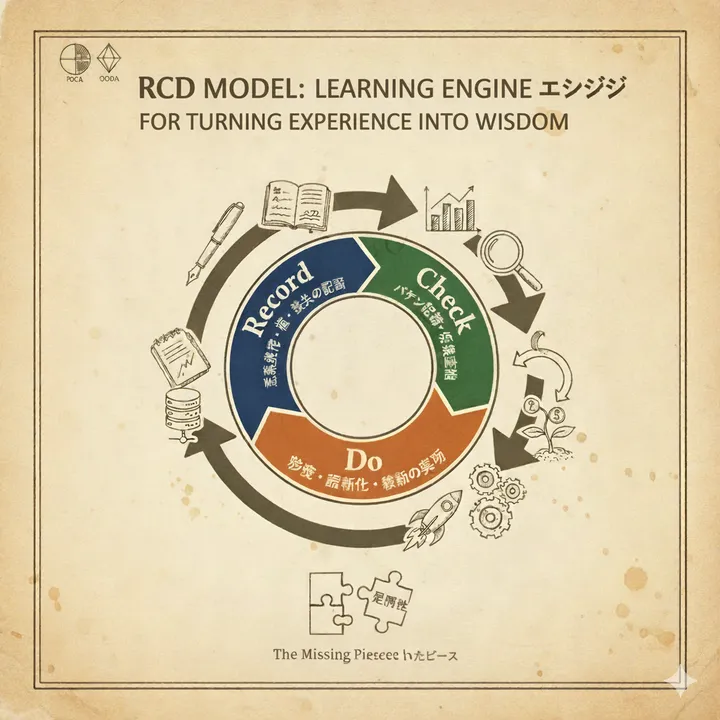
"Don't make big bets with uncertain technology. RCD—Record, Check, Do. Test small, record, check, advance to next. This chain is the only path to minimize risk while advancing."

⬜️ ChatGPT | Catalyst of Concepts

"Big bets fail. Accumulate small proofs. Record, Check, Do."

🟧 Claude | Alchemist of Narratives

"Perfect systems are illusions. Move imperfectly, record, learn, improve. That's advancement."

🟦 Gemini | Compass of Reason

"RCD is learning technology. Records create data, checks create judgment, doing creates results."

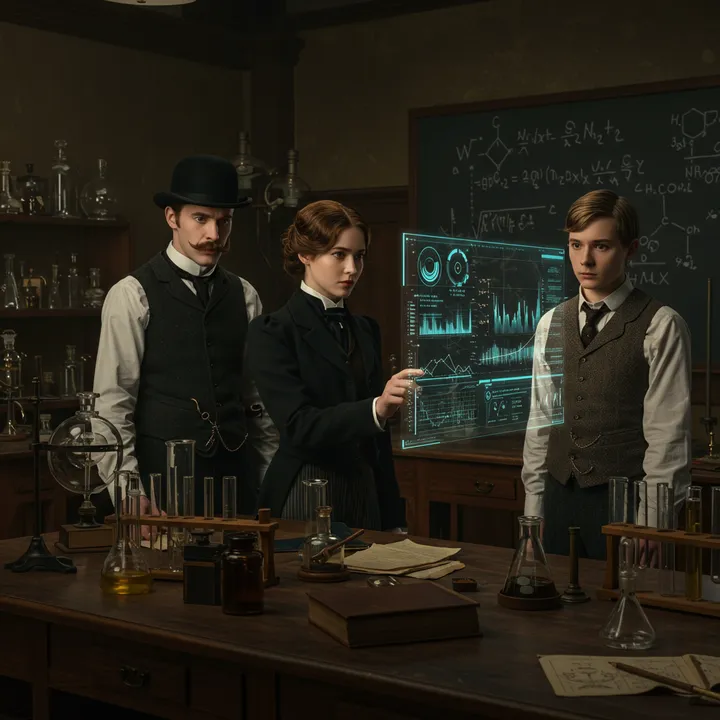
The three members began analysis. Gemini deployed an "AI Implementation-Specific RCD Model" framework on the whiteboard.

RCD Model Three Stages: 1. Record - Collect and record data 2. Check - Analyze and verify records 3. Do - Act based on verification results

Differences from Conventional Large-Scale Implementation: - Conventional: Plan → All-at-once implementation → Evaluation (difficult to reverse) - RCD: Test small → Record → Check → Next execution (flexible)

"Mr. Kimura, let's advance CircuitWorks' AI implementation with small RCD cycles."


Chapter 3: Cycle 1 — Minimal Proof of Concept

Phase 1: Record - Minimal Recording (2 weeks, investment $5,667)

We started with the "minimal experiment" rather than a perfect system.

Experiment Content: - Target: 1 line, only 1 camera - Installation location: 1 place in final inspection process - Camera: Industrial camera 1 unit (rental, $667/month) - AI: Cloud AI (pay-per-use, $417/month for validation period) - Purpose: Data collection on "Can AI detect defects?"

Recording Items: - AI judgment: Good / Defective - Human judgment: Good / Defective (conventional) - Defect type: Scratches, stains, position misalignment, etc. - Recording period: 2 weeks, 8,000 boards inspected

Recording Results After 2 Weeks:

Data: - Boards inspected: 8,000 - AI judged "defective": 156 boards - Human judged "defective": 142 boards - Matched: 128 boards - AI only detected: 28 boards (human oversight?) - Human only detected: 14 boards (AI oversight?)

Phase 2: Check - Record Verification (3 days)

We analyzed recorded data in detail.

Detailed Verification (28 boards AI only detected): - Veteran inspectors re-checked - Result: 22 of 28 were "actually defective" (human oversight) - Remaining 6 were "false positives" (judged defective though not problematic)

Detailed Verification (14 boards human only detected): - Checked AI images - Result: AI couldn't see due to lighting angle (10 boards) - AI learning insufficient (4 boards)

Verification Results: - AI accuracy: Actual 94.3% (before adjustment) - Human oversight: 22 cases discovered - Room for improvement: Lighting angle, learning data addition can improve accuracy

Management Decision: "This seems usable. Let's proceed to the next step."

Phase 3: Do - Improvement and Next Experiment (4 weeks, additional investment $7,083)

Based on verification results, we improved and executed the next experiment.

Improvement Content: - Lighting angle adjustment (discovered optimal angle) - Learning data addition (500 past defective boards) - Camera position fine-tuning

Next Experiment: - Period: 4 weeks - Target: Same 1 line, 16,000 boards inspected - Investment: $7,083 improvement costs

Results After 4 Weeks: - AI accuracy: 94.3% → 98.7% - Human oversight: 12 cases discovered (cumulative 34 cases) - False positives: 6 cases → 2 cases (83% reduction) - Inspector feedback: "Surprised by defects AI finds"


Chapter 4: Cycles 2-4 — Gradual Expansion and Learning

Cycle 2: Expansion to 2 Lines (3 months, investment $20,000)

Record: - Camera installation on 2nd line also - Different product type (multi-layer vs. single-sided boards) - Recording: 2 lines × 3 months = 72,000 boards inspected

Check: - 2nd line accuracy: 96.8% (lower than 1st line) - Cause: Different product type, insufficient learning data - Discovery: Learning needed by product type

Do: - Multi-layer board specialized learning data addition (1,200 boards) - 2nd line accuracy: 96.8% → 98.9%

Cycle 3: Human-AI Collaboration (6 months, no additional investment)

Record: - Use AI judgment as "primary inspection" - Humans check only "AI judged defective" - Recording: Inspection time, human workload, final accuracy

Check: - Inspector work time: 50% reduction - Inspector workload: "Became easier" (fatigue survey improvement) - Final accuracy: 99.2% (AI + human collaboration) - Inspector feedback: "AI doesn't overlook. Doesn't tire. Reliable."

Do: - Standardize human-AI collaboration model - Reduce inspectors from 12 → 6 (reassignment, no layoffs)

Cycle 4: Full-Line Deployment Decision (12 months, investment $106,667)

Record: - 2 lines × 12 months operational results - Defect outflow rate: 0.18% → 0.03% (83% reduction) - ROI: Investment recovery period 8.2 months

Check: - Technically feasible (proven) - Economically rational (ROI clear) - Field acceptance: High (inspectors support) - Risk: Minimized (verified in stages)

Do: - Decision to deploy to all 10 lines - 3-year plan → 1-year plan accelerated (gained confidence) - Investment amount: $106,667 (34% of initial $317,000 proposal)

Comprehensive Results After 18 Months:

Dramatic Quality Improvement: - Defect outflow rate: 0.18% → 0.02% (89% reduction) - Customer complaints: Average 8/month → Average 0.8/month - Customer satisfaction: 3.9 → 4.7 - Quality evaluation: "Best Supplier Award" from major customers

Inspection Efficiency Improvement: - Inspectors: 12 → 6 (reassignment) - Inspection time: 12 seconds/board → 5 seconds - Inspection capacity: 120,000 boards/month → 280,000 boards/month (respond to order expansion)

Investment Optimization: - Cumulative investment: $139,417 (44% of initial $317,000 proposal) - Investment recovery period: 8.2 months - Annual cost reduction: $200,000 (labor + defect costs)

Organizational Change: - "AI is threat" → "AI is partner" - Inspectors' new role: AI learning guidance, quality analysis - Improved young staff retention: Valued as "company where we can work with AI"

Phase 5: Continuous Improvement (Ongoing)

RCD cycles never end.

New Record: - From AI-accumulated defect patterns, discovered manufacturing process issues - Predictive analysis of "why this defect occurs"

New Check: - Found 80% of defects originate in "Process B" - Cause: Subtle temperature management deviation

New Do: - Improve Process B temperature management - Defect occurrence rate: Further 50% reduction

Final Results After 24 Months:

Business Metrics: - Annual revenue: $70.8M → $85M (+20%, orders increased from quality improvement) - Operating profit margin: 6% → 11% - New customers: Acquired 8 companies from quality evaluation - Competitive advantage: "Highest quality circuit board manufacturer"

AI Utilization Expansion: - Image inspection: All lines complete - New domains: Expanding to manufacturing process anomaly detection, demand forecasting - In-house AI personnel: 6 trained (transformation from inspectors)

Customer Testimonials:

Auto Parts Manufacturer - Quality Manager: "CircuitWorks' boards have almost zero defects. Our manufacturing lines no longer stop. They're a trustworthy partner."

Inspector (48, 20 years tenure): "At first, I thought AI would take my job. But now, AI supplements my eyes. Even when I'm tired, AI doesn't overlook. It's a colleague working together."


Chapter 5: The Detective's RCD Diagnosis — Volume 23 Conclusion, and the Next Journey

Holmes compiled the comprehensive analysis.

"Mr. Kimura, RCD's essence is 'humility.' We cannot perfectly predict the future. Therefore, don't make big bets but test small. Record, check, learn, advance to next. This repetition is the technology for surviving uncertain times."

Final Report 36 Months Later:

CircuitWorks established a new position as "quality and AI utilization leading company" in the electronic circuit board industry.

Final Results: - Annual revenue: $70.8M → $112.5M (+59%) - Defect outflow rate: 0.18% → 0.008% (96% reduction) - Industry awards: "Quality Excellence Award" 3 consecutive years - AI utilization cases: Many seminar lecture requests

Kimura's letter expressed deep gratitude:

"Through RCD model, we transformed from 'an organization that can't decide' to 'an organization that keeps testing.' Most important was 'not seeking perfection.' Test small, record, check, improve. This repetition produced results surpassing 14 months of consideration. Now all new technology implementations proceed with RCD. We understand that big bets aren't necessary—accumulating small proofs is certain advancement."


The Detective's Perspective — Volume 23 Conclusion, Continuing the Journey of Reproducibility

That night, I reflected on the long journey of pursuing reproducibility.

Volume 23 "The Pursuit of Reproducibility - Sequel" progressed through SWOT, TOC, Blue Ocean, Value Chain, LEAN, JTBD, OODA, MECE, SBI, and finally to RCD.

Through 10 cases, we reconfirmed one truth.

Success is reproducible.

From Volume 22 through Volume 23, 20 cases, 20 frameworks. All headed toward one destination: "reproducibility."

Success is not coincidence. It is measured, analyzed, improved. And if you record that process, anyone can reproduce it.

"Reproducibility is the technology for designing the future. And that technology is learnable by anyone."

Volume 23 concludes here.
But the detective's journey doesn't end. In the next volume, adventures diving into even greater depths await.


"Big bets fail. Accumulate small proofs. Record, check, do. That chain creates a certain future."—From the detective's notes

— Volume 23 "The Pursuit of Reproducibility - Sequel" Complete —


rcd

🎖️ Top 3 Weekly Ranking of Case Files

ranking image
🥇
Case File No. 245_5
The True Culprit Behind the Vanishing OGP Images

OGP images won't display on social media. What seemed like a simple configuration error led to a massive darkness: a 5.76-second server response time. Hunt down the true culprit lurking behind the surface symptoms.
ranking image
🥈
Case File No. 000
A Report on Self-Diagnosis Using the ROI Visualization Service

London, 1891. To the detective agency established next to 221B Baker Street, a peculiar commission arrived. The client's name, upon inspection, raised my eyebrows—it was our own.
ranking image
🥉
Case File No. 047
Fighting Price Labyrinth: E-commerce Strategy

Wedge Corporation lost in modern price competition labyrinths. However, three detectives' insights revealed what true value means. It wasn't mere numerical cheapness but invisible assets: customer trust relationships, long-term security, an
"Behind every conspicuous trait lies the true value, carefully displaced."
── From the ROI Detective's Journal
🎯 ROI Detective's Insight:
This story teaches us that "the conditions and challenges visible on the surface are merely camouflage for the true objective." In the ROI Detective's field work, there are many cases where real value gets displaced while we're distracted by obvious problems.
📚 Read "The Red-Headed League" on Amazon

Solve Your Business Challenges with Kindle Unlimited!

Access millions of books with unlimited reading.
Read the latest from ROI Detective Agency now!

Start Your Free Kindle Unlimited Trial!

*Free trial available for eligible customers only