
ROI Case File No.488 'The Day Our Customer Wasn't Our Customer'

The Day Our Customer Wasn't Our Customer
Chapter One: No Access to Our Own Customer Data
"We don't have the fans' personal information."
Takuya Hashimoto, DX Lead at Globex, spread a fan-club listing. Nearly 300 entries, each with artist name, operating company, contract start year.
"We have approximately 300 fan clubs by artist," Hashimoto continued. "More than half are outsourced to external operating companies. Fans pay membership fees, register information, and engage on external platforms. That personal information is held by the operating companies."
"Can you obtain member data from operating companies?" Claude confirmed.
"No," Hashimoto answered. "Personal information protection laws make information sharing for purposes beyond the original difficult. Contractually, the operating company is positioned as the data controller. We can request aggregate data from outsourcees, but individual member information is out of reach."
"What's Globex's strategic direction?" I asked.
"Conversion from BtoB to DtoC," Hashimoto answered. "Build infrastructure to connect directly with fans of each artist. For that, holding customer first-party information in-house is absolutely necessary. As things stand, the DtoC strategy has no foundation."
"Any in-house-operated fan clubs?" Gemini asked.
"About 120," Hashimoto answered. "But the systems used differ. Multiple packages, custom-built, even Excel-based ones managed internally—all coexist. Combined with outsourced, there's no unified platform."
"Is examination progressing concretely?" Claude confirmed.
"Several proposals from system companies," Hashimoto answered. "But all are package-introduction type with limited customization. The 300 fan clubs each have different operational styles, and uniform packages can't accommodate them. We're looking for a partner who can build in-house-led."
"The reason discussion isn't progressing hasn't been articulated yet," I said quietly.
Chapter Two: The Situation, Behavior, and Impact SBI Demands
"This case needs SBI."
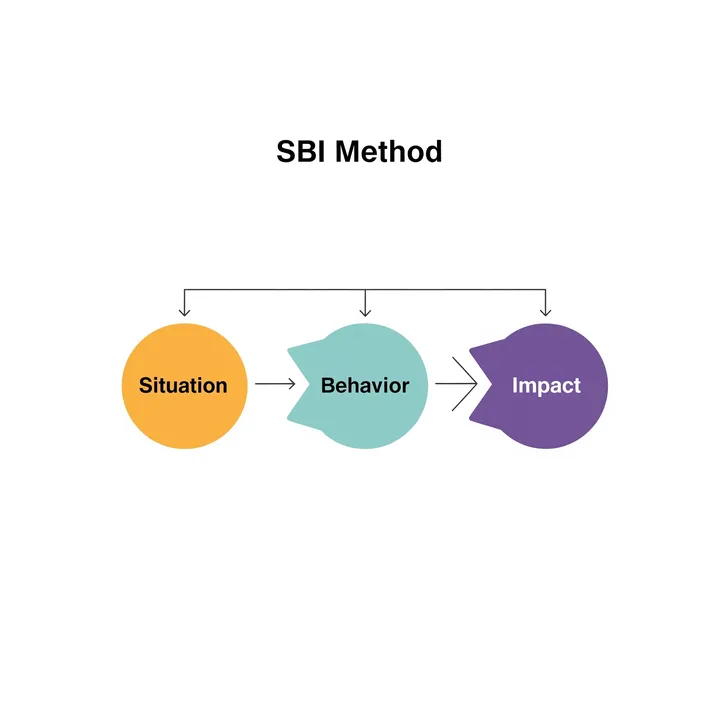
Claude wrote three letters on the whiteboard. S, B, I.
"SBI is a framework for analyzing the current state through three elements—Situation, Behavior, Impact," I explained. "Originally used as a feedback technique, it also applies to organizing complex business problems. Describe the situation, identify the behavior occurring within it, visualize the impact it produces. Looking at three elements simultaneously surfaces the problem's overall picture and priorities."
"Let's measure current cost first," Gemini said, opening ROI Polygraph. Hashimoto's fan-club operational data went in.
"Annual fragmentation cost is out," Gemini read. "Outsourcing fees to fan-club operators total approximately ¥84 million annually—sum of operation fees, system usage fees, and support. Maintenance of multiple systems for in-house operation is approximately ¥36 million annually. Cross-marketing opportunity loss from inability to connect data across 300 fan clubs—not knowing that the same fan belongs to multiple fan clubs drives redundant targeting and churn—estimated at approximately ¥60 million annually. Total: approximately ¥180 million annually arising from the current fragmentation structure."
Hashimoto examined the numbers. "The scale of opportunity loss is larger than I assumed."
"So, let's design with SBI," I continued.
[S—Situation: Describe the State Accurately]
"Describe the current state in three layers," Claude said. "Layer one—where data resides. In-house operation data is dispersed across multiple systems. Outsourced data is completely inaccessible from us. Layer two—relationships among fan clubs. The 300 fan clubs run independently, with no cross-cutting view of the same fan. Layer three—distance from strategy. If aiming at DtoC, customer first-party information residing in-house is a precondition. The current state doesn't meet that precondition."
"At layer three, the distance between strategy and current state is greatest," Hashimoto noticed.
"The greater the distance, the more meaning there is in organizing it," I responded.
[B—Behavior: Identify the Occurring Behavior]
"Organize what behavior is occurring now," Gemini continued. "First, each operating company manages fans on their own system—nothing enters Globex. Second, even in in-house operation, each fan club runs an independent system—no cross-cutting analysis is possible. Third, for each new initiative, data is requested per fan club—time and coordination costs arise per request. Fourth, personal information protection law response—contract reviews with outsourcees arise individually."
"The third behavior is the biggest daily burden," Hashimoto said. "Every time we launch a new campaign, we contact each fan club owner and receive aggregate data. One initiative can take two weeks."
"A structure where swift decision-making is impossible," Claude responded.
[I—Impact: Visualize the Impact]
"Divide the impacts the current behavior produces into three," Claude continued. "First, business impact—DtoC strategy doesn't advance, opportunity loss accumulates. Second, customer-experience impact—same fan receives redundant outreach from multiple fan clubs, no unified experience provided. Third, organizational impact—coordination cost per data request slows new-initiative speed."
"We need to improve all three impacts simultaneously," Hashimoto confirmed.
"Simultaneously," I answered. "Improving only one, the others remain and the strategy doesn't advance."
[Direction of Resolution—First-Party Information Integration Platform]
"Organized through SBI, the solution converges to one," Gemini continued. "Build a Globex-led integration platform, launching new fan clubs there and gradually migrating existing fan clubs. Contract reviews with outsourcees are renegotiated on the premise of the new platform."
"Is adopting an existing package an option?" Hashimoto confirmed.
"Limited," Claude answered. "Absorbing the diversity of 300 fan clubs in a single package isn't realistic. But full scratch isn't necessary either. Core components—member management, payment, authentication—combine SaaS, and fan-club-specific requirements are customized at the layer above. That configuration balances freedom and cost."
"Let's simulate with ROI Proposal Generator," Gemini suggested.
- Initial cost: Integration platform design and development, existing-data integration foundation, security response totaling ¥120 million. Includes partner outsourcing
- Monthly cost: Platform maintenance and cloud ¥1.8 million/month
- Monthly savings (assumed to fully materialize in year three): Savings from bringing outsourced operations in-house ¥2.1 million, consolidation of multiple systems ¥1.5 million, opportunity-loss recovery from cross-marketing ¥3.0 million, totaling ¥6.6 million
- Net monthly savings: ¥6.6M − ¥1.8M = ¥4.8M
- Payback period: ¥120M ÷ ¥4.8M ≈ 25 months (accounting for phased migration, 3 years for payback)
"Three years for payback, then approximately ¥57 million in annual net savings," Gemini summarized. "Plus, first-party information ownership becomes the foundation of DtoC strategy. Having data in-house changes the launch speed of new businesses. The strategic value not directly expressed in numbers is large."
Hashimoto reviewed the figures. "Three-year payback is standard for business investment. Adding the strategic value, it's sufficiently decidable."
Chapter Three: Phased Migration Design
"Let me organize the approach," I said at the whiteboard.
"Phase one—six months. Integration platform requirement definition, partner selection, core design. In parallel, create a contract template for personal-information-protection-law compliance. Phase two—12 months. Platform construction and production launch with new fan clubs. Advance-migrate part of in-house operations. Phase three—24 months. Complete migration of existing in-house operations and contract-revision negotiations with outsourced operations. Phase four—36 months and beyond. With all fan clubs on the integration platform, cross-marketing goes into full operation."
"Negotiation with outsourcees seems to be the hardest," Hashimoto said.
"It will be hard," Claude answered. "But the negotiation material lines up. With the new platform running, we can take the stance 'we can provide the same service in-house' toward outsourcees. Bargaining power changes."
Hashimoto closed his notebook. "I understand today this is a project on a three-year timeline. Trying to produce short-term results conversely stops progress."
Chapter Four: The Day Our Customer Became Our Customer
Twenty-eight months later, a report from Hashimoto arrived.
The integration platform launched in month 18. Twenty new fan clubs went live on the platform, reaching approximately 48,000 total members in six months of operation. "A member ledger Globex owns in-house for the first time," Hashimoto wrote.
Existing in-house fan clubs had about half migrated by month 28. The remaining half are scheduled for switchover at contract renewal timing. For outsourced operations, negotiations with two major operating companies are progressing, with one agreeing to phased migration.
The biggest change was cross-marketing realization. On the new platform, cases where the same fan belongs to fan clubs of multiple artists became visible, enabling cross-initiatives. In cross-initiatives during six months of operation, annual unit price per applicable fan rose approximately 17%. "We can now view one fan company-wide," Hashimoto wrote.
As a new business, an artist-by-artist live-streaming platform launched. Through integration with existing member data, approximately 12,000 viewers were acquired in the first operational month. "With first-party information, new-business launch became faster," the report noted.
For personal information protection law response, with in-house-held data becoming central, all processes for consent acquisition, disclosure requests, and deletion response completed in-house. "Response speed became something else compared to before," the report said.
Hashimoto's report concluded, "Twenty-eight months ago, not being able to access our own fans' information was ordinary. Now, it's no longer ordinary. The standard of ordinary changed."
A day when our customer became our customer.
"The company's own customer, yet no data at the company. This situation isn't rare. It forms over time through accumulated outsourcing. What SBI asks are three layers—situation, behavior, impact. Look at situation alone and resignation comes first. Identify behavior and improvement points become visible. Visualize impact and the grounds for investment align. Seeing three layers simultaneously makes complex business problems decomposable. The day our customer became our customer—it wasn't the day the integration platform was completed, but the day we chose to connect directly with customers."
Related Files
Tools Used
- ROI Polygraph — Visualizing outsourcing fees, system fragmentation, and opportunity-loss cost
- ROI Proposal Generator — Integration platform construction payback simulation


