
ROI Case File No.550: Every Time They Outsourced, Assets They Couldn't Fix Piled Up

Every Time They Outsourced, Assets They Couldn't Fix Piled Up
Chapter 1: We Can Build It, but We Can't Fix It
"We want to bring AI development using Claude Code in-house. We want to learn systematically so we can fix and edit on our own."
Tomoaki Utsumi, in charge of development promotion at TechNova, said this as he described the situation. "We've tried ChatGPT and Gemini, but lately I feel Claude Code's performance has improved. Other companies are adopting it too, and we want to use it seriously in real work."
"Why do you insist on in-house development?" Claude asked.
"Because when we outsource, we can't fix it," Utsumi answered. "AI always needs revision once it's built. Outsource every time, and costs mount. Assets we can build but can't fix keep piling up. I want to learn the use of Claude, Claude Code, and the whole tool chain systematically, so we can run it ourselves."
"What issues are there on the floor now?" I confirmed.
"Sales make materials separately, and the content varies," Utsumi answered. "Manually searching trends and social media to reflect them in proposals is inefficient too. Transcription mistakes into the Excel template happen. There are various issues, but they're not organized, and we don't know what to bring in-house first."
"With the issues full of gaps and overlaps, the in-house order can't be decided either," I responded. "Let's organize with MECE."
Chapter 2: What MECE Asks—No Gaps, No Overlaps
"This case needs MECE."
Claude wrote "MECE" on the whiteboard.
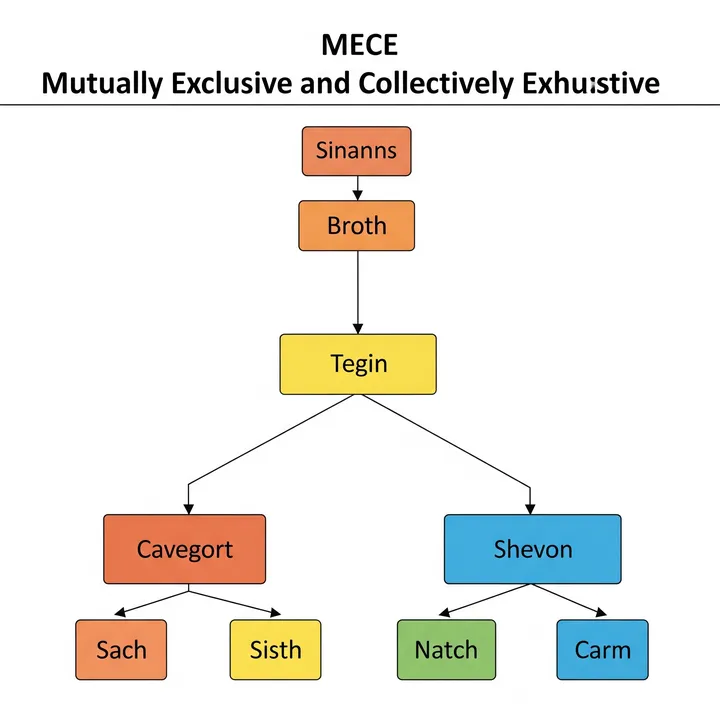
"MECE—Mutually Exclusive, Collectively Exhaustive—is a framework that organizes issues in a form that doesn't overlap with one another and covers the whole," I explained. "The crux is drawing the map of issues accurately. Leave an issue out and you miss a countermeasure; overlap them and you double the effort. Sales materials, information gathering, transcription mistakes—we line up the scattered issues with no gaps and no overlaps. It's a tool that correctly judges the target of in-house development."
"First, let's measure the current cost," Gemini said, opening the ROI Polygraph. He entered the data Utsumi had provided.
"The monthly cost is in," Gemini read out. "Duplicate labor from individual creation and variation of sales materials: 180 hours per month on average, at ¥4,000 per hour, ¥720,000 per month. Manual search-and-reflection labor for trends and social-media information: ¥480,000 per month on average. Rework from Excel-template transcription mistakes: ¥380,000 per month on average. Cost arising each time of outsourced revisions: ¥450,000 per month on average. Expected value of personnel-dependency and stalling risk from a lack of in-house AI know-how: ¥330,000 per month on average. A total of ¥2,360,000 per month. Annualized, about ¥28,320,000."
Utsumi stared at the figures. "I thought it was just the outsourcing fee. Add the material variation, and the risk of not being able to develop in-house, and it's this much?"
"Now, let's design with MECE," I continued.
[Enumerating the Issues—Line Them Up With No Gaps]
"First, we line up the issues with no gaps," Claude said. "Sales-material variation, inefficient information gathering, transcription mistakes—we write out the floor's issues without missing a single one. Leave a gap, and you miss a countermeasure later."
[Eliminating Overlaps—Erase the Duplicates]
"Next, we erase the overlaps among the listed issues," Gemini continued. "Aren't variation and transcription mistakes arising from the same work? Bundle the overlaps into one, and you avoid double-effort countermeasures."
[Sorting In-House Targets—Define the Scope You Can Fix Yourself]
"We sort the organized issues by in-house-development target," I continued. "Sales-material auto-generation, information-gathering automation, transcription auto-entry—we define the scope your company can revise with Claude Code. A sorting that doesn't produce 'can build but can't fix.'"
[Systematic Learning—Cultivate People Who Can Fix It]
"Finally, we cultivate people who can revise," Claude continued. "Learn the use of Claude, Claude Code, and the whole tool chain systematically. A structure that leaves the know-how in the organization so you can fix it yourself without outsourcing."
[Calculating the Investment Recovery]
"Let's run the estimate with the ROI Proposal Generator," Gemini proposed.
- Initial cost: MECE organization of issues, sales-material auto-generation system, information-gathering automation, Excel auto-entry and double-check, and Claude Code in-house-development training—¥5,600,000 total
- Monthly cost: Tool usage fee and operation ongoing fees combined, ¥240,000 per month
- Monthly reduction effect: Auto-generation and unification of sales materials = ¥570,000 per month (assuming 80% reduction), information-gathering automation = ¥380,000 per month, transcription-mistake rework reduction = ¥300,000 per month, reduction from bringing outsourcing fees in-house = ¥360,000 per month, totaling ¥1,610,000 per month
- Net monthly reduction: ¥1,610,000 − ¥240,000 = ¥1,370,000 per month
- Payback period: ¥5,600,000 ÷ ¥1,370,000 = approximately 4.1 months
"Recovery in just over four months," Gemini summarized. "What works is bringing it in-house after organizing the issues with no gaps and no overlaps. A gap and you miss a countermeasure; an overlap and you double the effort. Because MECE draws the map accurately, the in-house order gets decided, and assets you can build but can't fix stop piling up."
Utsumi confirmed the figures. "We were lining up issues as they came to mind. Organize with no gaps and no overlaps, and what to bring in-house first becomes visible."
"MECE is a tool that draws the map of issues accurately," I responded.
Chapter 3: A Deployment Plan That Judges With No Gaps and No Overlaps
"Let me organize the approach," I said, standing at the whiteboard.
"Month one—MECE organization of issues, eliminating gaps and overlaps. Month two—sorting in-house targets, fixing the starting order. Months three and four—building sales-material auto-generation and information-gathering automation. Month five—adopting Excel auto-entry and double-check. Month six—systematic Claude Code in-house-development training. Month seven onward—establishing in-house revision and operation, expanding the in-house scope."
"Will we really become able to fix it ourselves?" Utsumi confirmed.
"You will," Claude responded. "You end up reliant on outsourcing because what to fix and how isn't organized. Because MECE judges the issues with no gaps and no overlaps and defines the in-house targets, the scope to revise becomes clear. With the scope visible, your own hands—having learned systematically—can fix it. 'Can build but can't fix' stops happening."
Utsumi said, taking notes, "We were lining up issues on a whim. Organize with no gaps and no overlaps, then enter in-house development. I can see the sequence now."
Chapter 4: The Day They Became Able to Fix It Themselves
Ten months later, a report arrived from Utsumi.
The variation in sales materials was unified by the auto-generation system. "Materials sales had made separately were leveled by the template and AI. The variation in content vanished," Utsumi wrote.
The inefficiency of information gathering was resolved too. The search and reflection of trends and social-media information were automated. "The work of searching by hand and pasting into proposals now gathers automatically. The effort of information gathering vanished," the report read.
The biggest change appeared in whether they could fix it. From a state reliant on outsourcing, they became able to fix it themselves. "'Can build but can't fix' was mounting outsourcing fees. After learning Claude Code systematically, we became able to revise with our own hands. Assets we can't fix stopped piling up," Utsumi wrote.
Transcription mistakes also dropped. With Excel auto-entry and double-check, the mis-keying of handwork vanished. "Transcription mistakes into the template now stop by mechanism," the report read.
As a secondary effect, how issues were seen changed. The mindset of organizing with no gaps and no overlaps took root on the floor. "We stopped lining up issues on a whim. We came to erase gaps and overlaps before taking action," Utsumi wrote.
At the end of Utsumi's report it said: "I thought in-house development meant learning how to use the tool. But the real starting point was organizing the issues with no gaps and no overlaps. The moment we drew the map with MECE, what to bring in-house first got decided. Assets we could build but couldn't fix were the result of outsourcing without a map of the issues."
The day a company where assets they couldn't fix piled up every time they outsourced became a company that could fix it themselves, AI in-house development had changed from a slogan of tool acquisition into a design that judges the issues with no gaps and no overlaps, the report noted.
"In-house-development consultations usually come in the form of 'I want to learn how to use the tool.' But before learning, there's something to ask. What are we bringing in-house, and is the map of issues accurate? What MECE asks is no gaps and no overlaps. Line up the issues without missing one, in a form that doesn't overlap, and the target and order of in-house development get decided. The day a company where assets they couldn't fix piled up every time they outsourced could fix it themselves, what changed was not Claude Code's performance but the very perspective that judges the issues with no gaps and no overlaps."
Related Files
Tools Used
- ROI Polygraph — Visualizing sales-material duplicate labor, information-gathering labor, and outsourced-revision cost
- ROI Proposal Generator — Investment-recovery simulation for AI in-house development that judges with no gaps and no overlaps


