
ROI Case File No.574 'We Could Draw the Procedure, but Weren't Standing in the Users' Anxiety'

We could draw the procedure, but weren't standing in the users' anxiety
- Chapter 1: The procedure is written—but the anxiety won't clear
- Chapter 2: What EMPATHY asks—proceed by standing in the users' situation
- Chapter 3: An implementation plan that proceeds by standing with the users
- Chapter 4: The day, standing in the anxiety, the migration moved
- Related Files
- Tools Used
Chapter 1: The procedure is written—but the anxiety won't clear
"We want to migrate the university's on-premises mail server to Google Workspace or Microsoft 365. We'll do the work in-house."
Shin Soeda, in charge of information systems at TechNexus, described the situation. "The support deadline is closing in and spam is increasing. I drew up the migration procedure myself. But I want a specialist's check on whether the settings are sound and whether security is all right."
"You could draw the procedure—so what is it you're anxious about?" Claude asked.
"…The frontline that handles it can't move," Soeda answered. "I made the procedure manual. But the members who actually put their hands to the work are anxious—they don't know where they'll get stuck, and if they fail, everything stops. I could draw the technical sequence, yet it doesn't move forward."
"Did you design from the anxiety of the people who use it and the people who do the work?" I confirmed.
"I didn't," Soeda answered. "I've only been looking at the migration procedure. Who, where, and about what feels anxious. I've never composed it standing in the users' situation."
"Even if the procedure is drawn, if you aren't standing in the users' anxiety, the migration won't move forward," I replied. "Let's break it down with EMPATHY."
Chapter 2: What EMPATHY asks—proceed by standing in the users' situation
"This case calls for EMPATHY."
Claude wrote on the whiteboard: "Empathize, Map, Prioritize, Assess, Test, Handover, Yield."
"EMPATHY—the seven stages of Empathize, Map, Prioritize, Assess, Test, Handover, Yield—is a framework that stands in the situation of the people who use it and designs the migration from there," I explained. "The crux is not drawing the procedure first. First, empathize with where, and about what, the users and the people doing the work feel anxious. From there, map the present state, prioritize, assess, test, and hand over. Because you start from people's anxiety, the migration moves on the ground. It's a tool for meshing procedure with people."
"First, let's measure the current cost," Gemini said, opening ROI Polygraph. He entered the data Soeda had provided.
"The monthly cost is out," Gemini read off. "Groping and verification labor for the in-house migration averages 165 hours a month; at ¥4,000 an hour, that's ¥660,000 a month. Migration stalls from the users' anxiety average ¥380,000 a month. Backtracking in verification from security anxiety averages ¥360,000 a month. Migration-omission risk from insufficient grasp of the present state averages ¥340,000 a month. Delay in embedding operations from the absence of a handover design averages ¥300,000 a month. The total is ¥2,040,000 a month—about ¥24.48 million a year."
Soeda stared at the figures. "I'd been watching only the labor of the procedure. Once you add the cost of the migration stalling on the users' anxiety, it comes to this much."
"Then let's design it with EMPATHY," I continued.
[Empathize & Map—stand in the users' situation and map the present state]
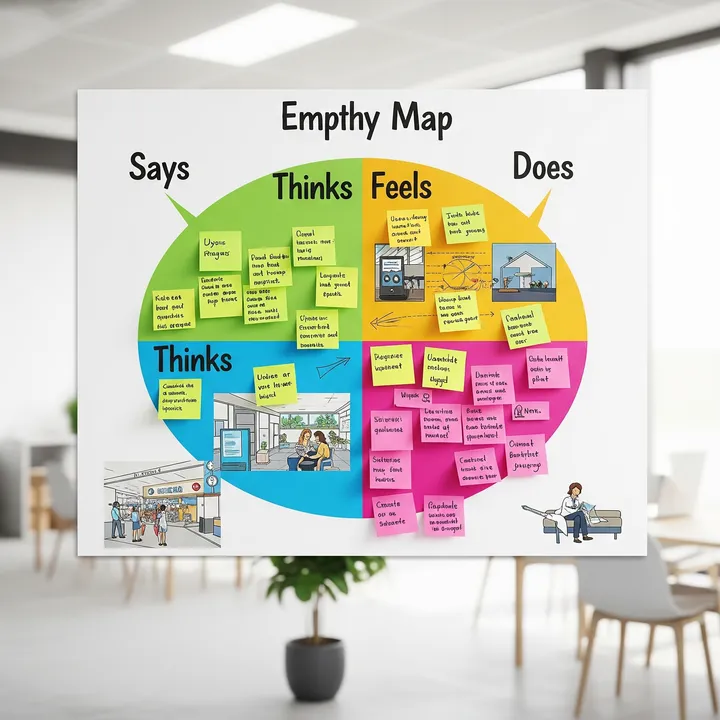
"First, empathize and map," Claude said. "Stand in where the working frontline gets stuck and what it feels anxious about. On that basis, lay side by side the current on-premises environment and the migration target's features. From people's anxiety, turn the present state into a map."
[Prioritize & Assess—measure the danger in order of the largest anxiety]
"Next, prioritize and assess," Gemini continued. "Line up the support deadline and security risks in order of the largest anxiety. Assess the current vulnerabilities and the points strengthened after migration. Measure what to act on first so that anxiety decreases."
[Test & Handover—test before handing over]
"After the assessment, test and handover," I continued. "Test the migration plan and surface latent problems in advance. On completion, hand over a detailed report and operational guidelines. Test, then hand over. Put it into a form the people who do the work can take over with confidence."
[Yield—produce the result of a safe migration]
"Last, the yield," Claude continued. "Finish the migration safely and swiftly, and produce a decrease in spam and a rise in security. Because you designed from the users' anxiety, the frontline doesn't stall and it connects to results."
[Estimating the payback]
"Let's run the numbers with the ROI Proposal Generator," Gemini proposed.
- Initial cost: empathy hearings, present-state mapping, migration design, security assessment, and test/handover support—¥5.2 million total
- Monthly cost: new-service use plus ongoing operation—¥220,000
- Monthly savings: resolution of stalls through a user-centered migration = ¥500,000 (assuming a 70% reduction); strengthened security = ¥340,000; prevention of migration omissions = ¥280,000; acceleration of operational embedding = ¥300,000; ¥1,420,000 a month total
- Net monthly savings: ¥1,420,000 − ¥220,000 = ¥1,200,000 a month
- Payback period: ¥5.2 million ÷ ¥1,200,000 = about 4.3 months
"A little over four months to recover," Gemini summarized. "What works is not drawing the procedure first but designing from the users' anxiety. Even if you tidy the procedure, if the working frontline stalls on anxiety the migration won't move. Because you stand in people's situation, the frontline moves. The investment doesn't swing at empty air."
Soeda said as he checked the numbers. "I thought drawing the procedure would move it forward. Unless you stand in the users' anxiety, the frontline won't move."
"EMPATHY is a tool for proceeding by standing in the users' situation," I replied.
Chapter 3: An implementation plan that proceeds by standing with the users
"Let me lay out the approach," I said, standing before the whiteboard.
"Month one—empathy hearings with the frontline and mapping of the present state. Month two—prioritize the support deadline and security risks and assess vulnerabilities. Months three and four—test the migration plan and surface problems in advance. Month five—carry out the migration and hand over the report and operational guidelines. Month six—verify effects and confirm spam and security. Month seven onward—embed operations and roll out horizontally to other departments and campuses."
"We have a procedure manual—do we need to start from empathy?" Soeda confirmed.
"That's the key point," Claude replied. "Even with a procedure manual, if you don't know where the people doing the work will feel anxious, the frontline stalls. Stand in people's situation with EMPATHY, and you crush the sticking points in advance and can hand over with confidence. Meshing procedure with people is the shortcut to moving the migration."
Soeda said as he took notes. "Before drawing the procedure, stand in the users' anxiety. I can see the order now."
Chapter 4: The day, standing in the anxiety, the migration moved
Ten months later, a report arrived from Soeda.
The migration proceeded without stalling after the ground-standing design. "We knew in advance where the hands-on members would get stuck. The anxiety cleared and the work went smoothly," Soeda wrote.
Security was strengthened too. Vulnerability assessment and post-migration measures erased the anxiety. "We finished the migration safely within the support deadline. Spam decreased too," the report said.
The biggest change showed in the starting point of the design. From drawing from procedure, they shifted to standing in the users' anxiety. "I'd been composing nothing but the migration sequence. Once I stood in the users' situation, the sticking points came into view in advance, and the frontline began to move," Soeda wrote.
The handover was smooth too. The report and operational guidelines supported the operations that followed. "It didn't end at handing over. The people who do the work could take it over with confidence," the report said.
As a side effect, the way of proceeding changed. Rather than procedure-first, a people-first mindset took root. "I stopped starting from the sequence. I began to think from who, where, and about what feels anxious," Soeda wrote.
At the end of Soeda's report was written: "I thought the mail-migration trouble was the soundness of the procedure. But the real problem was that even though the procedure was drawn, I wasn't standing in the users' anxiety. The moment I stood in people's situation with EMPATHY, the frontline began to move. Before drawing the procedure, standing with the users came first."
On the day a company that could draw the procedure but wasn't standing in the users' anxiety became a company that could move the migration by standing in people's situation, the mail migration had changed from a design of technical procedure into a design that proceeds by standing in the situation of the people who use it.
"A consultation about a system migration usually arrives in the form of 'is the procedure sound?' But before drawing the procedure, there's something to ask. Are you standing in the users' anxiety? What EMPATHY asks is the seven stages from empathy to yield. Stand in people's situation, and you can crush the sticking points in advance. On the day a company that could draw the procedure but wasn't standing with people could design from anxiety, what changed was not the precision of the procedure but the very perspective of proceeding by standing in the situation of the people who use it."
Related Files
Tools Used
- ROI Polygraph — visualizing in-house groping labor, stalls from users' anxiety, and migration-omission risk
- ROI Proposal Generator — a payback simulation for the mail-server migration, starting from a design that stands in the users' situation


