
ROI Case File No.576 'We Could Pick the Tool, but Couldn't Compose Price, Place, and Promotion'

We could pick the tool, but couldn't compose price, place, and promotion
- Chapter 1: We want to pick the tool—but the introduction won't compose
- Chapter 2: What the 4Ps ask—compose across product, price, place, and promotion
- Chapter 3: An implementation plan that composes across four elements
- Chapter 4: The day, composing on four, the introduction turned
- Related Files
- Tools Used
Chapter 1: We want to pick the tool—but the introduction won't compose
"We want to visualize our business flow and bring in a system. I'm looking for an IT consultant who'll walk alongside us."
Sei Yotsutsuji, in charge of business reform at TechNova, described the situation. "Our internal business flow is unclear, and efficiency isn't advancing. There's a lot of analog work, and the systems aren't integrated either. I want to clarify the whole of our operations, take stock, and pick the optimal tool. And I want someone to walk alongside us for the long term."
"Where do you start thinking about the introduction?" Claude asked.
"From tool selection," Yotsutsuji answered. "I research which product is optimal. But even when I can pick a good tool, I can't compose what comes after. How much it costs, where to place it, how to spread it internally. Decide the tool alone and it feels like nothing moves forward."
"Are you composing price comparison, the design of where to place it, and how to spread it internally?" I confirmed.
"…I'm not," Yotsutsuji answered. "I've only been thinking about the tool. I can pick the product, but price, place, and how to spread it are missing."
"Even if you can pick the tool, if you can't compose price, place, and promotion, the introduction won't turn," I replied. "Let's break it down with the 4Ps."
Chapter 2: What the 4Ps ask—compose across product, price, place, and promotion
"This case calls for the 4Ps."
Claude wrote on the whiteboard: "Product, Price, Place, Promotion."
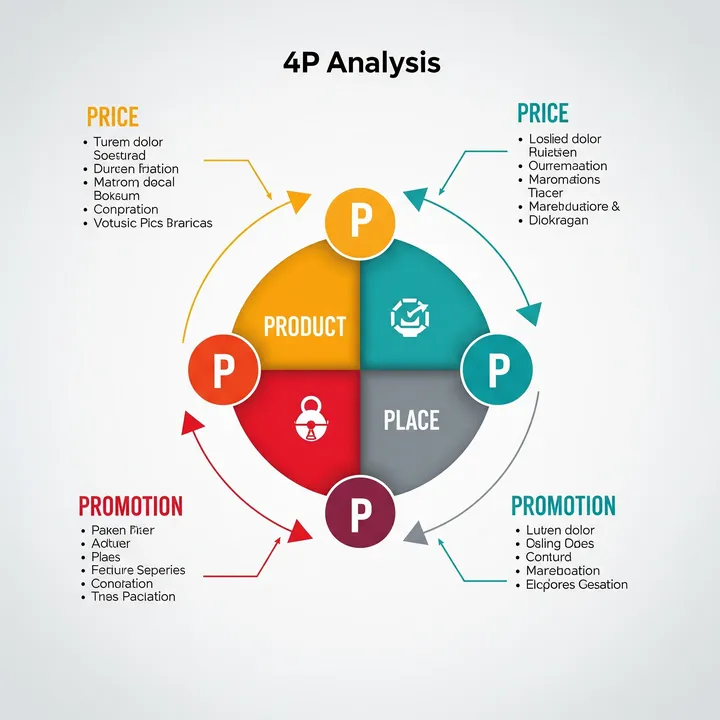
"The 4Ps—the four elements of product, price, place, and promotion—is a framework that composes what you deliver from four angles," I explained. "The crux is not ending with the product. Which tool to pick is only one corner of product. At what price (price), where to place it (place), and how to spread and embed it (promotion). Only when all four are lined up does the introduction turn. It's a tool for meshing the tool with implementation."
"First, let's measure the current cost," Gemini said, opening ROI Polygraph. He entered the data Yotsutsuji had provided.
"The monthly cost is out," Gemini read off. "Labor from analog work and non-integrated systems averages 175 hours a month; at ¥3,600 an hour, that's ¥630,000 a month. Duplication and rework from an unclear business flow average ¥400,000 a month. The wasted-introduction-cost risk from not selecting the optimal tool averages ¥360,000 a month. Post-introduction fossilization from the absence of embedding support averages ¥340,000 a month. Information scatter from the inability to manage centrally averages ¥300,000 a month. The total is ¥2,030,000 a month—about ¥24.36 million a year."
Yotsutsuji stared at the figures. "I'd been watching only the tool selection. Once you add the cost of fossilization because price, place, and promotion were missing, it comes to this much."
"Then let's design it with the 4Ps," I continued.
[Product—pick the tool that fits the operations]
"First, product," Claude said. "Analyze the current systems and business flow in detail and pick the optimal tool and system. But this is one corner of four. Don't end at picking."
[Price—compare the cost of introduction methods]
"Next, price," Gemini continued. "Compare the cost-effectiveness of package introduction versus scratch development. Discern the cost-performance. Even a good tool becomes a heavy investment if you compose the price wrong."
[Place—build a home for central management]
"After price, place," I continued. "Advance digitalization and place everything in a cloud that can be managed centrally. Make one home for scattered operations. Where you place it decides how easily information can be found."
[Promotion—spread it internally and embed it]
"Last, promotion," Claude continued. "Provide internal training and support for the new system so employees can migrate smoothly. Spread and embed it. Skip this and even a good tool goes unused and fossilizes."
[Estimating the payback]
"Let's run the numbers with the ROI Proposal Generator," Gemini proposed.
- Initial cost: business-flow visualization, tool selection, building central cloud management, internal-training design, and walk-alongside support—¥4.9 million total
- Monthly cost: system use plus ongoing operation—¥200,000
- Monthly savings: efficiency of the business flow = ¥450,000 (assuming a 70% reduction); reduction of duplication through tool optimization = ¥340,000; reduced information searching through central management = ¥280,000; prevention of fossilization through embedding = ¥280,000; ¥1,350,000 a month total
- Net monthly savings: ¥1,350,000 − ¥200,000 = ¥1,150,000 a month
- Payback period: ¥4.9 million ÷ ¥1,150,000 = about 4.3 months
"A little over four months to recover," Gemini summarized. "What works is not ending with tool selection but composing across four elements. Decide the product alone, and with price, place, and promotion missing the introduction won't turn and it fossilizes. Line up all four and the chosen tool embeds. The investment doesn't swing at empty air."
Yotsutsuji said as he checked the numbers. "I thought picking a good tool would settle it. Unless you compose price, place, and promotion, the tool won't turn."
"The 4Ps are a tool for composing across the four of product, price, place, and promotion," I replied.
Chapter 3: An implementation plan that composes across four elements
"Let me lay out the approach," I said, standing before the whiteboard.
"Month one—clarify the whole picture of operations and take stock, and design the four elements. Month two—select the tool and compare package and scratch prices. Months three and four—build the central-cloud-management base and digitalize. Month five—prepare internal training and a support structure. Month six—trial run and effect verification. Month seven onward—continuous improvement through long-term walk-alongside support and expansion of the operational scope."
"If we just pick a good tool, it'll become efficient—right?" Yotsutsuji confirmed.
"Picking alone isn't enough," Claude replied. "It becomes efficient because price, place, and promotion are composed too. Pick the tool but compose the cost wrong, let the home scatter, fail to spread it internally—it goes unused and fossilizes. Lining up all four with the 4Ps comes before selection. The walk-alongside support, too, exists to keep the four turning."
Yotsutsuji said as he took notes. "Before picking the tool, compose across the four elements. I can see the order now."
Chapter 4: The day, composing on four, the introduction turned
Ten months later, a report arrived from Yotsutsuji.
The business flow changed greatly after visualization and central management. "The flow that had been unclear was made visible. The analog work rode onto the system," Yotsutsuji wrote.
The information scatter cleared too. Central cloud management gathered the scattered operations into one home. "The time taken up in searching fell. At a glance you could tell where everything was," the report said.
The biggest change showed in how the introduction was composed. From tool selection alone, they shifted to composing across four elements. "I'd been researching nothing but which product was optimal. Once I composed price, place, and promotion, the chosen tool began to turn on the ground," Yotsutsuji wrote.
Embedding advanced too. Internal training and support prevented fossilization. "It didn't end at bringing it in. Employees migrated smoothly and keep using it," the report said.
As a side effect, the way introduction was viewed changed. Rather than the product alone, the habit of viewing across four elements took root. "I stopped ending at 'pick a good tool.' I began to think in terms of whether price, place, and promotion were all lined up," Yotsutsuji wrote.
At the end of Yotsutsuji's report was written: "I thought the efficiency trouble was picking the optimal tool. But the real problem was that even when I could pick the tool, I couldn't compose price, place, and promotion. The moment I composed the four elements with the 4Ps, the introduction began to turn. Before picking the tool, composing the four came first."
On the day a company that could pick the tool but couldn't compose price, place, and promotion became a company that could turn the introduction across four elements, the system introduction had changed from tool selection into a design that composes across four elements—product, price, place, and promotion.
"A consultation about operational efficiency usually arrives in the form of 'we want to pick the optimal tool.' But before picking the tool, there's something to ask. Are price, place, and promotion composed? What the 4Ps ask is the four of product, price, place, and promotion. Compose the four elements and the chosen tool embeds. On the day a company that could pick the tool but couldn't compose the four could compose across four elements, what changed was not the tool's performance but the very perspective of composing across product, price, place, and promotion."
Related Files
Tools Used
- ROI Polygraph — visualizing analog-work labor, duplication and rework, and post-introduction fossilization risk
- ROI Proposal Generator — a payback simulation for business-flow visualization and system introduction, starting from a four-element design of product, price, place, and promotion


